
The old pressure cooker still rests on the counter, dented and lightly stained, a reminder of family stews and Sunday pots of beans. Beside it sits a sleek new appliance, smooth, glowing, almost futuristic, marked only by a soft ring of light and a gentle chime. One feels like effort. The other feels like possibility. Across countless homes, this silent comparison plays out every evening, right when hunger, exhaustion, and daily chaos collide. Parents juggle phones, recipes, and tired glances toward the hissing pot. Increasingly, families are choosing to unplug the past.
From Kitchen Anxiety to Calm Control
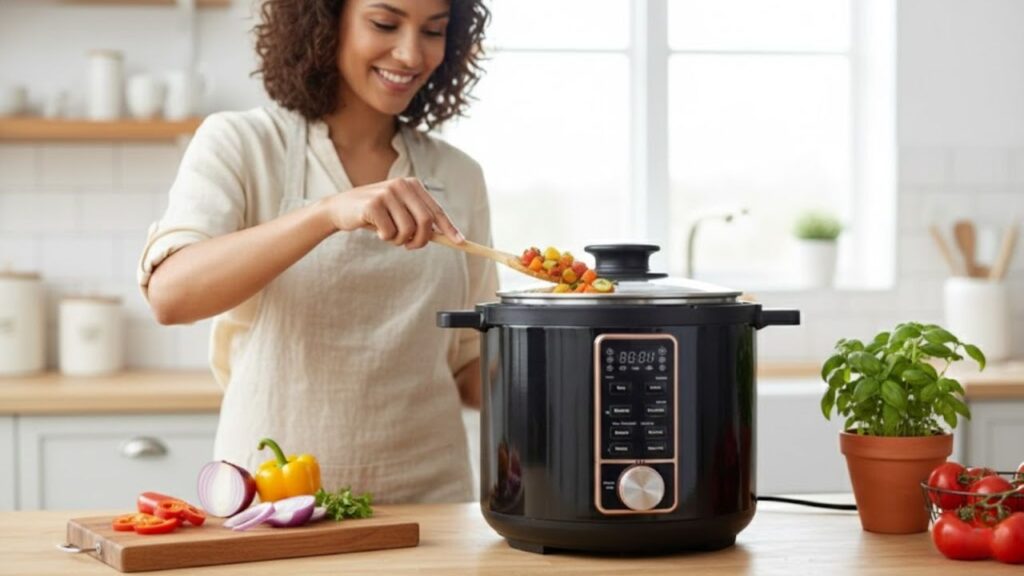
Anyone raised around a traditional pressure cooker remembers the sound first: the sharp whistle, the rising tension, the rule that children stayed well away. Contrast that with the modern multi-cooker’s soft beep. The promise of speed remains, but the fear disappears. Programs manage heat, sensors regulate pressure, and steam releases automatically. You press a button, the machine works, and you breathe. The old ritual of flame-watching and whistle-counting is quietly fading.
A recent European survey found that families with children under twelve ranked safety and predictability as their biggest weekday dinner concerns. Flavor and creativity came second. This is where smart cookers fit naturally. One mother in Manchester shared that she moved from being afraid of pressure cooking to relying on her connected cooker four nights a week. She selects a preset, adds ingredients, and receives a phone alert when dinner is ready. The old cooker now sits boxed in the loft, unopened.
 Chair-based hip routine after 60 builds strength better than squats and supports stair climbing
Automation and the Hidden Relief It Brings
This change goes beyond upgrading a gadget. It’s about reducing mental load. Traditional pressure cookers required constant attention and inherited know-how. Smart cookers shift that responsibility into the machine itself. Stews, lentils, and rice dishes become presets guided by sensors. Auto-locking lids, controlled pressure release, and built-in safety systems remove long-standing fears of kitchen accidents. For households balancing work, school, and tight evenings, trading vigilance for automation feels like relief.
 Daily exercises for women over 55 tighten arm flab faster and improve shoulder definition safely
How Families Actually Use Smart Cookers
The real advantage of these appliances isn’t flashy apps or endless modes. It’s how they standardise everyday meals. Choose a recipe, select portions, and the cooker adjusts timing and temperature automatically, keeping food warm until everyone is ready. Many parents swear by planning two or three “automation nights” each week, saving simple meals like soups, curries, or shredded chicken as favourites. On those nights, the cooker does the thinking.
Real life rarely matches marketing images. Evenings include crying toddlers, teens arguing over Wi-Fi, and missing sports kits. That’s why the most effective advice is practical: keep a short list of easy recipes, pre-measure spice blends, and use delayed starts when traffic is inevitable. Doing this once or twice a week can turn a frantic night into something calmer.
Changing How We Feel About Cooking
Emotionally, smart cookers often reshape our relationship with home cooking. Some parents admit feeling guilty about letting a machine do the work. Over time, that guilt fades. As one father, Ravi, explains, his children believe he cooks more now than before. Takeaway orders dropped, the kitchen smells like food, and for them, that equals mum and dad cooking.

Families do encounter common pitfalls: relying only on presets, overfilling the pot, or expecting restaurant-level results on busy nights. Starting with simple recipes, respecting fill limits, trusting saved favourites, and accepting that “good enough” is enough makes the experience smoother.
What We Gain When the Cooker Thinks
The move from manual to smart cookers marks a quiet shift. In many homes, only one person knew how to handle the old pressure cooker. Now, teenagers can safely prepare meals, and hesitant partners cook confidently. Knowledge that once felt exclusive becomes shared. This change rarely trends online, but it reshapes who feels capable in the kitchen.
On a broader level, this transition reflects a desire for control in an unpredictable world. People no longer want to gamble with dinner. They want certainty: start at six, eat by seven. Traditional cookers required trust in timing and technique. Smart cookers replace that with data, sensors, and automation. While some still prefer the hiss and craft of the old pot, many families now choose calm, safety, and predictability.
A Quiet Redefinition of Home Cooking
The pressure cooker doesn’t vanish; it simply steps back. The new appliance speaks the language of this decade: automation, safety, and reliability. In return, families gain time and mental space. Conversations replace arguments, and responsibility is shared. What’s changing isn’t just the tool, but the meaning of home cooking in a world where machines know the recipe by heart.

Key Takeaways for Modern Families
- Transition to smart appliances: Families are replacing traditional pressure cookers with automated, connected multi-cookers to simplify daily meals.
- Improved safety and reduced mental load: Sensors, locks, presets, and keep-warm functions remove fear and constant supervision.
- New cooking routines: Automation nights, favourite recipes, and shared tasks help families cook at home more often without sacrificing evenings.
