It usually hits on an ordinary evening. You’re slicing onions, someone nearby is wrestling with homework, a charger snakes across the counter, and the once-coveted kitchen island suddenly feels like a traffic circle. You catch yourself looping around it again just to grab a pan. That’s when it lands: this setup looks flawless online, but real life isn’t a styled photo. Slowly, a different thought takes hold. Maybe the problem isn’t you. Maybe it’s the island.
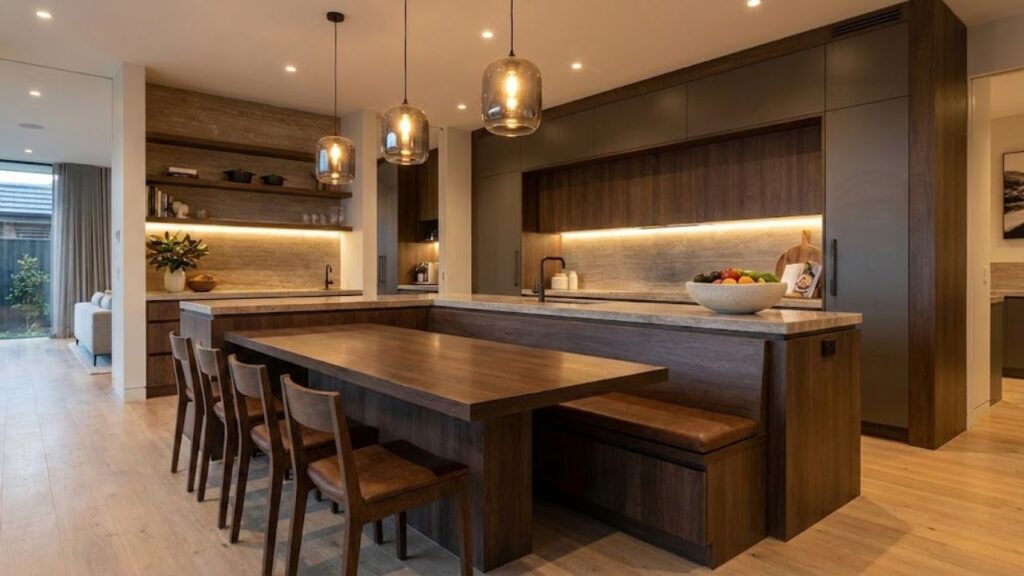
Why the Kitchen Island Obsession Is Losing Its Grip
Step into homes built between 2005 and 2020 and the layout is almost predictable. Open-plan living, a central kitchen, and right there in the middle sits a bold island topped with matching pendant lights. For years, it symbolized modern success. Yet many homeowners are now admitting something uncomfortable: the island often gets in the way. Designers are noticing the change. In recent projects, many clients ask to remove or shrink islands, not because they’re unattractive, but because they feel restrictive and awkward in daily use.
When Real Life Lives Around the Edges
One couple owned a stunning 2.5-meter marble island that guests adored and social media praised. Day to day, however, cooking felt like weaving through an obstacle. The space they needed most—near the stove, sink, and oven—was never quite right. The island sat at the center, but real life happened along the perimeter. The core issue is simple: islands are fixed, while life constantly shifts. A heavy, immovable block can’t adapt to changing routines, hobbies, or family rhythms.
 3I/ATLAS Radio Signal Reported - What a Strange Signal Could Mean for the Interstellar Comet
The 2026 Shift Toward the Kitchen Worktable
Design trends for 2026 respond directly to that rigidity. Enter the kitchen worktable. Unlike built-in islands, these tables feel more like furniture: lighter, refined, and flexible. Slim legs, visible floor space, and mixed materials such as warm wood, metal, or stone create an open feel. Designers may call them prep tables or modern kitchen tables, but the real benefit is freedom of movement and restored circulation throughout the room.

Flexibility That Matches Daily Life
A freestanding worktable adapts easily. On regular days, it’s a prep surface for meals and groceries. On weekends, stools slide in for casual drinks. During holidays, it can shift to make space for extra tables without trapping anyone. Families who’ve made the switch often say they didn’t lose usable surface area—they lost daily frustration. Better sightlines, lighter visuals, and adaptable zones instantly make kitchens feel larger and calmer.
 Goodbye kitchen cabinets: the cheaper new trend that won’t warp, swell, or go mouldy over time
How to Replace an Island Without Second Thoughts
The smartest approach starts with movement. Trace your usual path from fridge to sink to stove. The worktable should support that flow, not block it. Aim for generous clearance on all sides so multiple people can move comfortably. Height matters too. For frequent cooking, a counter-height table works best, while still allowing stools for coffee or work. This is where function leads design, not trends.
Small Changes, Big Relief
If removing an island feels daunting, start by lightening it visually. Open shelving, slimmer bases, or partial conversions can help. Some homeowners keep fixed plumbing in place while transforming part of the island into a freestanding table. Let go of the guilt—kitchens are tools, not monuments. Designers now emphasize flow over furniture, focusing on ease rather than sheer size.
A Kitchen That Moves With You
The 2026 kitchen isn’t about impressing with massive stone slabs. It’s about how easily you move, gather, and reset when life gets messy. The worktable reflects a deeper shift away from rigid spaces toward adaptable living. Whether it’s a desk in the morning, a prep zone at noon, or a gathering spot at night, the central piece must keep up. The real luxury now is flexibility—the ability to shift a table slightly and suddenly feel room to breathe.
 Bird lovers swear by this cheap January treat while critics say it is slowly killing wild birds
Key Takeaways for Making the Shift
- From island to worktable: A lighter, freestanding table improves circulation and visual space without sacrificing function.
- Design around movement zones: Supporting the fridge–sink–stove path reduces collisions and daily stress.
- Plan for adaptability: Slim legs, mobile storage, realistic finishes, and testing layouts allow the kitchen to evolve with your lifestyle.