
On a grey morning at the DGA test center in Saclay, the sound doesn’t just fill the air, it chews it. A prototype fighter jet engine screams behind reinforced glass, flame licking the exhaust tunnel, while a small group of engineers stare at a cluster of flickering green curves on their screens. One of them smiles: the figures are stable, the vibration low, the temperature just where they wanted it. “Nobody else in Europe can do this,” murmurs a visitor from Paris, half proud, half provocative.
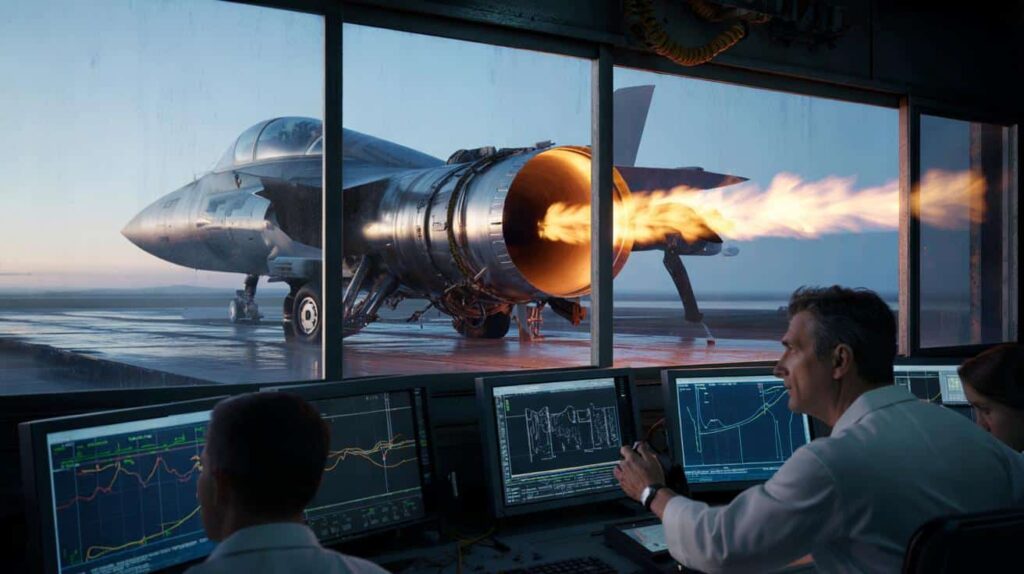
Outside the hangar, the tone is far less peaceful. In Brussels, Berlin and Rome, defense officials are trading frustrated messages. France, again, is accused of keeping the best toys for itself, locking away know‑how and budgets inside the opaque belly of the DGA, its powerful arms procurement agency.
A monopoly in engines. A fog of secrecy. And a lot of clenched jaws.

France’s engine pride meets Europe’s rising frustration
Around the French defense ministry, people talk about fighter jet engines almost like a family heirloom. Safran’s high‑precision powerplants, tested and blessed by the DGA, are held up as the crown jewels of European propulsion. The message, sometimes whispered, sometimes shouted, is simple: **when it comes to cutting‑edge fighter engines in Europe, France leads and wants to stay there**.

The problem is that the rest of the continent has stopped finding this charming. Especially now that billion‑euro future programs are on the table and everyone wants a real seat, not a folding chair.
Take the Future Combat Air System, the ambitious “fighter of tomorrow” program shared by France, Germany and Spain. On paper, it’s a grand European project. In meetings, it often sounds more like a tug‑of‑war. German industry keeps asking for more access to engine technology, more visibility on tests, more say on design choices. French negotiators respond with polite smiles and red lines.
Behind them sits the DGA, controlling test benches, secret budgets and long‑term roadmaps. Documents circulate with blacked‑out paragraphs, technical annexes vanish into classified annexes. We’ve all been there, that moment when you realize the collaboration you were promised looks more like subcontracting.
For Paris, the logic is simple: engines are strategic. The ability to design a hot section blade that survives hellish temperatures, or to calibrate digital controls so a jet stays whisper‑smooth at Mach 1.8, are skills that took decades, wars and billions to build. Giving that away feels like tearing out the country’s industrial spine.
For Berlin, Madrid or Rome, the story reads differently. They see massive programs paid with European taxpayers’ money, but a tech core locked inside French walls. They also fear this imbalance will haunt future aircraft deals, exports, and maintenance contracts. *The more France consolidates its engine monopoly, the more others wonder if they’re funding their own dependency*.
Inside the DGA’s black box: how France keeps control
To understand the current anger, you have to picture how things work inside the DGA. The agency doesn’t just validate designs; it steers them. It coordinates classified research with Safran, allocates “study credits” in obscure budget lines, and schedules engine test campaigns that even some partner nations only hear about after the fact.
Engine programs are cut into discreet work packages with neutral names, often buried in broader “propulsion studies” that barely raise an eyebrow in public budget debates. In this dense forest of acronyms, one clear trend emerges: the brain and heart of high‑precision engines stay in France.
This is where the tension becomes almost personal for engineers across Europe. German propulsion specialists complain off‑record that they’re stuck on peripheral tasks: casings, some software, a bit of integration. Italian teams say they’re invited late, when the core choices are already baked in. Spanish officials point out that their air force will one day fly jets whose engines they don’t fully understand or control.
Let’s be honest: nobody really reads every technical annex or follows every line of a multi‑year defense budget. The DGA knows this, and works in the shadows of public attention. The result feels like a carefully curated dependency, not a happy accident.
French officials counter that the “black box” is partly for safety. Fighter engines are touchy: tiny errors can mean catastrophic failure, or vulnerabilities that hostile states would love to probe. Some of the secretive programs aim to harden digital systems against cyberattacks, refine stealth signatures, or improve durability under extreme stress.

Critics respond that secrecy has become a habit rather than a necessity. They argue that sharing more with trusted European partners would spread costs, accelerate innovation and reduce the risk of everyone launching rival programs in frustration. **In a continent already struggling to harmonize tanks, missiles and aircraft, a propulsion cold war is the last thing anyone needs**.
How this French monopoly reshapes Europe’s defense future
There’s a very practical side to this story: who gets to train the next generation of engine builders. By keeping the most sensitive design and testing in France, the DGA and Safran also keep the most interesting jobs there. Young German or Italian engineers find themselves in support roles, far from the hot core, their career paths capped by nationality rather than skill.
Over time, that creates a quiet, structural imbalance. France doesn’t just hold current know‑how; it controls who learns the tricks for tomorrow’s engines.
For European defense planners, the risk is a spiral. As partners feel sidelined, they start floating alternative projects: national demonstrators, rival engine studies, hybrid civil‑military programs to rebuild competence at home. Money spreads thin, political patience thins faster, and shared projects wobble.
A few senior figures in Brussels privately fear a repeat of the past: separate fighter families, incompatible logistics, higher unit costs for everyone. They see France’s stubborn hold on engines not as genius industrial policy, but as a catalyst for fragmentation.
Some French voices are starting to say it out loud: the monopoly might actually backfire. If Germany or others lose faith in shared engines, they could pour their weight into competing programs with the UK or the US. Export buyers might then hesitate between jets locked into one national engine monopoly and aircraft built on a broader, more balanced industrial base.
“Europe can’t preach strategic autonomy while structuring its flagship fighter programs around the secrets of a single state,” a former European defense official told me. “At some point, the political math stops working, even if the engineering is flawless.”
- French engine monopoly: concentrates top know‑how and jobs in one country.
- DGA secrecy: fuels mistrust and accusations of hidden agendas among partners.
- Future programs: risk fragmentation if Germany, Italy or Spain go their own way.
- Taxpayer stakes: billions invested, but unequal access to the resulting technology.
- Strategic choice: accept imbalance, or rethink how Europe shares its crown jewels.
A fragile balance between secrecy, sovereignty and shared power
Step back from the spreadsheets and you see something almost emotional at play. France looks at its engines and sees a rare space where it still stands toe to toe with the US, the UK, even pushing ahead on some technologies. Giving that up, or even diluting it, feels like erasing a piece of national backbone.
Other Europeans look at the same engines and see an echo of older hierarchies, where big states lead and others follow, even as everyone opens the same wallets and shares the same risks.
The debate around the DGA’s hidden programs won’t be settled by one communique or one treaty tweak. It forces hard questions: how much secrecy can a democracy tolerate in the name of security. How much dominance can a partner accept in the name of cooperation. And how many times Europe can afford to fumble a shared project before everyone decides it’s safer to go alone.
Some argue that the only way forward is uncomfortable transparency: letting more European eyes into French test cells, sharing roadmaps earlier, accepting real co‑leadership on propulsion. Others fear that opening the door even a little will end with the crown jewels scattered.
In the end, this isn’t just about metal, turbines or thrust curves. It’s about trust, timing and the quiet politics of who gets to decide what “European” really means when the stakes are at Mach 2. The engines roaring in those DGA hangars may be French‑designed, but the echoes their monopoly creates will shape the whole continent’s future. Whether that future sounds like a chorus or a cacophony is still very much up for grabs.

| Key point | Detail | Value for the reader |
|---|---|---|
| French engine monopoly | Safran and the DGA control the most advanced fighter jet engine know‑how in Europe | Helps readers grasp why France sits at the center of current defense debates |
| DGA secrecy | Classified programs and opaque budgets limit partners’ access to tests and data | Explains the roots of German, Italian and Spanish frustration |
| Future of European defense | Risk of fragmented programs if the imbalance isn’t addressed | Shows how this technical dispute could hit taxpayers, exports and security |
FAQ:
- Is France really the only European country mastering top‑tier fighter engines?
Right now, France is the only EU country with a fully independent, combat‑proven high‑performance fighter engine ecosystem, from design to testing and export support.- What role does the DGA play in this monopoly?
The DGA steers research, funds secretive programs, runs key test centers and sets the technical standards that lock high‑end propulsion work onto French soil.- Why are Germany, Spain and Italy so upset?
They invest heavily in joint projects but feel sidelined from core engine know‑how, leaving them dependent on French decisions for future aircraft.- Could Europe develop a shared, non‑French engine?
Technically yes, but it would require big investments, time, and a political decision to challenge existing power balances and industrial habits.- What’s at stake for ordinary citizens?
Billions of euros in taxes, the price and availability of future fighter jets, and Europe’s real capacity to act independently in a crisis all ride on how this dispute evolves.
