
The waiter looked almost offended when I asked for the grilled vegetables “without olive oil, please.”
In a tiny family trattoria on the Amalfi coast, forks froze mid‑air, a nona frowned, and someone at the next table whispered something that clearly translated to: “Poor soul, she doesn’t know.”
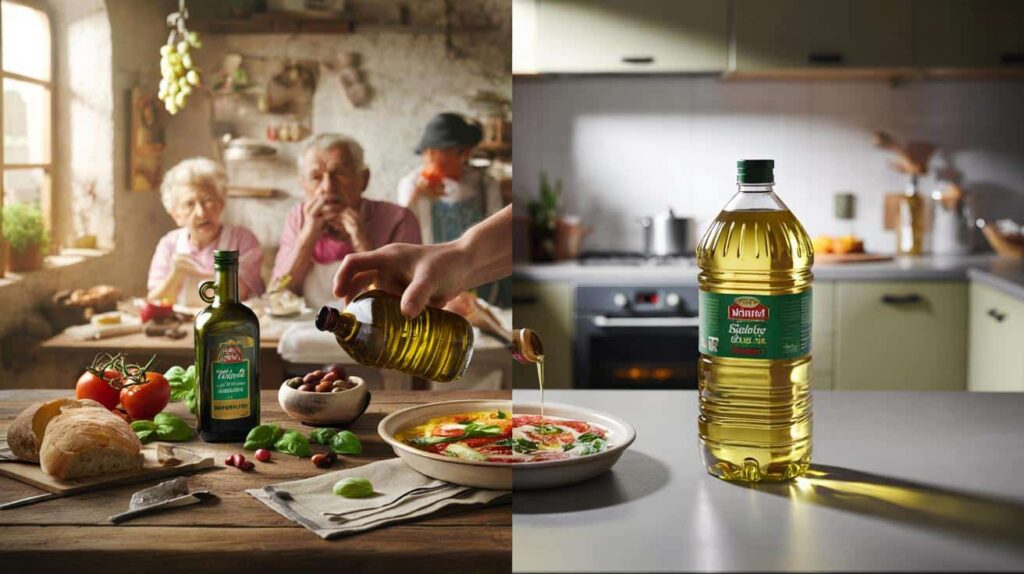
The cult around the dark green bottle is real. It’s not a condiment, it’s a belief system, especially for those who swear by the Mediterranean diet as the gold standard of health and longevity.
Now a new wave of research is quietly poking this sacred cow, pointing instead to a dirt‑cheap, totally unsexy fat that seems to tick more health boxes on paper.
And some Mediterranean die‑hards are not taking it well.

Olive oil knocked off its pedestal? The study that lit the fuse
The bombshell didn’t come from a wellness blogger.
It came from a group of nutrition researchers who did what no one really wanted them to do: they lined up everyday cooking fats and started comparing them head‑to‑head on heart risk, inflammation, and real‑world use.

At the top of their charts wasn’t your cold‑pressed extra‑virgin from a hillside in Crete.
It was plain, industrial, wallet‑friendly seed oil – the kind many health‑conscious people have been side‑eyeing for years.
The finding spreading fastest through social media? That a **cheap, high‑oleic, refined seed oil** can, in some contexts, look just as good for your arteries as premium olive oil – sometimes even slightly better on LDL cholesterol and oxidation markers.
Nutrition Twitter went nuclear.
Mediterranean diet fans started posting pictures of centenarians in Sardinia like witnesses for the defense. “Explain them,” one user wrote, zooming in on a 102‑year‑old woman drenching bread in green oil.
But buried under the outrage were some telling numbers.
In one meta‑analysis making the rounds, people who swapped a mix of saturated fats (think butter and lard) for a neutral, high‑oleic seed oil saw LDL cholesterol drop more than the classic olive oil switch. The oil in question? The kind sold in big plastic bottles at discount supermarkets for a fraction of the price.
On paper, it behaved almost exactly like olive oil in the bloodstream.
On a receipt, it was three times cheaper.
So what’s going on here?
First, the Mediterranean diet’s magic has never been olive oil alone. It’s vegetables, beans, nuts, walking up hills, gossip in the street, long lunches, smaller portions, low ultra‑processed food.
Second, the new research zooms in on a specific trait: the balance of fatty acids and how they influence cholesterol and inflammation. High‑oleic seed oils are bred to be richer in monounsaturated fat – the same family that made olive oil famous – and more stable when heated.
That means a neutral, boring‑looking bottle of high‑oleic sunflower or canola can legitimately compete with the “liquid gold” in key biomarkers.
The science isn’t insulting your Italian uncle. It’s quietly reminding you that molecules don’t care about marketing.
The dirt‑cheap fat the data actually likes (and how to use it)
So which fat is wearing the surprise crown in these studies?
Not mysterious at all: canola and high‑oleic sunflower oils are often the quiet winners when researchers run the numbers on LDL, HDL, and real‑world cooking stability.
They’re widely available, usually refined, almost annoyingly neutral.
Perfect for high‑heat cooking, stir‑fries, roasting, and baking. The fatty acid profile leans toward monounsaturated fats, with some omega‑3 in canola’s case, and relatively low saturated fat.
Practically, this means one simple method: keep your flavorful olive oil for drizzling cold on salads, soups, and grilled veggies.
Use the dirt‑cheap, high‑oleic seed oil for your pan, your wok, and your oven tray. You get the aromatic romance of olive oil where it matters, and the calm, smoke‑free performance of the cheaper fat where heat is highest.

A lot of people feel guilty just reading that.
There’s a quiet shame baked into nutrition conversations: if you’re not showering everything in small‑batch olive oil from a picturesque village, you’re somehow “less healthy.”
Here’s the plain truth: **most households simply can’t afford to deep‑fry their potatoes in premium extra‑virgin every weekend.**
And researchers know this. Behind many of these new papers is a very down‑to‑earth question: what fats can regular people use, at scale, without wrecking their arteries or their budget?
The common mistake is swinging from one extreme to another.
From “olive oil is a miracle, everything else is poison” to “seed oils are the real superfood now, throw away the green bottle.” Real life sits in the messy middle, where both can coexist in a smart, practical kitchen.
“Olive oil works beautifully in a traditional Mediterranean pattern,” one cardiologist told me on the phone. “What the newer studies are saying isn’t ‘grandma was wrong.’ They’re saying, ‘If you don’t have a Tuscan hillside, you can still protect your heart with affordable options.’”
- Use olive oil where you actually taste it
Cold dishes, finishing touches, dipping bread, quick sautés at medium heat. - Use cheap high‑oleic seed oil for high‑heat jobs
Roasting potatoes, searing meat, sheet‑pan vegetables, homemade fries. - Check the label for “high‑oleic” and fewer words
Short ingredient list, no flavored blends, no “mystery mix” of multiple oils. - Think about your whole plate, not just the bottle
Vegetables, legumes, whole grains, sleep, stress – the usual boring, powerful stuff. - *Don’t panic about perfection*
Let’s be honest: nobody really eats like a clinical trial every single day.
What this fight over oil really reveals about us
The anger around this new research isn’t only about molecules.
It’s about identity, memory, and the tiny daily rituals that make us feel like we’re doing something good for ourselves. Watching a thin stream of emerald olive oil land on ripe tomatoes is more than nutrition; it’s a small act of faith.
So when a graph suggests your grandmother’s “liquid gold” is, in some ways, nutritionally similar to a no‑label canola bottle from the discount aisle, it feels like someone is flattening culture into chemistry.
People push back because they’re defending something that lives far beyond the lab.
At the same time, there’s another story quietly unfolding in smaller kitchens, far from Mediterranean coastlines. A single parent comparing prices in the oil aisle. A student in a shared flat trying to roast vegetables on a tiny budget. An older person with rising cholesterol and an equally rising energy bill.
For them, this research can feel oddly liberating.
If a cheap, neutral fat can protect their heart almost as well as the glossy bottle in the “fancy” section, some of the moral weight lifts off every grocery trip. Health isn’t reserved for the ones who can spend €12 on 500 ml of cold‑pressed green romance.
We’ve all been there, that moment when you quietly put the premium bottle back on the shelf and reach for what you can actually afford.
Somewhere between these two worlds – the sun‑drenched mythology of the Mediterranean table and the fluorescent lights of the discount aisle – lies a more honest relationship with food. Olive oil can keep its poetry and its place on the table. Cheap, high‑oleic seed oils can take over the heavy lifting in the pan without shame.
The real shift isn’t just “goodbye olive oil, hello budget bottle.”
It’s letting go of the idea that health lives in one magical ingredient instead of in hundreds of small, repeatable choices.
Next time you reach for a bottle, the more interesting question might not be “Which fat is the purest?” but “Which habit can I actually live with, week after week?”
That answer will look different in Naples, in New York, and in your own kitchen – and that’s where the story really gets personal.

| Key point | Detail | Value for the reader |
|---|---|---|
| Olive oil isn’t the only “heart‑healthy” fat | High‑oleic seed oils (like canola or high‑oleic sunflower) often perform similarly in studies on cholesterol and inflammation | Reassurance that affordable options can still support long‑term health |
| Use different oils for different jobs | Olive oil for flavor and low/medium heat, neutral seed oils for high‑heat cooking and bulk use | Practical way to balance taste, health, and budget without food anxiety |
| Context beats any single ingredient | Overall diet pattern, stress, movement, and ultra‑processed food intake matter more than one bottle of oil | Encourages focusing on sustainable habits instead of chasing miracle foods |
FAQ:
- Question 1Are seed oils now “healthier” than olive oil according to research?
- Answer 1Not exactly. Some high‑oleic seed oils look very similar to olive oil on certain markers like LDL cholesterol and oxidation, and sometimes show a slightly stronger effect when replacing saturated fat. That doesn’t erase the benefits seen with olive oil in Mediterranean diet studies, it just widens the circle of fats that can be part of a heart‑friendly pattern.
- Question 2Which cheap fat are researchers usually talking about?
- Answer 2Most of the buzz centers on refined canola oil and high‑oleic sunflower oil. They’re low in saturated fat, relatively high in monounsaturated fat, and stable for everyday cooking. Regular, non‑high‑oleic sunflower or corn oil has a different profile, with more omega‑6, and appears in fewer of the “head‑to‑head with olive oil” comparisons.
- Question 3Should I throw out my olive oil now?
- Answer 3No. Olive oil still fits beautifully into a healthy eating pattern and brings polyphenols and flavor. A more balanced move is to keep your olive oil for salads, finishing dishes, and quick cooking, and use a cheaper high‑oleic seed oil for high‑heat or large‑volume cooking.
- Question 4What about all the scary posts saying seed oils cause inflammation and disease?
- Answer 4Most large, well‑designed human studies don’t back up the worst claims. When seed oils replace saturated fats like butter or lard, inflammation markers often improve or stay neutral. The drama usually comes from animal studies, extreme doses, or online echo chambers. Your overall diet and lifestyle shape inflammation far more than a tablespoon of oil.
- Question 5How do I choose a decent everyday oil without going broke?
- Answer 5For cooking, look for a neutral, affordable oil labeled “high‑oleic” (often canola or sunflower), in a size you’ll actually use within a few months. For flavor, pick a modest bottle of extra‑virgin olive oil you enjoy the taste of. Store both away from heat and light, and focus your energy on filling the rest of your cart with plants, whole grains, and foods you genuinely like – that’s where the big health wins live.
