
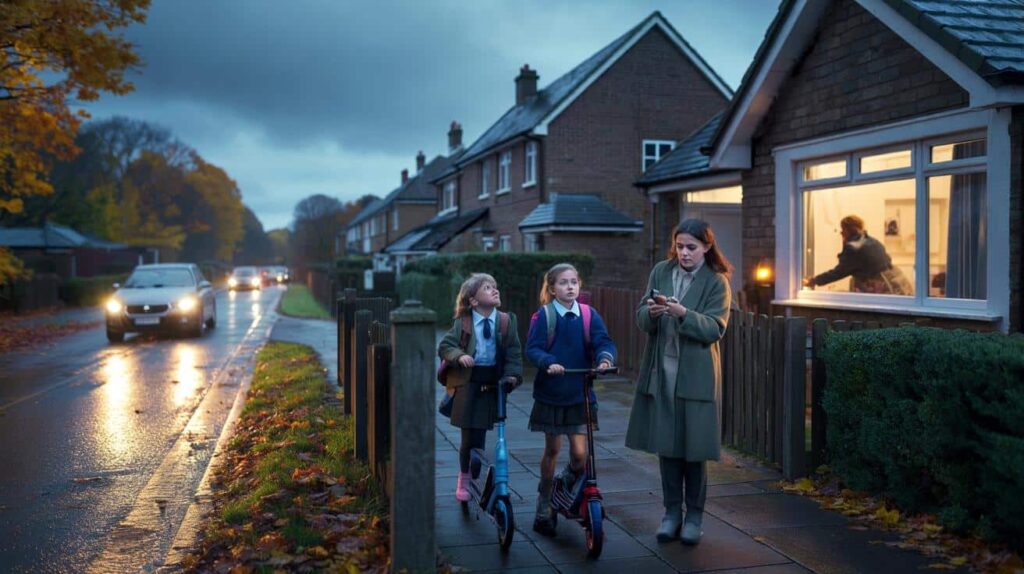
At 4.07pm on a drizzly afternoon in late October, the street where I live in Leeds simply disappears. One moment kids are wobbling home on scooters, the next the sky drops like a curtain. Car headlights snap on, kitchen windows glow yellow, and that feeling returns – the one that says, “Already?” as you glance at the clock and can’t quite believe it.
Next year, that strange moment is going to come earlier than many people expect.
Because in 2026, Britain’s clocks will change on an unusually early date, dragging sunset times forward and nudging millions of daily routines out of sync.

The time will only shift by an hour.

But your whole evening might move with it.
Why the UK’s clocks will jump earlier in 2026 – and what that really means
Most of us think of the clock change as a vague “end of October” thing. A passing line on the news, a reminder on the oven display, that friend who texts: “Don’t forget to change the clocks!” But in 2026, the UK will tumble out of British Summer Time earlier in the month than many people are mentally primed for, bringing forward the shock of the first truly early dusk.
That means earlier school runs in the gloom, earlier switch-ons of the heating, earlier yawns on the sofa.
The time on the clock will look familiar.
The light outside will not.
Think of a typical family in Birmingham at the end of October 2026. The parents have just about found a rhythm: after-work park trips, football training on Wednesdays, a quick loop round the block with the dog before tea. One week, sunset is just late enough for the kids to squeeze in half an hour outside after school. Seven days later, the same hour looks like late evening.
The numbers tell the story. Around the clock change, the UK can lose almost an hour of usable afternoon light in what feels like a handful of days. Add the earlier-than-usual date into the mix, and you get that odd, jet-lagged sensation: hungry at the wrong time, tired too early, wide awake at 3am.
Life hasn’t changed.
The sky has – and the brain needs time to catch up.
The real disruption doesn’t come from the hour on the clock. It comes from the sudden mismatch between our inner body clocks and the new rhythm outside. Human circadian cycles are anchored to light, especially the sharp contrast between bright morning and dim evening. When sunset jumps earlier, your body doesn’t instantly reset like your smartphone.
Sleep specialists call it “social jet lag”: your official schedule moves, but your biology lags behind.
In practice, that can mean cranky children at bedtime, adults staring at screens late into the night because they “don’t feel sleepy yet”, and a spike in groggy, low-focus mornings just as roads are darker and wetter. The earlier switch in 2026 compresses that shift into an even shorter window.
The UK will technically be on Greenwich Mean Time.

Many of us will feel stuck somewhere in between.
How to soften the blow when the evenings suddenly vanish
There’s no way to stop the planet tilting, but you can quietly slide your routine ahead of the clocks. The simplest method is also the least glamorous: move your key times by 10–15 minutes every few days in the two weeks before the change. Bedtime, wake-up, dinner, kids’ screen cut-off – all edging gently earlier.
That slow nudge lets your body clock drift into the new pattern without the overnight shock. It’s like walking down a small ramp instead of jumping off a step.
For families, it can help to “fake” the darker evenings a little earlier too. Draw curtains, dim harsh lights, and step away from bright screens sooner.
You’re teaching your brain the new script before the director yells “Action” on the official date.
Of course, this is the tidy version of life. We’ve all been there, that moment when you swear this season you’ll be organised, and then work runs late, kids catch colds, and the meal plan collapses into takeaway menus. Let’s be honest: nobody really does this every single day.
That doesn’t mean you’re doomed to a miserable November. Pick one anchor habit instead of trying to redesign your whole life. It might be a strict lights-out time for children, a non-negotiable morning walk, or putting your phone away an hour before bed.
Small, consistent moves are kinder to a tired brain than a grand, one-weekend overhaul.
The earlier clock change in 2026 will expose the gap between our expectations and reality, but it also gives a chance to test what genuinely helps your own household.
“People underestimate how much a simple light routine can change their whole winter,” says Dr Anna Hughes, a sleep researcher who has studied UK workers across the clock change. “When the clocks move earlier, I tell patients: don’t fight the dark, work with it. Use bright morning light like medicine, and treat evenings as a signal to power down, not push through.”
- Use **morning light** like a reset: open curtains fully, work by a window, step outside for five minutes even if it’s cold.
- Keep **evening lighting soft**: warm-toned lamps instead of bright white overheads, especially in the hour before bed.
- Protect one **outdoor moment** daily: a brisk walk at lunch, a school run on foot, or a quick lap around the block before dinner.
- Avoid stacking big changes: don’t start a strict new diet, a heavy gym plan, and a new bedtime routine all in the same week as the clock change.
- *Notice your own winter pattern*: some people feel the dip mainly in mood, others in sleep or focus – tailor your tweaks to that.
Rethinking winter evenings when the clock jumps ahead of you
When the clocks change earlier in 2026, every household in the UK will be nudged into a quiet experiment. Not one any of us signed up for, but one that will reveal a lot about how fragile – or flexible – our routines really are. You may realise your evening depends entirely on that sliver of post-work daylight. Or that your kids’ moods are less about homework and more about the sun vanishing mid-afternoon.
Those realisations can sting, yet they also open a door.
Once you see how strongly the shifting sunset tugs at your days, you can choose whether to treat it as a yearly annoyance or as a signal to redesign winter on your own terms. Maybe that means rescheduling clubs into earlier slots, swapping late gym trips for early ones, or leaning into cosier, screen-free routines instead of fighting the darkness with endless scrolling.
The earlier switch in 2026 won’t just change the time. It might change the question from “How do we get through winter?” to “What kind of winter evenings do we actually want?”

| Key point | Detail | Value for the reader |
|---|---|---|
| Earlier clock change | 2026’s switch out of British Summer Time arrives earlier in the calendar than many expect | Helps you anticipate sharper drops in afternoon light and plan routines before the shock hits |
| Body clock lag | Our biology responds to light, not just the numbers on a watch, so the change can trigger “social jet lag” | Explains why you feel off-balance and offers a more compassionate view of tiredness and irritability |
| Gentle adjustments | Shifting sleep, meals and light exposure by small steps over days smooths the transition | Gives practical, low-effort ways to protect sleep, mood and family rhythms during dark months |
FAQ:
- Will the clocks really change earlier than usual in 2026?Yes, the UK’s switch back to standard time in 2026 falls earlier in the month than many people are mentally used to, which brings forward the first very early sunsets and can make the change feel more abrupt.
- Does one hour really affect sleep that much?For some people it hardly registers, but for others – especially children, shift workers and those prone to low winter mood – the combination of clock time and much earlier darkness can disrupt sleep for days or weeks.
- What’s the best way to prepare kids for the earlier change?Start sliding bedtimes, wake times and after-school routines 10–15 minutes earlier every few days before the switch, dim lights in the evening, and keep mornings as bright and active as possible.
- Can the earlier change make seasonal depression worse?For those sensitive to light, it can intensify or bring forward symptoms, which is why regular outdoor time, bright morning light, and, where advised by a professional, light therapy lamps can be helpful.
- Is this the last time the UK will change its clocks?There’s ongoing debate about scrapping the time change altogether, but for now the UK remains on a twice-yearly shift between British Summer Time and Greenwich Mean Time, including the earlier autumn change in 2026.
