On a wet Sunday afternoon, a packed supermarket hums with impatience. Near the cereal aisle, a toddler cries at full volume while an exhausted mother bargains over chocolate puffs. A few steps away, a woman in her thirties scrolls through her phone, a carton of oat milk and a single avocado resting in her basket.
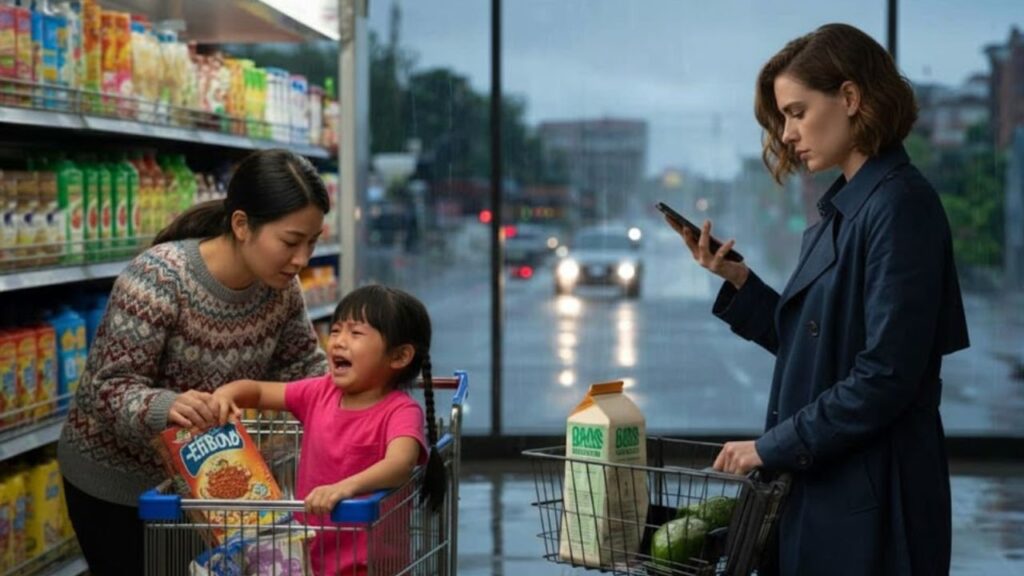
She notices the tears, meets the mother’s apologetic glance, and offers a small smile. Then her eyes drop back to the screen, where a headline glares up at her: “Is Not Having Children Selfish?”
For a moment, her chest tightens. She knows the labels by heart—selfish, cold, career-driven, anti-family. At the same time, every new climate report leaves her wondering whether choosing not to bring a child into this world is the only truly responsible decision she can make.
She pays, steps into the rain, and carries the question with her.

Is refusing to have children selfish… or brutally honest?
Why the “Selfish” Label Cuts So Deep
The accusation hits hard: “People who don’t want kids are selfish.” It surfaces at family dinners, in hushed conversations after someone admits they’re childfree, or in blunt social media posts. The logic seems simple—choosing yourself means choosing comfort over sacrifice.
But step back, and the wider picture shifts. Wildfires, record heatwaves, ecosystems under strain, cities that feel unbearable by early summer. For many younger adults, the charge of selfishness collides with a deeper worry: what kind of future would a child actually inherit?
Consider Léa, 29, living in a small apartment facing a busy ring road. She works in marketing, earns well, and is in a stable relationship. From the outside, she fits the idea of being at the “right time” in life.
Yet one browser tab never closes on her laptop: a sharply rising graph of CO₂ levels. She reads about food insecurity, climate displacement, and growing mental health strain. Léa adores children, but the thought of having one now feels like inviting someone into a room just as the ceiling begins to crack.
The Side of Parenting We Rarely Admit
There’s a truth often left unsaid. The polished image of parenthood—soft lighting, laughter, coordinated outfits—hides the hard mechanics beneath it: financial pressure, emotional labor, chronic exhaustion. When childfree people are branded as selfish, it overlooks a crucial point.
Many are not rejecting love. They are rejecting the idea of creating more suffering in a world that already feels stretched to its limits.
In a reality where the wealthiest 10% are responsible for roughly half of global emissions, choosing not to add another high-consumption life can resemble restraint rather than indifference. It isn’t glamorous. It can be isolating. But for some, it is the most honest choice they know how to make.
From Moral Judgment to Personal Ethics
One practical way to approach this dilemma is to split it into two questions. First: “Do I genuinely want to be a parent?” Second: “How does that desire sit within the reality of the planet?” Blending these into a single knot of guilt makes any answer feel impossible.
 Goodbye Hair Dye for Grey Hair: The Conditioner Add-In That Gradually Restores Natural Colour
Start with instinct, stripped of climate data, family expectations, and social scripts. Is there a deep pull toward raising a child, or is it more a sense of obligation shaped by what life is “supposed” to look like? Only then does the environmental context come in—not as self-punishment, but as part of a broader value system.
Many people argue on the wrong battlefield. Those without children feel compelled to defend themselves with statistics about emissions, while those who want children feel pressured to justify themselves as if they’re committing an ethical crime. Both sides end up wounded.
Naming the pressures out loud can help. A parent’s longing for grandchildren matters. So does the fear of a climate-altered future. Pretending one erases the other only fuels inner conflict. The truth is uncomfortable: no one makes this choice with perfect logic. Emotions seep into every calculation.
As one 34-year-old software engineer put it: “I’m not avoiding kids because I don’t care. I care so deeply it keeps me awake. I can’t imagine a baby without also picturing them growing up with extreme heat and water shortages. People call that selfish. To me, it feels like the opposite.”
- Clarify your desire – Describe what parenthood looks like to you beyond fear and fantasy.
- Acknowledge the environmental reality – Children in high-consumption societies carry a larger footprint, raising the stakes without banning parenthood.
- Accept moral imperfection – Parenting, remaining childfree, adopting, or fostering all exist within an imperfect world.
A Shared Future None of Us Fully Control
Ultimately, this debate exposes shared anxieties more than clear ethics. Parents worry about being judged as reckless. Childfree adults fear being labeled self-centered or incomplete. Older generations fear a loss of continuity. Younger ones fear a planet that may not hold steady.
Meanwhile, temperatures rise, species vanish, and political arguments drag on while deadlines slip. Whether or not we have children, we will still share crowded buses, heatwaves, and flooded streets.
Perhaps the better question is not whether refusing parenthood is selfish or responsible, but how we coexist with each other’s decisions. A parent raising a child with low-impact habits and a strong moral compass can help shape a better future. A childfree person investing time and resources into community or climate action can do the same.
The real damage happens when either side insists the other is morally inferior. No reproductive choice should require a courtroom-style defense at the dinner table.
The planet doesn’t need unanimous agreement on having babies. It needs lower emissions, fairer systems, and people—parents or not—who are willing to act. Responsibility and selfishness are not measured by the number of children someone has.
The dividing line isn’t between parents and the childfree. It lies between those who look away and those who face the reality, then quietly decide how they will respond.