Poverty reduction: Targeted distribution of resources leads to increased support for vulnerable families.
- Consumer spending: A potential decline may result in reduced overall economic activity.
- Job market pressure: Rising demand for employment could contribute to potential job creation.
- Financial stability: Improved security for lower-income households.
When Public Spaces Reflect Private Struggles
A child screams in a supermarket aisle so loudly that the fluorescent lights seem to tremble. His mother scrolls through her phone, pushing the trolley one-handed, barely looking up as cereal boxes hit the floor. A security guard hesitates. A cashier sighs. An older woman mutters about “kids these days.” No one intervenes. No one knows if they should.
Life moves on. But the image lingers.

On the way home, it blends with other familiar scenes: a teenager vaping outside school gates, a baby crying through thin apartment walls at 2 a.m., a news report about a 14-year-old stabbed by another child the same age.

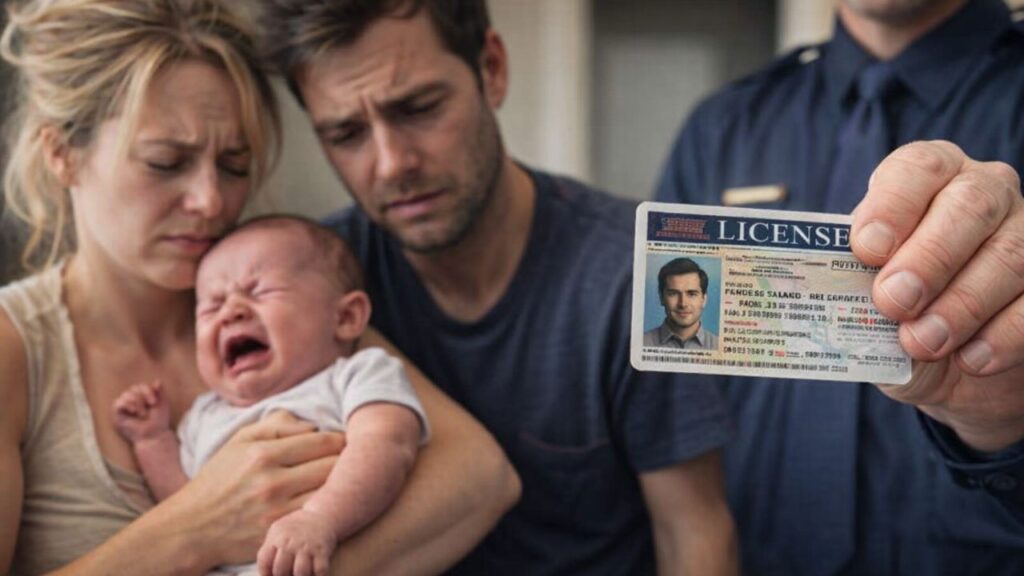
We require licenses to drive cars, cut hair, even handle dogs. Yet anyone can become a parent by accident.
The Cost of Unprepared Parenting
The data quietly echoes what instinct already tells us. Teachers burn out before 30. Pediatricians raise alarms about anxiety in children under ten. Police officers manage intoxicated teenagers in public parks. Again and again, professionals are sent to repair damage that began at home.
Walk into any classroom and the contrast is visible. One child can listen, wait, regulate frustration. Another erupts at the smallest refusal. That gap does not form between the school gate and the desk. It is shaped through years of attention, habit, or chaos.
Schools are expected to fix what parenting never built. And the strain shows.
A Teacher’s Reality
Emma, a 28-year-old primary school teacher in a low-income area, describes a boy who throws chairs when someone looks at him the “wrong way.” When she contacts his mother, the response is blunt: “That’s your job. Handle him.”
There is no curiosity about his anger, no sense of shared responsibility. Parenting, in this mindset, ends at the front door. Multiply that belief across thousands of households and the cost spreads everywhere: emergency services, schools, mental health systems, exhausted social workers.
The child joins a waiting list for a psychologist. The teacher takes sick leave. The parent scrolls social media.
Parenting as Social Infrastructure
If driving requires a license because mistakes can harm others, raising a human being deserves similar seriousness. Parenting shapes empathy, impulse control, and respect for boundaries. These are not private preferences. They are foundations of public life.
When parents struggle, the consequences spill outward. Emotional underdevelopment becomes bullying at school, violence in relationships, road rage, workplace harassment. As children, it is labeled a behavior issue. As adults, it is called toxic culture. The root remains the same.
We insist parenting is natural and instinctive. The evidence around us suggests otherwise.
Rethinking the Idea of a Parenting License
A parenting license does not require a dystopian system where the state decides who may have children. Think of it more like a seatbelt law: uncomfortable at first, then obviously protective.
Imagine mandatory, free parenting education connected to child benefits. Practical learning, not pamphlets. Small group sessions before and after birth. Guidance on managing stress, reading infant cues, setting realistic expectations, and resolving conflict without creating a home filled with tension.
The goal is not perfection. It is a minimum standard of competence.
 Goodbye Hair Dye for Grey Hair: The Conditioner Add-In That Gradually Restores Natural Colour
Common Objections and Realities
The resistance is predictable: “Who are you to tell me how to raise my child?” Yet we accept traffic laws without protest. We do not allow reckless driving in school zones simply because someone prefers it.
Parenting unfolds in parks, buses, classrooms, and hospitals. When basic skills are optional, everyone else must navigate the fallout.
Most parents are not malicious. They are exhausted, underprepared, and repeating what they experienced. Shame and defensiveness often replace curiosity and growth.
A licensing model would communicate something different: support, education, and expectation. Caring for a child becomes recognized as a skill, not a biological accident.
What “Qualified” Parenting Could Mean
Qualified parenting is not an idealized social media fantasy. It is built on learnable basics: clear boundaries, calm follow-through, listening without constant lecturing.
Training could include role-play scenarios. How to respond when a child lies. What to say when anger escalates. How to resist the urge to yell. People practice CPR for emergencies they may never face. Practicing words that shape a child’s self-worth is no less important.
Parents are not cruel by nature. They are often improvising with lives that depend on them.
The danger lies in turning education into rigid doctrine. Children are not machines. A useful system leaves room for culture, neurodiversity, and personality. It focuses on safety, emotional stability, and respect, not ideology.
A Shared Foundation for Families
A practical parenting license could provide a common toolkit for caregivers:
- Core skills: Nonviolent conflict, consistent boundaries, basic child development.
- Support access: Local parenting groups, crisis lines, free workshops.
- Warning signs: Recognizing when stress, yelling, or burnout require help.
- Community norms: Clear expectations for public behavior and safe intervention.
- Ongoing refreshers: Short updates at key developmental stages.
These elements already exist in fragments. A licensing approach simply defines them as the baseline.
Children Shape Society, and Society Shapes Children
In every bus, classroom, and waiting room, the effects of parenting are visible. A toddler who waits calmly. A child who apologizes after bumping into someone. A teenager who steps in to stop a fight instead of recording it.
These outcomes are not coincidences. They are the result of thousands of small, consistent moments handled well enough.
The alternative is equally visible: yelling in public spaces, fear behind closed doors, emotional neglect disguised by material comfort.
Society spends billions repairing damage that early guidance could have prevented. A parenting license may feel uncomfortable, even threatening. Beneath that discomfort lies a harder truth: love alone is not always enough.
If training is required to cut hair, serve food, or drive safely, it may be time to apply the same seriousness to those shaping the next generation. The question is not whether society pays the cost of unqualified parenting, but whether it continues to do so quietly.