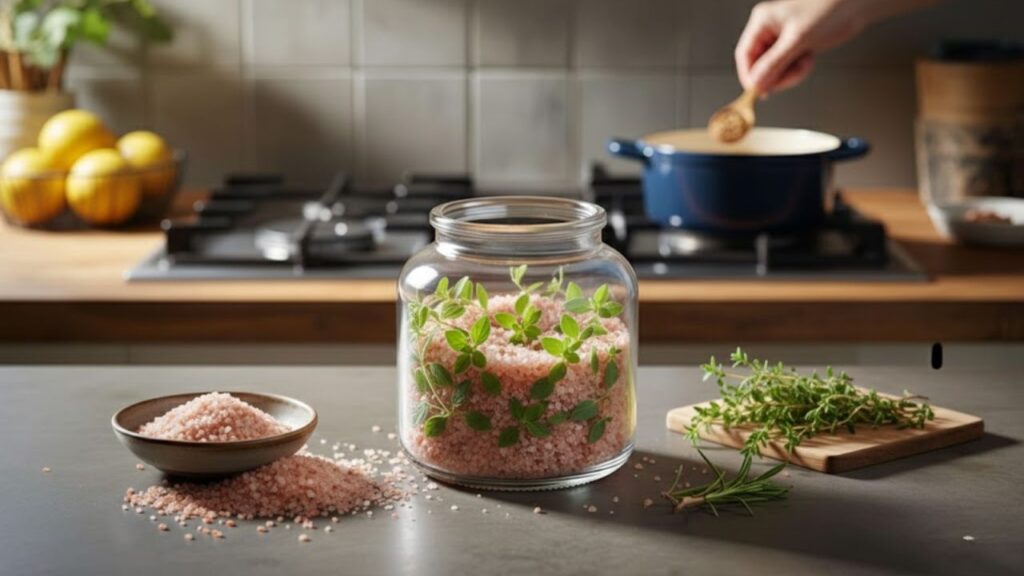
The disagreement began, as it so often does, over something trivial. A simple glass jar on a kitchen shelf, half-filled with coarse sea salt, with sprigs of rosemary standing inside like tiny green lances. One friend called it brilliant: the salt dries the herb, the herb scents the salt. The other grimaced, complaining about wasted aroma, pointless habits, and what they dismissed as “Instagram cooking.”
Caught between those reactions, many home cooks pause with the jar in hand, unsure whether they are being clever or just following a pretty trend. That hesitation reveals more than it seems. It reflects how we think about cooking today.
Why This Jar Sparks So Much Kitchen Tension
Spend a few minutes scrolling through cooking videos and the image appears again and again: a clear jar by the stove, salt sparkling, rosemary frozen mid-branch. One pinch later, ordinary potatoes become “Mediterranean-inspired.” On social media, this pairing has turned into a visual shortcut for serious home cooking, almost as symbolic as cast iron pans or a sourdough starter tucked under cloth.

Step into a professional kitchen, though, and the mood shifts. A chef in Lyon bans herb-infused salt from the line, insisting on plain salt and fresh herbs used in stages. Meanwhile, a pastry chef in Marseille keeps a generous jar of rosemary salt near her oven, crediting it for her focaccia’s crust. The debate is not just online noise. Even chefs disagree.
 Goodbye Hair Dye for Grey Hair: The Conditioner Add-In That Gradually Restores Natural Colour
At the core of the argument is a simple fact. Salt absorbs both moisture and aroma. It draws essential oils from rosemary while helping prevent mold. Over time, the salt grows more flavorful, but the herb itself slowly loses intensity. Supporters welcome that exchange, enjoying dishes gently scented with rosemary without extra steps. Critics argue that blending the two removes control, making it harder to judge timing, balance, and peak flavor.
How to Combine Rosemary and Coarse Salt Without Ruining Taste
If you choose to pair them, treat the jar as a working ingredient, not decoration. Begin with rosemary that is fully dry, either air-dried for several days or briefly dried in a low oven. Any remaining moisture can clump the salt and dull the aroma. Use coarse sea salt, not fine salt, and a jar with a snug lid that opens easily while cooking.
Instead of stuffing rosemary on top, layer it. Add a thin bed of salt, scatter a few sprigs, then cover with more salt. Leave a little space at the top so you can gently shake the jar. This helps distribute the oils evenly. Allow it to sit for three to four days before tasting. Judging too early gives a false impression.
The most common mistake is using this infused salt exactly like regular salt. That leads to dishes that feel overly perfumed or even bitter. Use it selectively, on foods that naturally suit rosemary such as roasted potatoes, lamb, focaccia, or grilled vegetables. Always taste a small pinch first. If the herb overwhelms the salt, adjust your hand.
This jar is not magic. It is simply salt that has absorbed the character of an herb.

Why Rosemary Salt Often Goes Wrong at Home
Few people carefully measure seasoning on a busy weeknight. That is why rosemary salt often turns into an all-purpose habit, slowly overpowering dishes that need restraint. Those who dislike the trend usually learned the hard way, through eggs or vegetables ruined by an overly pine-like flavor.
Time adds another layer of confusion. Rosemary’s scent in salt reaches a peak and then fades. Some cooks keep the same jar for months, thinking they are avoiding waste, unaware they are using little more than decorated salt. Others discard it too soon, assuming it has spoiled. The reality is simpler.
- Use a small jar so the salt is finished within three to four weeks.
- Replace rosemary sprigs once they lose fragrance when rubbed.
- Keep plain salt nearby for dishes that do not suit rosemary.
- Label the jar with a start date to track freshness.
- Reserve infused salt for finishing or roasting, not every pot of water.
So Who Actually Wins This Debate?
Both sides are chasing the same goal: control over flavor. Supporters value convenience and a consistent herbal note. Skeptics prefer precision and the freedom to decide exactly how much herb enters a dish. They are not opposing camps, just different approaches to the same jar.
The quiet truth is straightforward. Rosemary salt works best when it has a clear role, not when it serves as a kitchen accessory. It suits weeks filled with Mediterranean-style cooking. It makes less sense when meals shift between stir-fries, curries, and baking.
A good habit fits real life, not an imagined version of it.
On one shelf, a rosemary salt jar becomes a trusted helper, lifting roasted vegetables or chicken with minimal effort. On another, it is simply clutter. Neither cook is wrong. The only real question is whether that small glass jar helps you cook more often, enjoy the process, and love the flavors on your plate. If it does, the argument ends right there.