At first glance, it feels like any other weekday routine. In Jakarta, the sun rises through haze, motorbikes weave through traffic, and street vendors drag plastic stools onto the sidewalk. But stand near the seawall and look carefully at the entrances of older homes, and something feels off. Stone thresholds that once sat safely above ankle height now skim the ground. Some have vanished beneath added layers of concrete, as if the city itself is slowly bowing.
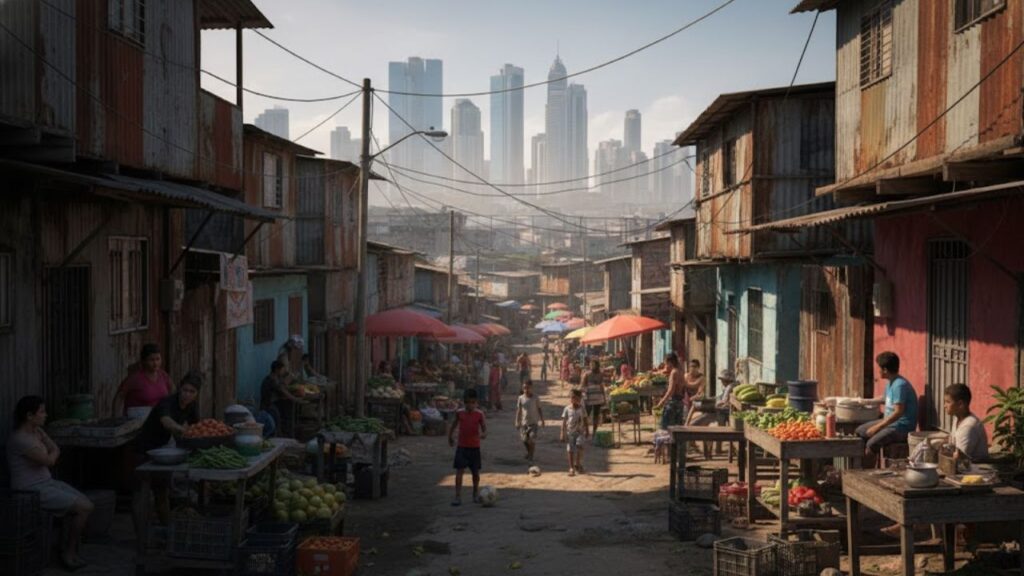
Beneath the sticky air and tangled power lines, engineers are attempting something unusual. They are forcing water back into the earth, into oil fields that once fueled the explosive growth of these megacities.
Deep underground, out of sight, they are trying to keep the surface steady for just a little while longer.

When the Ground Beneath Cities Begins to Give Way
Land subsidence rarely arrives as breaking news. It does not erupt like a volcano or tear through neighborhoods like a hurricane. Instead, it creeps in quietly, showing itself as cracks across a living-room floor, doors that no longer shut properly, or streets that now require a step up.

In coastal megacities such as Jakarta, Shanghai, and Mexico City, the pace can be startling. Several centimeters each year, accumulating into meters over a lifetime. What sounds abstract becomes real when a childhood café ends up below the level of the tide.
Much of this sinking, however, is not purely natural.
How Human Activity Accelerated the Drop
For decades, the formula was straightforward: extract resources from below and build higher above. Oil, gas, groundwater. Cities expanded on wealth drawn from the earth, while the ground itself compacted. In northern Jakarta, some areas have sunk more than four meters since the 1970s. Entire neighborhoods now depend on walls and pumps to hold back the Java Sea.
Mexico City, built atop an ancient lakebed, has subsided so dramatically that colonial buildings lean at uneasy angles. In Shanghai, aggressive groundwater use once caused parts of the city to sink nearly 10 centimeters per year. Engineers were eventually forced to confront a stark question: if removing fluids caused the land to sink, could adding something back help slow the fall?
Borrowing a Stabilization Trick from the Oil Industry
The solution came from oil engineering. Energy companies already understood that removing vast amounts of hydrocarbons reduces underground pressure, allowing rock layers to compact. To counter this, they developed a method of injecting water into depleted reservoirs to maintain pressure and reduce surface movement.
Applying this idea to cities was far from simple. Urban geology is complex, with layers of clay, sand, and rock behaving unevenly. Still, in places like Shanghai and parts of California, carefully managed water injection into exhausted oil fields has helped slow the rate of subsidence. It is not permanent, and it is not a cure, but it buys time.
In sinking cities, time is the most valuable resource.
The Quiet Science of Holding the Ground in Place
The principle is deceptively simple. Picture a sponge being squeezed because water has been removed. Adding water back allows it to relax slightly. Engineers drill wells into depleted reservoirs beneath or near cities and inject treated water under controlled pressure, aiming to restore some of the lost support.
This process does not inflate the ground like a balloon. It works more like restoring missing support to a loaded shelf. Pressures are monitored, volumes carefully measured, and surface sensors track even tiny movements. In this context, reducing subsidence by a few millimeters per year is considered success.
From satellite imagery, these changes appear as subtle shifts in color, where red zones of rapid sinking begin to fade.
Shanghai’s Long, Measured Response
During the 1960s and 1970s, Shanghai faced severe subsidence driven by groundwater extraction and earlier resource development. The response combined multiple strategies: strict limits on groundwater use, tighter water-management rules, and systematic water injection into certain depleted fields.
Over decades, the impact became clear. In some districts, sinking slowed to less than six millimeters per year. Movement continues, but the difference is significant. Instead of losing meters over a lifetime, the loss is far smaller. Old flood marks on walls no longer rise so quickly relative to the street, and shop owners find they no longer need to raise floors every few years.
 Goodbye Hair Dye for Grey Hair: The Conditioner Add-In That Gradually Restores Natural Colour
Above ground, daily life feels unchanged. Below, engineers maintain a constant balancing act.
The Risks Beneath the Solution
From a physical standpoint, the process is clear. Removing fluids lowers pore pressure, sediments compress, and the surface drops. Reintroducing water increases pressure and slows that compression. In certain geological conditions, it can even cause a slight rebound.
But the earth is unpredictable. Too much pressure can trigger minor seismic activity or force fluids into unexpected fractures. Too little pressure achieves almost nothing. As a result, engineers rely on extensive modeling, historic fault maps, and continuous monitoring. This work is deliberate and cautious, more like managing a chronic condition than delivering a dramatic fix.
The goal is simple: lose less ground, more slowly.
What This Means for People Living Above
Residents rarely see the preparation behind these efforts. Before any injection begins, engineers analyze years of satellite data and ground measurements to understand how neighborhoods have shifted. Depleted oil fields are mapped in detail, identifying which layers respond best and which old wells can be reused.
The water itself is treated to prevent corrosion or mineral buildup that could clog rock pores. Injection rates are adjusted carefully, allowing time to observe how the surface responds. It is a slow, controlled process, similar to drip irrigation beneath a city.
On spreadsheets, it appears as pressure readings and annual millimeter changes. For residents, it can mean a home that stays level a little longer.
How Cities Ended Up Here
In many cases, the damage began long before engineers intervened. Unregulated groundwater pumping, illegal wells, and industrial overuse drained aquifers with little oversight. Short-term solutions accumulated into long-term consequences, gradually pulling cities downward.
Authorities then react with restrictions, higher water prices, seawalls, and public discussions about subsurface management. Residents can feel unfairly blamed, even though decades of cheap water and weak regulation encouraged the behavior. Few people read annual subsidence reports, yet their effects shape entire neighborhoods.
As one city geologist in Mexico City summarized during a workshop, the underground was treated as storage for ambition. First emptied, now hurriedly refilled to prevent collapse.
Why Public Awareness Still Matters
- Monitor subsidence maps and reports: They reveal which districts face the greatest long-term risk.
- Follow changes in groundwater and reinjection policies: These decisions affect insurance, infrastructure, and property values.
- Ask basic questions about new developments: Understanding water sources and subsurface conditions keeps critical issues visible.
A Delicate Truce Between Cities and the Earth Below
There is something quietly striking about the idea of stabilizing a city by moving water through ancient rock layers. Oil fields that once drove economic booms now serve as silent supports beneath homes and highways. It feels like a delayed acknowledgment that too much was taken.
Water injection alone cannot solve sea-level rise or the pressures of dense urban development on soft coastal ground. What it does offer is breathing room. Time to improve water management, relocate vital infrastructure, rethink zoning, and consider retreat from the most vulnerable areas.
When the next headline mentions a sinking city, imagine the unseen work below. Depleted reservoirs, carefully restored pressures, and slow-settling clay layers. Above, life continues along seawalls that did not exist decades ago. Below, pumps push water into darkness, buying a few more years for places and memories people are not ready to let go.