
The TV had barely been on for a few minutes before the first commercial appeared. A glowing burger spun in slow motion, cheese stretching dramatically, soda bubbling like fireworks. An eight-year-old leaned forward on the sofa, completely transfixed, as if something magical was happening.
His mother sighed, muttering “not again,” gripping the remote like a shield.
It’s a familiar moment for many parents — the realisation that a child can hum multiple fast-food jingles long before they can read a full sentence.
Why Governments Want to Limit Junk Food Advertising
For some governments, the answer feels straightforward: reduce the ads. Ban junk food marketing during children’s programmes, across YouTube, and near schools on public transport.

Many parents welcome the idea as a relief. Critics, however, label it government overreach — the so-called nanny state.
Somewhere between everyday family life and legislative chambers, the issue has become a deeper argument about who gets to influence children’s food choices.
Is this about safeguarding young minds, or about controlling taste?
How Advertising Shapes Children’s Food Preferences
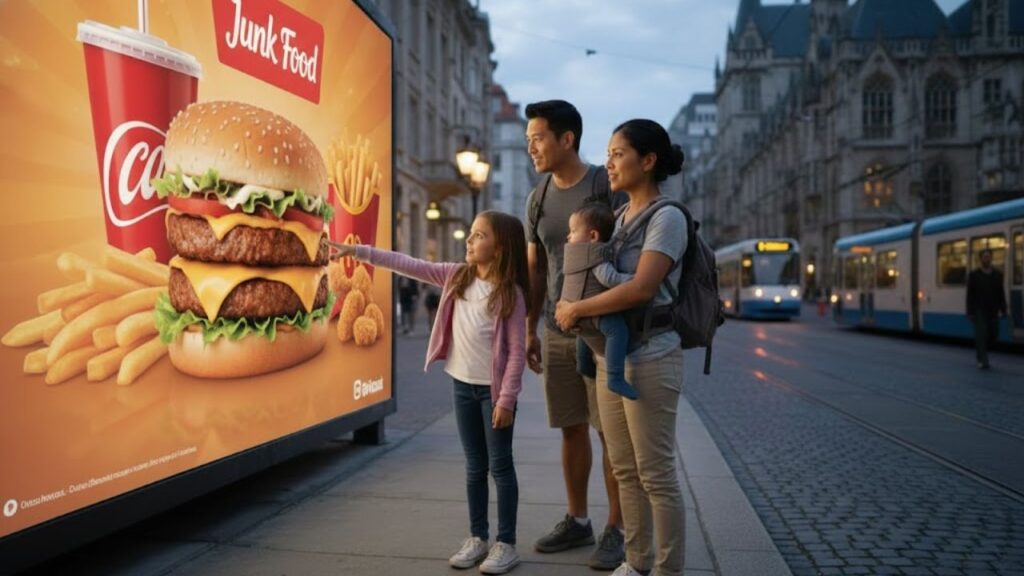
Walk through any city with a child and you can almost follow their gaze from one ad to the next. Oversized burgers on one billboard, bright cereal boxes on another, cartoon mascots offering “fun” with a simple QR scan.
By their teenage years, children have been exposed to tens of thousands of food advertisements, most promoting salty, sugary, or fatty products. That outcome is intentional.
These campaigns are built to bypass logic and trigger desire. Bold colours, catchy music, influencer tie-ins. Children’s brains are still developing, learning what everyday food looks like — and advertisers are there early, shaping that picture.
What Different Countries Are Doing About Junk Food Ads
In the UK, restrictions on junk food advertising during children’s television were introduced years ago. Broader rules targeting HFSS (high fat, salt, sugar) advertising before 9pm are now moving slowly through political debate and industry pressure.
Quebec took action much earlier. Since the late 1970s, junk food advertising aimed at children has been restricted. Research there showed lower fast-food consumption and a slower rise in childhood obesity compared to nearby regions.
Contrast that with the US, where sports broadcasts are saturated with pizza, wings, and soda commercials. Studies link this constant exposure to stronger “pester power” at home and higher calorie intake among young viewers.
The evidence is not flawless, but the patterns are difficult to dismiss.
The Nanny State Debate and Where Critics Push Back
This is where opposition sharpens. If the government can restrict ads for crisps, critics ask, where does it stop? Ice cream? Sweetened coffee? Dessert menus?
Public health experts respond that the focus is on products, not personal choices. They point to overburdened health systems and the long-term costs of treating conditions like diabetes and heart disease that often begin with childhood habits.
The core argument is simple: children are not just smaller adults. They are more easily influenced and less able to recognise persuasion. That’s why food advertising to kids is increasingly compared to how gambling or alcohol promotion is handled around minors.
 Goodbye Hair Dye for Grey Hair: The Conditioner Add-In That Gradually Restores Natural Colour
The tension remains unresolved. Are these rules creating fairness, or over-sanitising everyday life?
Parents, Pressure, and the Limits of Individual Choice
Picture a typical evening meal. You’re exhausted after work, trying to encourage vegetables, while your child has been subtly sold fries all day through screens, billboards, and apps.
Some families use practical “ad buffers.” These include reducing live TV, choosing streaming services with fewer commercials, muting ads, and openly explaining marketing tricks — the slow-motion food shots, artificial urgency, and endlessly cheerful kids.
It’s not a perfect solution. But it helps turn children from passive viewers into slightly more critical audiences.
Many parents quietly admit they’re tired of competing with billion-dollar advertising budgets. They don’t want strict food rules imposed by the state, yet they don’t want every commute or screen to feel like a marketing battlefield.
Why Food Regulation Feels More Personal Than Other Rules
The term “nanny state” carries weight because it suggests condescension. Still, most people accept regulations like seatbelts, smoke-free spaces, and age limits on alcohol.
Food feels different. It’s deeply tied to culture, comfort, and class. Questions of judgment emerge quickly. Who is blamed — the parent grabbing a quick meal after a long shift, or the company targeting their child relentlessly?
Public health advocates often clarify that these policies are not about eliminating treats. They’re about lowering the noise level.
A public health lawyer involved in European advertising rules summed it up simply: advertising doesn’t just sell products, it sells norms. Restricting junk food ads for children isn’t about banning food — it’s about refusing to turn childhood into a constant sales pitch.
What Policies Tend to Work Best
The most effective approaches usually combine regulation with support, including:
- Restricting junk food ads in spaces primarily aimed at children
- Providing schools with genuine food education, not brand-led materials
- Helping small businesses offer healthier options sustainably
- Funding campaigns that make home cooking feel achievable
- Tracking outcomes transparently so changes are visible
The biggest risk of overreach often lies not in visible laws, but in unchecked corporate influence presented as personal choice.
Finding the Balance Between Freedom and Fairness
At its core, this debate isn’t really about burgers or vegetables. It’s about power and influence. Who gets to shape children’s desires — families, governments, or corporations with advertising budgets larger than some health departments?
Limiting junk food ads won’t instantly change eating habits or empty fast-food queues. Children still learn most from what they see at home and in daily life. But when the environment constantly promotes treats, personal responsibility can start to feel stacked against families.
Some see ad restrictions as the first step toward being told what to buy. Others view them as a reasonable adjustment — like turning down an overwhelming speaker so everyone can think clearly.
Perhaps the real question isn’t whether this is a nanny state issue. It’s this: in a world where persuasion never switches off, what does real choice for children actually mean?

Key Takeaways
- How ad restrictions work: They focus on HFSS products in child-focused media and time slots, reshaping kids’ media exposure
- What parents can still control: Ad-free viewing, conversations about marketing, and simple household food norms
- Why the debate persists: It sits at the intersection of child protection, corporate freedom, and fears of government overreach
