
On a wet Tuesday morning in Boston, a long line wraps around a public building. Parents clutch folders filled with SAT results and tax documents. Students in worn hoodies stand beside well-dressed executives, all waiting to speak on the same controversial proposal: reserving elite university seats for the top 1 percent of taxpayers.
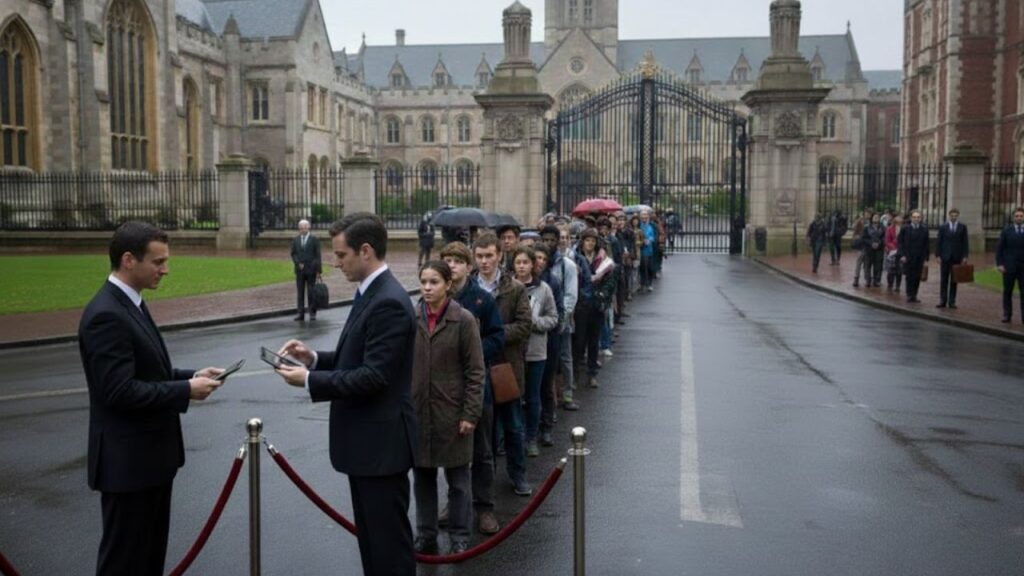
Inside the room, a grocery store worker quietly shares her hope that her daughter might attend Harvard. A few rows back, a hedge fund manager scrolls through projected tuition figures on his phone. Their lives rarely overlap, yet today they meet at the center of a single question about access to power.
No one pretends the discussion is impartial.

When Prestigious Campuses Start to Feel Exclusive
A stroll through an Ivy League campus can feel welcoming. Tour groups wander freely, teens pose for photos, and the setting suggests openness. For a moment, it seems effort alone is enough.

That illusion fades when the numbers appear.
The proposal, supported by wealthy donors and a small group of lawmakers, would formalize what critics argue has existed quietly for years: preferential access for the richest families. A fixed share of seats would be set aside for those who contribute the most in taxes. The wording sounds procedural. The consequences would be deeply personal.
At the hearing, a 17-year-old student named Maya approaches the microphone. Her father drives for Uber. Her mother cleans offices overnight. She ranks in the top 2 percent of her class, leads the debate team, and is the first in her family to apply to college.
She recalls opening her Harvard portal and seeing “Deferred.” Her voice steadies as she adds, “If this passes, I won’t just be measured against grades. I’ll be measured against incomes.”
An older man in a navy blazer dismisses her concern. Later, he tells reporters that high taxpayers deserve greater influence. “I support these institutions,” he says. “My children should benefit.” Nearby, someone mutters that others are being reduced to marketing material.
The Case For and Against Reserving Seats
Supporters argue that elite universities already depend heavily on wealthy families. They cite large donations, legacy admissions, and full-tuition payments that help fund financial aid. From this view, setting aside seats for top taxpayers merely acknowledges an existing financial structure.
Opponents respond with a single word: segregation. Not defined by law or race, but by income level. They warn that embedding privilege into admissions policy deepens the gap between students prepared to lead and those expected to accept limited options.
Few believe that a student from a low-wage household begins with the same advantages as a billionaire’s child. The real issue is whether that imbalance should become official policy.
How the 1 Percent Debate Is Rewriting the College Dream
Behind closed doors, universities are already preparing. One provost describes late-night strategy meetings with spreadsheets and legal counsel. If the law changes, institutions must decide how many seats could be protected for high taxpayers without damaging their public image.
Some administrators have suggested a softer approach: not strict quotas, but “preferred consideration” above certain income thresholds. The language sounds mild. Admissions staff imagine trying to explain this new barrier to students at underfunded high schools.
A junior staff member says it feels like they are pricing out curiosity itself.
Online, the argument has intensified. Viral posts contrast inclusive marketing slogans with headlines about the proposal. Teachers, first-generation graduates, and even affluent parents express unease.
A software engineer from Seattle shares his story of growing up on food stamps, attending an elite college, and now paying high taxes. He writes that his children should not skip the line simply because he succeeded, since that success depended on a system that was not closed to him.
It is a familiar moment: realizing that a system once trusted may have been easier to enter than to repeat.
 Goodbye Hair Dye for Grey Hair: The Conditioner Add-In That Gradually Restores Natural Colour
Financial Stability Versus Fair Access
Proponents insist the plan would stabilize university finances and ease pressure on middle-class taxpayers. Rewarding wealthy contributors, they argue, encourages continued funding for scholarships and research. Some frame it as a national incentive to keep high earners from moving wealth abroad.
Critics point to different data. A 2023 study found that at many top colleges, students from the top 1 percent already outnumber those from the entire bottom half of the income scale. Formal preferences, they say, would turn an uneven field into a sheer drop.
The core question remains simple: is higher education a public ladder or a private reward?
What Families Outside the 1 Percent Can Do
For most families, the debate can feel overwhelming. While policies are argued on television, students still have assignments due. Admissions counselors recommend broadening college lists early, combining well-known schools with lesser-known institutions that offer strong programs and generous aid.
Many parents now track more than rankings. They compare graduation rates, average student debt, and first-generation enrollment. If elite campuses shift toward a 1 percent model, regional universities, honors colleges, and public institutions may drive future mobility.
Families are also having more direct conversations about money. Students are asking which opportunities exist, for whom, and at what cost. Counselors say the healthiest talks focus on realistic contributions and clear debt limits.
One common mistake is treating elite admission as the sole measure of success. That pressure can weigh heavily on teens watching wealthier peers purchase advantages. A Bronx counselor reminds students that their worth is not defined by one email.
Those who emerge intact often choose fit, mental health, and financial security over prestige.
Looking Beyond Headlines to Real Change
- Track policy developments through local education reporters and state higher-education boards.
- Ask direct questions about who is admitted and who graduates.
- Protect your child’s confidence by separating potential from policy debates.
Beyond the Top 1 Percent: Shaping the Future
Elite universities do more than grant degrees. They influence lawmakers, executives, and national narratives. Reserving more access for top taxpayers reshapes who occupies those roles.
Some accept this as an efficient return for those supporting the tax base. Others hear an old argument in new language: privilege justified as practicality. Many national challenges trace back to decisions made in rooms lacking diversity of experience.
Outside the spotlight, alternatives are emerging. Civic colleges, apprenticeship-degree programs, and community college partnerships promise jobs alongside credentials. These paths may gain importance if traditional gates narrow further.
Parents, students, and alumni are questioning whether to continue investing in prestige systems drifting toward exclusivity or to support models aligned with broader opportunity.
The outcome will not hinge on one bill. It will reflect millions of individual choices: where families apply, donate, vote, and advocate.
The proposal to reserve elite university seats for the top 1 percent has exposed something deeply personal. It touches parental fears, student hopes, and a collective concern that the future is being priced beyond reach.
How that discomfort is handled may reveal more about national values than any inscription carved above a campus gate.

Key Takeaways at a Glance
- Who benefits: The proposal would reserve seats for the top 1 percent of taxpayers, formalizing existing advantages.
- What to watch: Early signals will appear in state policies, university finances, and admissions data.
- How to respond: Expanding college options, discussing finances honestly, and focusing on outcomes over prestige.
