A 20-second plank burns approximately 0.3 to 0.8 calories, depending on body weight and form 12. While this amount is minimal, the real value of the plank lies in building core strength, improving posture, and supporting long-term metabolic health through muscle development. If your goal is fat loss or significant calorie burn, planks should be combined with cardio and full-body strength training rather than relied upon alone. Proper form and progressive duration are key to maximizing benefits without injury.
About the 20-Second Plank Exercise
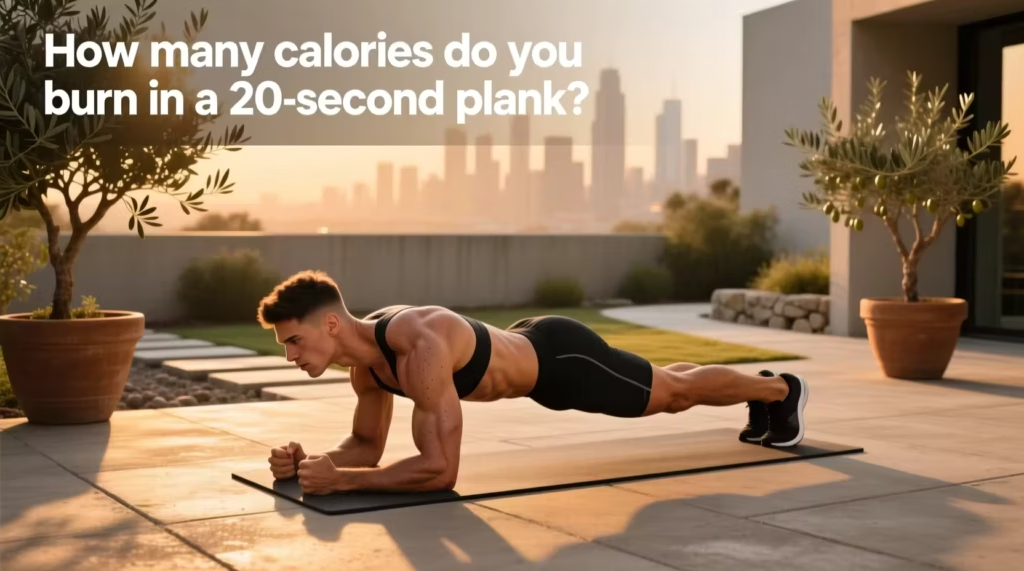
The 20-second plank is a short-duration isometric exercise that involves holding a push-up-like position while engaging the core muscles. It’s often used as an entry-level challenge for beginners learning proper body alignment and muscular endurance. ✅ This brief hold allows individuals to focus on technique—keeping the body in a straight line from head to heels, elbows under shoulders, and core tight—without overwhelming fatigue.
Commonly included in warm-ups, circuit training, or core-focused workouts, the 20-second plank serves more as a foundational movement than a cardiovascular workout. 🏋️♀️ Its primary function is neuromuscular activation: teaching the body to stabilize itself using the deep abdominal muscles, including the transversus abdominis, rectus abdominis, and obliques, along with supporting muscles in the back, shoulders, and glutes.
Because it requires no equipment and can be done almost anywhere, the 20-second plank is accessible to most fitness levels. However, its brevity means it contributes very little to daily caloric expenditure—making it unsuitable as a standalone fat-loss tool but valuable as part of a broader strength and stability program.
Why the 20-Second Plank Is Gaining Popularity
Despite burning only a fraction of a calorie, the 20-second plank has become a staple in home workouts and fitness challenges due to its simplicity and low barrier to entry. 🌐 With the rise of time-efficient exercise routines like HIIT and micro-workouts, people are looking for movements that deliver functional benefits in minimal time.
This short plank duration appeals to those new to fitness who may struggle with longer holds. It also fits seamlessly into busy schedules—requiring less than half a minute—and supports consistency, which is critical for long-term habit formation. Additionally, social media fitness trends often promote plank challenges (e.g., “hold a plank for 20 seconds every hour”), reinforcing its visibility and perceived effectiveness.
Moreover, users report improved posture, reduced lower back discomfort, and greater confidence in other physical activities after incorporating regular planks—even brief ones—into their routines. These experiential benefits contribute to its sustained popularity beyond measurable calorie output.
Approaches and Differences
While the standard forearm plank is most common, several variations influence intensity and muscle engagement—even within a 20-second window.
- Forearm Plank: The basic version. Low impact, ideal for beginners. Focuses on core stabilization. ⚙️
- High Plank (Straight-Arm): Performed on hands instead of forearms. Slightly increases shoulder and upper body demand.
- Side Plank (20 seconds per side): Targets obliques more directly. Can increase perceived difficulty despite same duration.
- Dynamic Plank Variations: Includes small movements like shoulder taps or knee-to-elbow touches. Increases heart rate slightly and engages more muscle groups. ✨
- Elevated Plank: Feet or hands on a bench or step. Alters leverage, increasing core or upper body load depending on setup.
Each approach offers different advantages:
| Plank Type | Advantages | Potential Challenges |
|---|---|---|
| Forearm Plank | Beginner-friendly, promotes proper alignment | Limited calorie burn; easy to lose form over time |
| High Plank | Engages more upper body; transitions well into push-ups | Higher wrist pressure; harder to maintain neutral spine |
| Side Plank | Better oblique activation; improves lateral stability | Less total muscle engagement; balance-dependent |
| Dynamic Plank | Slightly higher calorie burn; improves coordination | Risk of compromised form if movements are rushed |
| Elevated Plank | Adjustable intensity; targets specific areas | Requires equipment; risk of instability |
Key Features and Specifications to Evaluate
When assessing the effectiveness of a 20-second plank, consider these measurable and observable criteria:
- Form Quality: A straight line from head to heels, neutral neck, engaged core. Poor form reduces muscle activation and increases injury risk 1.
- Muscle Engagement: You should feel tension in the abdomen, glutes, and shoulders—not strain in the lower back or wrists.
- Breathing Pattern: Steady, controlled breaths indicate sustainable effort. Holding your breath suggests excessive tension.
- Progression Readiness: If 20 seconds feels easy, increasing duration or adding variation is appropriate.
- Caloric Expenditure Estimate: Use body weight to estimate burn rate (see table below).
| Body Weight | Calories Burned per Minute | Calories in 20 Seconds |
|---|---|---|
| 110 lbs (50 kg) | 2 | ~0.3 |
| 150 lbs (68 kg) | 3–4 | ~0.5–0.7 |
| 175 lbs (80 kg) | 4–5 | ~0.7–0.8 |
Note: Values are estimates and may vary based on muscle mass and effort level 2.
Pros and Cons
The 20-second plank offers distinct advantages and limitations depending on fitness goals.
✅ Pros
- Builds foundational core strength and stability
- Improves posture and spinal alignment
- No equipment or space required
- Low injury risk when performed correctly
- Supports performance in other exercises
❌ Cons
- Burns very few calories due to short duration and static nature
- Not sufficient for cardiovascular conditioning
- May encourage poor form if done repetitively without feedback
- Limited muscle hypertrophy stimulus compared to dynamic resistance training
💡 Best suited for: Beginners, recovery days, warm-ups, or as part of a circuit. Less effective for: Those seeking rapid fat loss or muscle growth as a sole exercise.
How to Choose the Right Plank Approach
Selecting the optimal plank strategy depends on your current fitness level and goals. Follow this step-by-step guide:
- Assess Your Current Ability: Can you hold a 20-second plank with proper form? If not, start with shorter intervals (10 seconds) and build gradually 3.
- Define Your Goal: For core stability → standard plank. For added challenge → dynamic or elevated variations.
- Prioritize Form Over Duration: A perfectly held 20 seconds is better than a shaky 60 seconds.
- Incorporate Variation Gradually: Add one new variation per week to avoid overload.
- Combine With Other Exercises: Pair planks with squats, lunges, or jumping jacks for balanced workouts 4.
🚫 Avoid these pitfalls:
- Arching or sagging the lower back
- Holding your breath
- Overextending the neck
- Using planks as your only workout
Insights & Cost Analysis
The 20-second plank requires no financial investment—it’s free and can be done at home, in a hotel room, or outdoors. No special gear is needed, though a yoga mat may improve comfort on hard surfaces (typically $10–$30). Compared to gym memberships ($30–$100/month) or fitness classes, planks offer exceptional cost-efficiency for core development.
However, because they don’t significantly elevate heart rate or burn calories, relying solely on planks will not produce noticeable changes in body composition. For meaningful results, combine them with other low-cost, high-impact activities like walking, bodyweight circuits, or resistance bands.
Better Solutions & Competitor Analysis
For individuals aiming to increase calorie burn or overall fitness, planks should be integrated into broader routines. Below are alternative or complementary exercises:
| Exercise | Benefits Over Plank | Potential Drawbacks |
|---|---|---|
| Mountain Climbers | Higher calorie burn, cardio + core engagement | More joint stress; harder on wrists |
| Push-Ups | Dynamically builds upper body and core strength | Requires more strength; form-sensitive |
| Jump Squats | Elevates heart rate quickly; builds power | High impact; not suitable for all joints |
| Plank with Shoulder Taps | Adds instability, increases calorie burn slightly | Balance required; risk of wobbling |
Customer Feedback Synthesis
User experiences with the 20-second plank are generally positive, especially among beginners and those rehabbing from inactivity.
🌟 Frequent Praise:
- “Easy to fit into my morning routine”
- “Helped me feel more stable during other workouts”
- “Improved my posture at my desk job”
⚠️ Common Complaints:
- “Didn’t see any weight loss even after weeks”
- “My wrists hurt during high planks”
- “Hard to tell if I’m doing it right without a mirror or trainer”
Maintenance, Safety & Legal Considerations
To maintain progress and prevent injury:
- Practice consistently—2–3 times per week is sufficient for beginners.
- Listen to your body: stop if you feel sharp pain or numbness.
- Modify as needed: drop to knees if form breaks down.
- Ensure adequate floor space and non-slip surface.
No legal regulations govern plank performance. Always consult public space rules if exercising outdoors. When following online tutorials, verify credentials of fitness professionals, though no certification is required to share general exercise advice.
Conclusion
If you need to build core stability, improve posture, or establish a consistent movement habit, the 20-second plank is a practical and accessible choice. ⭐ However, if your primary goal is burning calories or losing fat, it should be part of a varied routine that includes aerobic and resistance training. The true benefit of planking lies in long-term musculoskeletal health and enhanced performance across other physical activities—not in immediate energy expenditure.
Frequently Asked Questions
- How many calories does a 20-second plank burn? Approximately 0.3 to 0.8 calories, depending on body weight and muscle mass.
- Is a 20-second plank good for beginners? Yes, it’s an excellent starting point to learn proper form and build initial core endurance.
- Can planking help reduce belly fat? Not directly. While planks strengthen abdominal muscles, fat loss requires a calorie deficit achieved through diet and full-body exercise.
- What happens if I do a 20-second plank every day? You may improve core strength and posture, but for continued progress, increase duration or add variation over time.
- How can I make a 20-second plank more challenging? Try adding shoulder taps, leg lifts, or perform it on an unstable surface like a foam pad.