
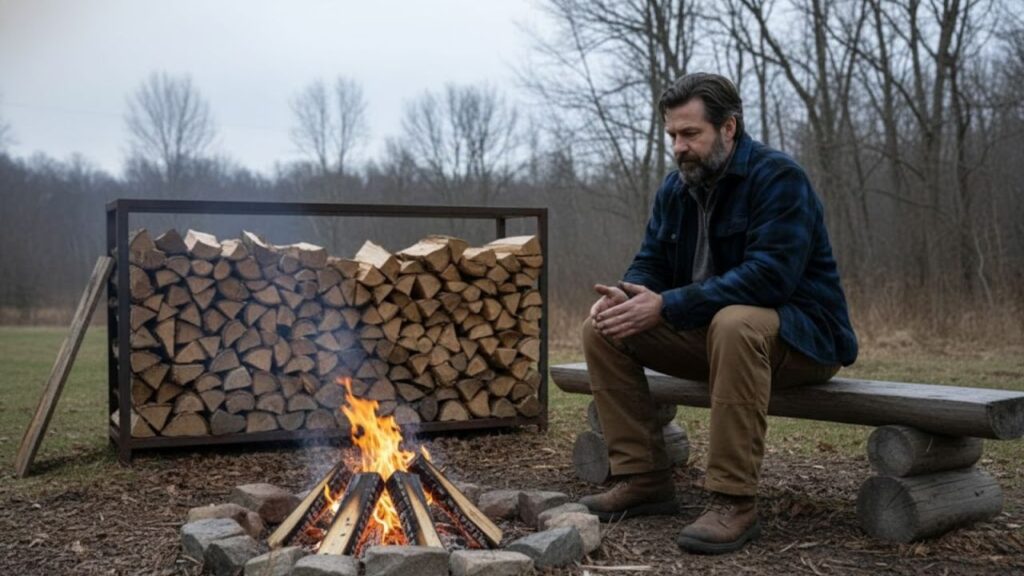
The first cold snap showed up earlier than expected, the kind that bites your nose the moment the back door swings open. They walked out to the woodpile with quiet confidence, jackets zipped, already imagining the warm crackle of a steady fire. Months of planning had gone into this: ordering early, stacking carefully, covering the pile. The hard work felt finished.
Instead of catching cleanly, they hissed and smoked. The glass darkened within minutes. Flames flared briefly, then collapsed, leaving behind half-burned wood and mounting frustration.
No one had warned them that you can do everything “right” and still end up with firewood that won’t burn. That helpless realization arrives quietly: the issue isn’t the lighter, the kindling, or the stove. The problem is the wood itself.

They Thought They Were Prepared — The Wood Disagreed
The story begins like countless others. A bulk delivery at the start of summer. A neighbor’s assurance. A casual promise that it would all be “dry by November.” The stack looked solid and reassuring, a neat wall of logs at the edge of the garden, a tarp stretched neatly across the top.

From a distance, everything suggested readiness.
Up close, the warnings were already there: ends that stayed pale, bark clinging tightly, a damp scent after rain. They simply didn’t know how to interpret those signs. No one had ever clearly explained what “seasoned wood” actually means, beyond a vague idea of waiting.
The Fire That Never Quite Took Hold
The real test came on a stubborn Saturday afternoon, fueled by determination after several failed attempts. More kindling was added. Cardboard followed. Even a store-bought fire starter promised an easy win. Each time, the result was identical: a hopeful blaze for a few minutes, then the same disappointing fade.
Smoke thickened, curling with a slightly sour smell. The chimney struggled to draw. The room took on the scent of a damp forest campfire. Every obvious check came back clean: the stove, the air vents, the flue.
Why “Dry-Looking” Wood Still Fails
What no one had explained is that firewood has far less to do with appearance and far more to do with time, airflow, and wood species. A split log can look ready while still holding too much moisture deep inside. When burned, much of its energy goes into evaporating water instead of heating your home.
That’s when the warning signs appear: the hissing sound, blackened glass, and sticky creosote coating the flue. Months of storage reveal an uncomfortable truth. Wood stacked on the ground and fully wrapped hasn’t been drying at all. It has been trapped and sweating.
- Vegetable gardens where forks are placed in soil to deter animals without chemicals
- Common phrases self-centered people use in daily conversations
- Practical frugal living tips for staying comfortable on less money
- Why more retirees are returning to work to cover rising costs
- A look inside the life of the world’s wealthiest king and his vast assets
- A simple homemade solution that revives old wooden furniture
- The fertile “black gold” soil that reshaped global agriculture
- A DIY hot water system producing thousands of liters daily without fuel
Seasoning wood isn’t about waiting — it’s about letting sun and wind do their quiet work.
How to Store Firewood So It Burns When You Need It
The most important change is surprisingly simple: give the wood air. Firewood must be raised off the ground on pallets or rails, with space between logs so wind can move freely. Not stacked like bricks, but loosely, allowing air to circulate.
Only the top of the pile should be covered. A solid roof, secured tarp, or sheet of metal works well. The sides should remain open. Sun, breeze, and dry cold all help pull moisture from the wood.
Another commonly skipped step is splitting large rounds as soon as they arrive. Thick logs dry from the inside out, and without splitting, that process can take years.
Good Intentions, Bad Results
Many people repeat what they see around them: a massive pile beside the house, wrapped tightly all the way to the ground, logs packed together for stability. The intention is sensible.
The outcome is not.
 Goodbye Hair Dye for Grey Hair: The Conditioner Add-In That Gradually Restores Natural Colour
Moisture rises from the soil, becomes trapped under the cover, and has nowhere to escape. Bark grows mold, insects move in, and the core of each log stays persistently wet.
The solution isn’t constant maintenance. It’s smarter design from the beginning. Proper airflow, thoughtful orientation, and a clear separation between long-term storage and the smaller amount brought indoors.
“I Didn’t Know I Was Buying Time”
One man described his first winter with poor firewood in a single sentence:
“I thought buying wood was simple — pay, stack, burn. I didn’t realize I was really buying time.”
He wasn’t the only one.
Three simple checks can prevent the same mistake:
- Use a moisture meter and aim for below 20% before burning
- Check the ends: dry wood cracks, loosens its bark, and sounds hollow when struck
- Rotate your supply so this winter’s wood was delivered last year
Experienced wood burners develop a steady rhythm: one pile drying, one ready, one in use. It may look excessive, but it’s simply how the seasons stay in balance.
Firewood as a Lesson in Patience and Rhythm
Behind the frustration of unusable firewood lies a quieter truth. Heating with wood ties you to time in a way modern systems never do. You pay now for comfort you’ll enjoy months later.
That delay can be irritating. It can also be grounding. You begin to notice sunny September days, the direction of the wind, and how long moisture lingers after rain. Planning six months ahead becomes second nature.
Many people never talk about their first failed season. They feel embarrassed. They blame the stove, the supplier, or themselves. What they’re really encountering is a material with unforgiving but simple rules: moisture must leave, air must move, and time must be respected.
Once that understanding settles in, frustration gives way to routine. Checking the pile in late summer. Stacking logs with family. Letting a few rest near the stove before use.
Much like baking bread or growing vegetables, you learn to cultivate dry wood. Different scale, same patience.
Some readers will recognize the smoky glass and stubborn logs. Others will remember the year they learned the hard way. What connects these experiences is a shared realization: no one ever explained it clearly.
Perhaps that’s the quiet value of failed fires. They push us to ask questions, observe more closely, and listen to those who’ve done it for years. And they leave behind a simple truth: some comforts can’t be rushed — and a good flame is one of them.

- Airflow over appearance: Raised, open-sided stacks dry faster and burn cleaner
- Seasoning needs time: Most wood requires 12–24 months to be truly ready
- Simple checks matter: Moisture meters and rotation prevent wasted winters
