A cardboard box on the kitchen floor looks boring to you.
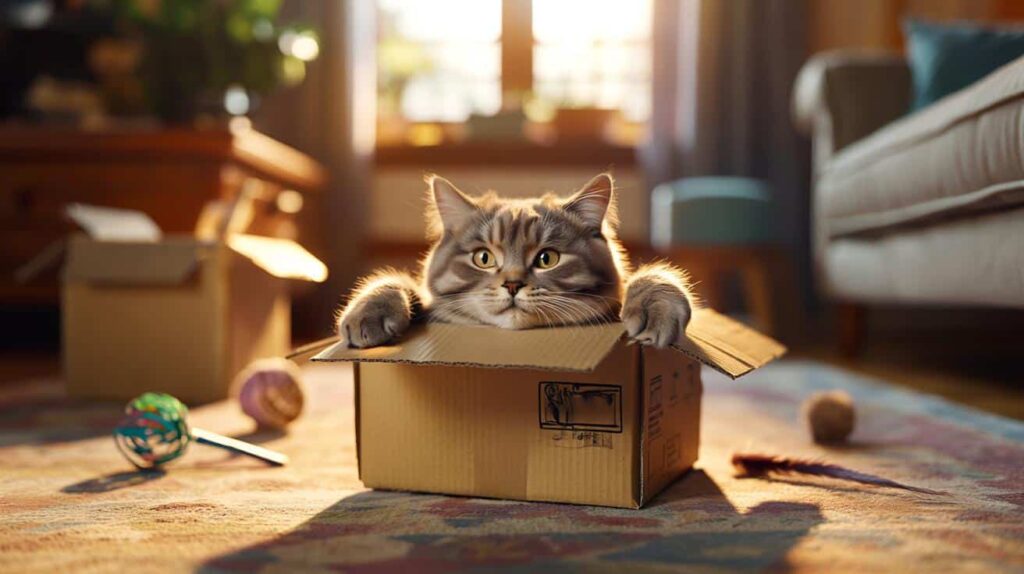
For your cat, it is something very different.
That plain, slightly crushed parcel you were about to throw out can quietly become the most valuable “furniture” in your home for your cat. Behind this simple object sit instincts, biology and behaviour that explain why so many felines squeeze themselves into spaces that look hilariously too small for their bodies.

Why cats feel drawn to boxes
To understand the magic of a small box, you need to think like a prey animal and a predator at the same time. Cats occupy both roles in nature. They hunt, but they are also hunted.

In the wild, hiding spots keep cats alive. Hollow logs, rock crevices and dense bushes all give them cover, letting them watch without being easily seen. A cardboard box is the indoor version of that shelter.
A box offers a tight, enclosed refuge where a cat feels less exposed and more in control of its surroundings.
From inside a box, your cat can monitor the room, doors and people, with most of its body shielded from view. That sense of cover lowers vigilance, which in turn lowers stress. It is one reason cats often settle faster in a new home if they have a box or two to retreat into.
The warmth factor: cardboard as a cosy shell
Cardboard is not just cheap; it is also a decent insulator. Air gets trapped inside the layers of paper, slowing down heat loss. For a cat, whose body temperature is naturally higher than ours, retaining warmth feels comfortable and safe.
Many owners notice that cats gravitate towards radiators, sunny windowsills and laptops. A small box works a bit like a simple sleeping bag made of cardboard. The smaller the box, the better the heat builds up around the cat’s body.
For a resting cat, a snug box can feel like a heated den, wrapping warmth tightly around muscles and joints.
Comfort, privacy and the “do not disturb” zone
Pets share our homes, but they rarely control when lights, noise or activity start and stop. A box lets a cat draw a clear line: this little cube is off-limits.
Inside that space, the animal can nap without being constantly approached by children or other pets. It can blink slowly, stretch, and groom in peace. That privacy has real value for an animal that evolved to keep one eye open in case of danger.
Many cats will even choose a slightly tatty box over a soft, expensive bed. The bed is open and exposed; the box is partially enclosed and feels safer. Owners of busy households often report that boxes reduce tension between cats and curious toddlers, because they create a visible “cat-only” zone.
The scratching bonus
Cardboard also happens to be very satisfying to scratch. The layered structure gives resistance but still tears easily under claw pressure. That helps a cat shed the dull outer sheath of its claws and keep them sharp.
- Vertical scratching posts work the shoulder and back muscles.
- Horizontal cardboard offers a different angle and texture.
- Scratching on a box also leaves scent marks from glands in the paws.
When your cat digs into the sides or edges of a box, it is doing necessary maintenance, not being destructive for the sake of it.
Boxes as playgrounds and training grounds
Rest is only half the story. A box can instantly turn into a stage for intense feline drama. Jumping in and out, stalking from inside, and ambushing toys from the flaps all mimic hunting behaviour.
Short, high-energy bursts of play from a box keep the cat agile and mentally sharp. Pouncing from cover is exactly how a small predator would target a mouse at the edge of a hedge. Indoors, the box stands in for that hedge.
A simple box can become a fortress, a tunnel, a lookout post or a hunting blind, depending on how the cat chooses to use it.
Some behaviourists suggest placing toys near or partially inside the box: crinkle balls, feather wands or treats hidden under paper. That encourages the cat to combine stalking, problem-solving and rapid movement in one compact activity zone.

Imagination and boredom relief
Indoor cats can easily fall into a routine of sleeping, eating and waiting. Boredom shows up as over-grooming, vocalising, or even aggression. A small box offers a new “story” without you spending more money on cat gear.
Rotate boxes from different deliveries, change their positions, and occasionally cut new entrance holes. Each variation gives the cat a slightly different puzzle to work out: how to get in, where to watch from, which direction to leap.
Territory, scent and the sense of ownership
Cats experience space very differently from humans. They build a mental map of safe spots, vantage points and escape routes. Within that map, a box can become a core piece of territory.
Through scratching, rubbing cheeks and simply lying inside, the cat leaves pheromones on the cardboard. These scent marks are invisible to you, but they tell the cat: this place is familiar and under my control.
When a cat settles into “its” box, it is exercising the right to occupy a personal, clearly defined patch of territory.
This sense of ownership can reduce tension in multi-cat homes. Each cat may choose a different box, chair or windowsill. Having distinct safe zones reduces direct competition and stand-offs.
Mental health benefits backed by science
Several studies on feline stress show that hiding places matter. Shelter cats given boxes tend to adapt faster, groom more normally and show fewer signs of anxiety such as crouching in corners or refusing food.
A confined, predictable space gives the nervous system a chance to reset. In a box, unfamiliar voices sound a bit further away. Movement in the room is partially blocked from view. That slight reduction in sensory input can have a calming effect.
Veterinary clinics sometimes use boxes or covered carriers as “safe pods” during hospitalisation. Cats that can hide often appear less frantic during examinations and recover better from stressful procedures.
| Box feature | Benefit for the cat |
|---|---|
| Enclosed sides | Creates a secure hiding place and reduces visual stress |
| Small footprint | Concentrates body heat and supports snug resting |
| Cardboard texture | Offers satisfying scratching and scent-marking surface |
| Moveable object | Can be relocated to shape new play and rest areas |
How to choose and use boxes safely
Not every box is ideal. While cats often climb into anything, owners can tweak a few details to make boxes safer and more comfortable.
- Pick a box that lets the cat curl up but still turn around.
- Remove all tape, staples and loose plastic that could be chewed or scratched off.
- Avoid boxes that smell strongly of chemicals or food residue.
- Cut an extra entrance hole for older or less agile cats.
- Replace boxes when they become damp or heavily shredded.
If you live with several cats, offer more than one box and place them in different rooms. Position at least one in a quiet corner, away from the litter tray and feeding area, so the animal does not have to cross busy paths to reach its refuge.
When boxes might not be enough
A box supports comfort and stress relief, but it is not a cure for underlying medical or behavioural issues. If your cat hides constantly, avoids contact, or stops eating, that signals a problem that needs veterinary attention.
Boxes also need to be used with care around very young children. Teach kids not to poke or lift the box while the cat is inside. A startled animal may scratch in self-defence, which then damages trust.
Extra insights: reading your cat’s box behaviour
The way your cat uses a box can tell you quite a lot. A cat that naps loosely on top of the box, rather than inside, probably feels relaxed in the household. One that spends long periods deep inside, ears flattened, might be coping with tension, noise or change.
Notice whether your cat chooses higher boxes placed on chairs or low ones on the floor. Elevated boxes suit confident, curious cats who like to watch. Ground-level hideouts appeal more to shy or elderly animals who want quick access and less climbing.
You can even turn box time into a gentle training tool. Place a box near the area where you clip nails, brush fur or check ears. Reward the cat with treats when it calmly enters the box after these sessions. Over time, the animal may link the box with feeling safe after mildly stressful events.
Finally, think of a small cardboard box as cheap, flexible environmental enrichment. Added alongside scratching posts, climbing shelves and window views, it supports both body and mind. Cats ask for little in design terms: just a sheltered edge, a place to hide, and a space that smells decidedly like them.