
The first thing that stands out is not the gold, the marble, or even the guards in flawless uniforms. It is the silence. A heavy, padded quiet that fills the endless hallways of one of his many palaces. Inside, the air carries a faint mix of polished wood, perfume, and authority. Outside, heat hangs over the city like a thick curtain. Within these walls, a king with more homes than most people own clothes moves through spaces that barely intersect with the daily lives of his citizens.
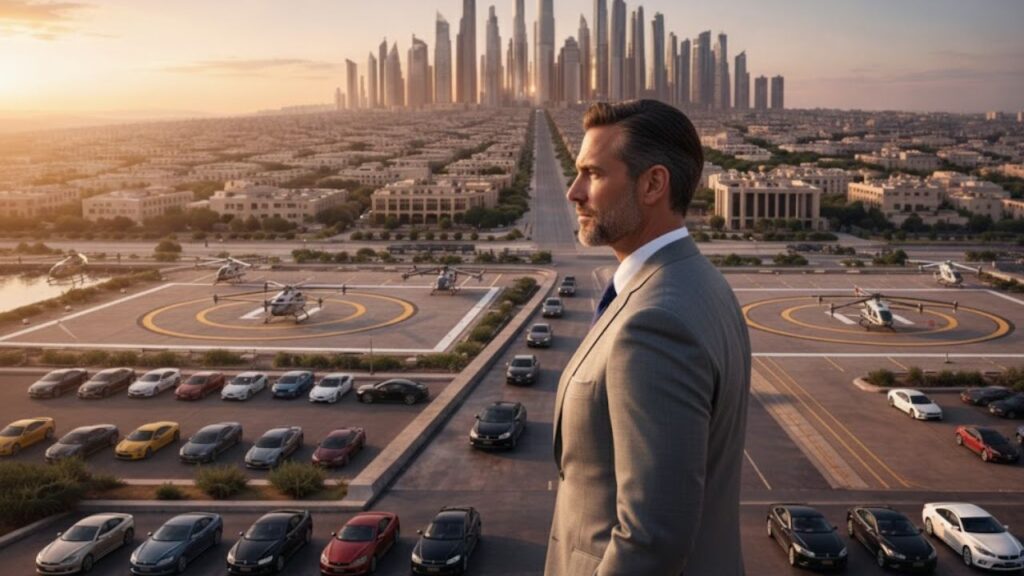
He owns 17,000 homes, 38 private jets, 300 cars, and 52 luxury yachts. You read the numbers once, then again, because the mind struggles to accept the scale. Somewhere between the third and fourth zero, the figures stop feeling real.
But this man is real. And the size of his fortune says something stark about the world we live in.

The monarch whose wealth defies measurement
On paper, he is a king. In practice, he functions like a one-person economic system. The world’s richest monarch presides over a fortune built from oil revenues, land ownership, corporate stakes, and centuries of inherited power. His wealth is not a simple figure on a ranking list. It exists as a vast web of palaces, penthouses, private islands, aircraft hangars, and marinas spread quietly across the globe.

Seventeen thousand homes is not a rounding error. It is the equivalent of housing for a mid-sized European town, reserved for one royal family. Many properties sit empty, climate-controlled shells glowing with chandeliers no one sees. Others are used briefly, serving as overnight stops between flights aboard one of the 38 private jets.
To grasp the scale, imagine a private airfield at sunset. A row of jets rests on the tarmac, their white exteriors spotless, windows darkened. One aircraft is a flying palace with gold accents and a prayer room. Another resembles a luxury hotel, complete with a private bedroom and a marble bathroom. Fuel trucks move quietly between wings while crews work in shifts, ensuring any jet can depart within an hour. Somewhere else, far away, a village struggles with an understaffed clinic. The contrast is not abstract. It is visible from the sky.
This level of wealth does not come from a successful business or smart investing. It comes from a system where the boundary between state resources and royal ownership is blurred or nonexistent. Oil and gas income flows through royal funds. Land that would be public elsewhere becomes part of the royal estate. Stakes in national companies are held through complex structures that ultimately lead back to the same family.
That is the reality: power that never has to negotiate eventually owns everything. While public debate often focuses on billionaire entrepreneurs, this king’s fortune quietly exceeds them all, protected by tradition, protocol, and an army of legal experts. He is not only wealthy, but effectively unreachable.
What 17,000 homes, 300 cars, and 52 yachts really look like
Picture a digital map dotted with thousands of pins. Each marker represents a property tied to the royal portfolio: coastal villas, luxury apartments in global capitals, sprawling palaces, secluded mountain retreats, and entire compounds in desert cities. Zoom out, and the pins cluster around places like London, Paris, Geneva, Dubai, New York, and remote private islands few people can name.
Every home has its own staff and security. Gardeners maintain lawns no guests walk on. Housekeepers polish crystal in dining rooms unused for months. Teams open shutters, run taps, and maintain systems simply to keep the properties from appearing abandoned. At this level, wealth becomes a logistics machine.
The car collection alone could rival a museum. Rows of Rolls-Royces, fleets of armored Mercedes, Lamborghinis that rarely touch public roads, and classic Bentleys restored to perfection. Many vehicles are customized with royal crests, gold trim, built-in safes, and luxury refrigeration. These are not just cars; they are symbols.
Then there are the 52 yachts. From smaller day vessels to massive floating residences longer than a football field, each comes equipped with helipads, cinemas, spas, medical suites, and permanent crews. At night, they appear in satellite images like glowing islands in elite marinas around the world.
Beyond luxury, these assets function as tools of control. Multiple homes across continents allow constant movement without reliance on others. A private jet fleet eliminates delays and exposure. Cars and yachts act as mobile fortresses, insulated environments in an unpredictable world.
 Goodbye Hair Dye for Grey Hair: The Conditioner Add-In That Gradually Restores Natural Colour
Much of this wealth is also structured for discretion. Properties are purchased through shell companies, jets are held by layered ownership entities, and yachts are registered in tax-friendly jurisdictions. Each layer increases distance from scrutiny. This is how a fortune becomes vast yet difficult to trace.
The impact of extreme royal wealth on society
For citizens living under such a monarchy, the effects are felt even without direct access to palaces. They appear in rising land prices, in national budgets that include royal spending beyond public approval, and in the careful language people use when the king is mentioned.
Some of this money re-enters the country through development projects and charitable foundations. Skyscrapers rise, highways expand, and glossy promotional videos showcase modernization. At the same time, many face high living costs, limited freedoms, and a concentration of wealth in very few hands.
Exposure to images of extreme luxury often creates mixed emotions: fascination, envy, and unease. One moment invites curiosity, the next highlights personal financial pressure. This contrast is not accidental. Extreme wealth reshapes perception, dazzling just enough to delay questioning.
Few genuinely believe that one person needs 38 private jets. Yet the system surrounding him sustains this scale. Advisors, consultants, and contractors benefit from proximity. Prestige brings opportunity. Access to royal circles opens doors to billion-dollar deals. Over time, the circle closes, and dissent fades.
As one political economist observed, royal wealth of this magnitude is not merely personal indulgence. It binds the state’s future to a single family, turning public decisions into private considerations.
- Mental distance: Daily life for ordinary citizens becomes abstract when leaders live in isolated luxury.
- Symbolic signal: Such wealth reinforces hierarchy as permanent and unquestionable.
- Hidden costs: Security, maintenance, and prestige projects often rely on public funds or natural resources.
- Normalized excess: Framing extravagance as tradition discourages scrutiny.
- Global effects: These fortunes influence international markets, real estate, and luxury industries worldwide.
What this level of wealth reveals about the world
This king’s fortune acts as a mirror. On one side, it reflects an old system of birthright power, protected by custom and religion. On the other, it shows a modern reality where money moves faster than accountability, and private luxury frequently outweighs public need.
You do not need to be politically active to sense the imbalance. It appears when images of luxury yachts and humanitarian crises appear side by side in the same news feed. The king represents only the most visible part of a much larger structure.
The real question is not how one man can own 17,000 homes, but what global systems allow this while millions struggle to afford one. It is less about opposing wealth and more about understanding who bears the cost of maintaining runways, marinas, and empty, air-conditioned villas.
These stories will continue unless such numbers are seen not as distant curiosities, but as part of shared reality. Sitting with the discomfort matters. Somewhere between the palace gates and an ordinary front door lies a boundary of what society accepts as normal. That boundary is being redrawn every day.

| Key point | Detail | Value for the reader |
|---|---|---|
| Scale of royal wealth | 17,000 homes, 38 jets, 300 cars, 52 yachts tied to one king and his court | Gives a concrete sense of how extreme inequality can become in modern monarchies |
| System, not just lifestyle | Wealth built on blurred lines between state assets, royal funds, and opaque companies | Helps readers see that this fortune is structural, not just personal “taste for luxury” |
| Impact on ordinary lives | Public resources, land prices, and political space are shaped by this concentration of power | Connects distant royal excess to everyday issues like housing, services, and democracy |
