In both compact flats and busy family homes, a new approach to drying dishes is quietly reclaiming valuable worktop space and reshaping how kitchens are organised. Rather than sitting beside the sink, this modern system moves upward, using the wall to turn a daily chore into a clean, low-profile feature.
The slow decline of the traditional dish rack
For years, the classic dish rack lived next to the sink like a permanent fixture. It worked, but rarely elegantly. As kitchens become smaller and home cooking more common, its drawbacks are harder to ignore.
- Persistent dampness: Water collects in trays, leaving counters wet and mats slow to dry.
- Visual clutter: Plates, cups and pans remain on display even when they are technically put away.
- Lost prep space: In narrow or studio kitchens, the rack occupies space better used for food preparation.
The old-style rack fixes one issue while quietly creating others: clutter, moisture and wasted space. As more people work, cook and film content from their kitchens, that compromise feels increasingly outdated.

The growing appeal of wall-mounted drainers
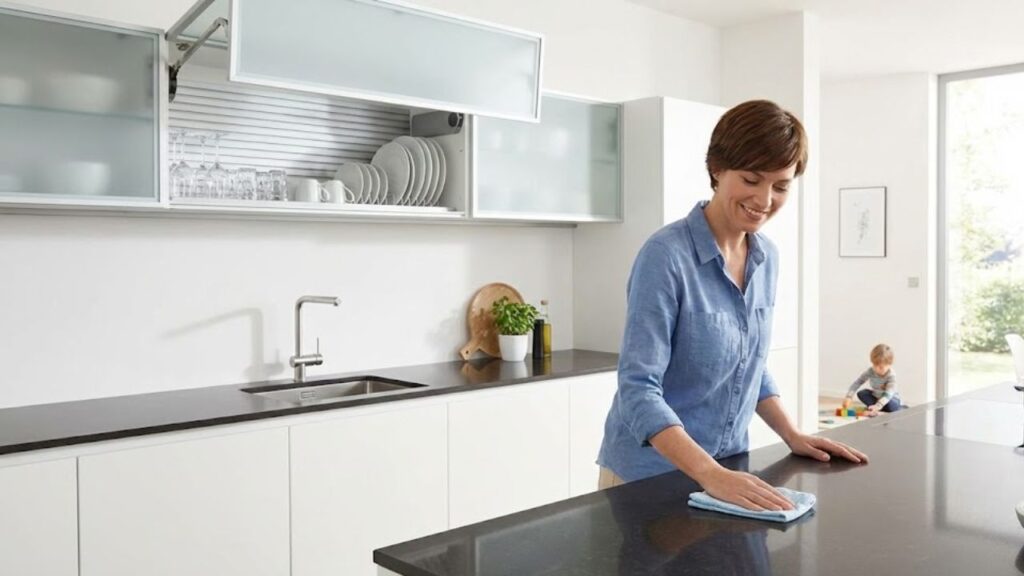
The solution gaining momentum is the wall-mounted dish drainer. Fixed above or beside the sink, this open shelving system allows plates, glasses and cutlery to dry while suspended, freeing the counter below.

By shifting drying space vertically, dishes drip directly into the sink or a narrow drainage channel, keeping surfaces clear and dry.
How the system functions day to day
Most designs share a similar structure: bars or shelves for plates, baskets for bowls and cups, and a small compartment for cutlery. Some models include a gently angled drip tray that guides water back into the sink.
Because the rack becomes part of the wall, it blends into the kitchen rather than adding to the mess. Many versions now support up to 10 kg (around 22 lbs), enough to handle a full household load after a family meal.
Why more households are making the switch
Those who replace a sink-side rack with a wall-mounted version usually point to three advantages: space savings, improved hygiene and a cleaner look.
- Counter space: The area around the sink is fully freed for cooking or appliances.
- Moisture control: Water drains straight into the sink instead of pooling on trays or mats.
- Visual impact: A slim, built-in appearance keeps dishes less intrusive.
- Ease of cleaning: Open designs have fewer surfaces where grime can collect.
Why small kitchens benefit most
Residents of dense cities such as London or New York are among the most enthusiastic adopters. In narrow kitchens, reclaiming the counter beside the sink makes room for a chopping board, coffee machine or simply a clear surface.
For renters especially, that extra strip of counter can make the entire kitchen feel larger, all without structural changes.
What to check before buying
While the concept is simple, a few checks help avoid disappointment later.
- Wall type: Tiles, plasterboard and brick require different fixings.
- Weight limit: Larger households should choose sturdy, clearly rated designs.
- Dimensions: Measure carefully so cupboards and windows remain usable.
- Drainage method: Some models drain directly into the sink, others rely on removable trays.
- Materials: Stainless steel and durable plastics resist rust and staining best.
Before installation, it pays to measure twice and picture a full load of dishes on the rack.
Installation choices for owners and renters
Homeowners often opt for drilled brackets anchored into the wall for maximum stability. Renters may prefer heavy-duty adhesive systems, which perform best on smooth tiles and with lighter loads.
A sensible guideline is to avoid relying only on adhesive if you own heavy cookware or stoneware. Combining lighter loads with mechanical fixings offers greater peace of mind.
 Goodbye Hair Dye for Grey Hair: The Conditioner Add-In That Gradually Restores Natural Colour
Cleaner drying and easier maintenance
Traditional racks and damp mats can encourage bacteria and, in humid homes, even mould. By lifting dishes off the counter and allowing better airflow, wall-mounted systems help items dry faster.
With fewer corners and flat surfaces, cleaning is simpler. A quick wipe of the bars and occasional rinsing of any drip tray is usually enough. Some designs even feature removable baskets that can be washed along with the dishes.
How routines change around the sink
Relocating the drainer alters kitchen habits in subtle ways. Dishes move straight from sink to rack without blocking workspace. Once dry, they are already closer to cupboards, making tidying up quicker.
In busy homes, this efficiency can prevent plates from lingering overnight. Some households even keep everyday dishes on the rack permanently, using cupboards only for less-used items.
Potential drawbacks to consider
Not every kitchen suits this setup. Low ceilings or windows directly above the sink can restrict placement. In homes with young children, storing breakable items higher up may require extra thought.
Drainage design also matters. Poorly routed drips can splash onto tiles or floors, making water control as important as appearance.
Who gains the most in real life
Picture a couple sharing a 35 m² flat with a narrow, single-wall kitchen. A traditional rack consumes much of the counter. By moving drying space upward, they gain room for appliances and food prep, turning a one-person kitchen into a shared space.
In family homes, a wider and more robust rack above a deep sink can double as daily storage. Children can reach their cups easily, easing congestion during busy mornings.
Helpful terms and practical tips
When browsing options, “load capacity” indicates the maximum safe weight, while “304 stainless steel” refers to a rust-resistant metal well suited to damp environments.
Features such as adjustable tiers allow shelves to shift up or down, accommodating taller plates or oversized bowls.
For anyone hesitant about drilling, starting small can help. A compact rack with modest loads offers a trial run. If it improves daily flow, upgrading later becomes a confident decision.
Paired with other vertical storage ideas like magnetic knife strips, hanging rails or under-cabinet hooks, a wall-mounted drainer supports a broader move toward smarter, breathable kitchens where every surface finally earns its place.