France often highlights the Rafale fighter jet, but far less attention goes to what keeps it airborne: the M88 jet engine and the ecosystem shaping its evolution. Central to this effort is the DGA, France’s defence procurement and technology authority, working closely with engine manufacturer Safran. Together, they oversee not only development but also the long-term independence of France’s combat aviation capabilities.
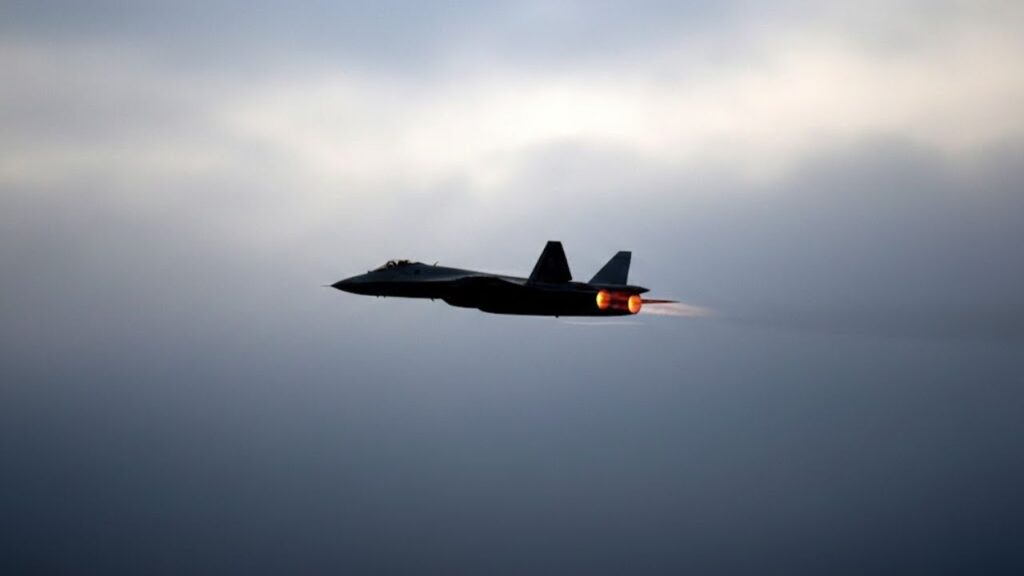
A Test Facility Unlike Any Other in Europe
Located in Saclay, south of Paris, the DGA operates a propulsion test centre described by officials as unmatched in Europe. The site can precisely recreate the air conditions a fighter engine encounters at extreme altitudes and speeds. This level of control, combined with intense test campaigns, provides France with a capability no other European country currently possesses.
The Saclay site remains Europe’s only facility able to reproduce, in such detail, the real breathing conditions of a combat jet engine in flight.

Redesigning Engines for Extreme Limits
The work underway goes beyond incremental improvements. Engineers aim to redesign critical components so they can endure temperatures that defeat conventional metals, reduce fuel consumption, and keep the entire supply chain under national control. These goals directly support both performance gains and strategic autonomy.

Inside the Saclay Test Bays
Since autumn 2025, DGA teams have been testing future variants of the M88 engine on dedicated stands. Each engine is pushed close to operational limits under simulated scenarios resembling a Rafale performing high-altitude, high-speed manoeuvres.
Simulating Combat Flight at Extreme Altitude
The Saclay facility allows technicians to finely adjust temperature, pressure, and humidity. They can simulate a fighter flying at around 15,000 metres, executing turns at roughly Mach 1.5, while the engine draws in thin, freezing air.
The system can also reverse conditions abruptly, flooding the engine with suddenly heated air to reproduce repeated thermal stress. This approach, known as accelerated ageing, compresses years of operational wear into a matter of hours.
By condensing long-term fatigue into short test cycles, DGA engineers can identify structural weaknesses well before they emerge in frontline aircraft.
Forensic Analysis After Every Test
Once testing ends, the process becomes highly detailed. Engines are dismantled, and components are examined under microscopes. Some parts are sent to other DGA facilities specialising in aerospace materials analysis. Every crack, deformation, or colour change is logged and fed back into digital design models.
Turenne: Driving Materials to Their Limits
The most ambitious innovation effort is grouped under “Turenne”, a DGA-funded programme conducted with Safran. Its focus is the most demanding section of a jet engine: the high-pressure turbine.
A Turbine Operating Like a Furnace
Positioned just behind the combustion chamber, the high-pressure turbine faces gas temperatures exceeding 1,800°C. Here, tiny blades—known in French as aubes—spin at extreme speeds. Any failure in this zone would be catastrophic.
Under Turenne, engineers are testing advanced ceramics, next-generation superalloys, and protective surface coatings. Increasing the temperature the turbine can tolerate directly improves engine efficiency and thrust.
Key Technologies Under Evaluation
- Technical ceramics to raise turbine inlet temperatures beyond 1,800°C
- Advanced superalloys to improve blade strength between 1,500°C and 1,800°C
- Ceramic coatings to extend component lifespan under extreme heat
- Controlled atmospheric simulation to replicate altitude and speed conditions
In practice, engine development becomes a high-tech metallurgy exercise. Materials that insulate well may prove brittle, while stronger alloys often add weight. Saclay’s testing environment helps determine which solutions survive under realistic conditions.
Why France Stands Apart in Europe
Europe hosts major aerospace players in the United Kingdom, Germany, Italy, and Spain. Yet France remains among a small group of nations able to design, test, and manufacture a complete modern fighter engine independently. That group traditionally includes the United States, Russia, and China.
Thanks to the Saclay facility and Safran’s industrial capacity, France can:
 Goodbye Hair Dye for Grey Hair: The Conditioner Add-In That Gradually Restores Natural Colour
- Scale new materials from laboratory samples to full engine components
- Validate designs under combat-like conditions without external support
- Protect sensitive data within a national, classified framework
- Secure spare parts and upgrades without foreign dependency
This control means France does not require foreign approval to modify, export, or upgrade its fighter engines.
A Strategic Choice, Not a Luxury
For Paris, this capability is essential. Fighter engines sit at the intersection of advanced physics, dual-use technology, and export politics. Losing control in this domain would affect not only defence readiness but also broader diplomatic leverage.
A Global Race That Never Pauses
While France refines successors to the M88, competitors continue to advance. The United States is developing adaptive cycle engines with General Electric. China is reportedly intensifying tests on its WS-15. Russia continues work on engines such as the Saturn 30 for the Su-57.
The DGA views Saclay’s work as critical simply to remain competitive. The risk lies not in sudden obsolescence, but in rivals gradually gaining advantages in range, thrust, or maintenance efficiency.
Efficiency and Climate Pressures
There is also a growing climate dimension. More efficient engines consume less fuel, extend operational range, and reduce emissions. Armed forces face increasing pressure to limit their carbon footprint without sacrificing capability, making propulsion technology a key lever.
From Materials Science to Sovereignty
Beneath the technical language lies a clear political signal: mastering extreme materials reinforces national sovereignty. France intends to ensure its fighters can operate and be exported regardless of shifting alliances or trade restrictions.
The Turenne programme illustrates this approach. The state defines objectives and funds research. Safran contributes industrial expertise. The DGA provides testing and validation. Together, they convert theory into operational hardware for the Rafale and future combat aircraft.
Expanding the Defence Research Network
France is not working in isolation. In 2025, the DGA signed a deeper cooperation agreement with India’s DRDO, covering areas such as military AI, cyber defence, propulsion, advanced materials, and quantum research.
This partnership fits within a wider network of defence technology agencies seeking to share costs and accelerate innovation.
Selected Defence Research Agencies
- DGA (France): Defence system design, testing, and acquisition
- DRDO (India): Military research, development, and production
- DARPA (United States): High-risk, high-reward technology projects
- Dstl (United Kingdom): Scientific support for defence policy
- BAAINBw (Germany): Procurement and support for armed forces
Understanding the Key Technical Concepts
Several terms frequently appear in discussions around next-generation engines:
- Superalloy: A metal alloy designed to retain strength at extreme temperatures, often nickel-based
- Ceramic coating: A protective layer that shields metal components from heat and corrosion
- Turbine inlet temperature: The temperature of gas entering the turbine, a key efficiency driver
- Adaptive cycle engine: An engine capable of switching between high-power and fuel-efficient modes
A useful comparison is a car engine tested not just on a bench, but on a system that can simulate mountain roads, Arctic cold, and desert heat in a single day. Now scale that down, raise the temperatures dramatically, and add strategic consequences to every failure.
Staying Airborne in Future Conflicts
In future warfare, the advantage will favour forces that keep aircraft airborne longer, with fewer refuelling missions and reduced maintenance demands. France is betting that ultra-precise testing, advanced materials, and tight control over engine technology will secure its position for the next generation of combat aviation.