The girl in the café bathroom doesn’t realize anyone is watching, yet the quiet line behind her follows every move as she fixes her lips. With two quick pencil strokes, she presses them together, then adds a touch of gloss. There’s no dramatic overlining, no heavy contour ritual. When she looks up, her lips resemble someone who’s just returned from a relaxing holiday—soft, healthy, and naturally full.
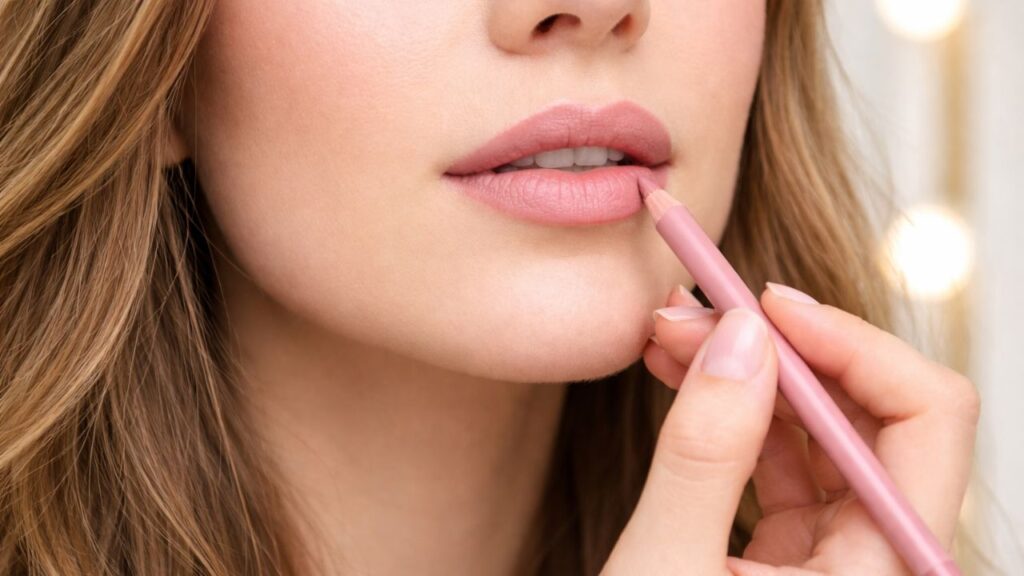
The Lip Liner Placement Trick Most People Miss
Nothing about the look feels obvious. There’s no sharp border or bold, social-media-style outline. Her lips simply appear more dimensional than everyone else’s. Later, at your own mirror, you try to recreate it. Same pencil, same gloss, same expression. Still, your lips look flat. The difference comes down to a tiny placement detail—easy to overlook, yet powerful enough to change everything.
It’s Not About Bigger Lips, It’s About Focus
Why Old Lip-Liner Rules Don’t Always Work
The classic advice is familiar: trace just outside your natural lip line, soften it, fill it in, and move on. Many learned this technique early, and for years it worked well enough. But on real faces, in natural daylight, heavy overlining can feel disconnected. Instead of enhancing features, it can make lips seem slightly out of sync with the rest of the face, especially up close.
 Trimming Every 6 Weeks Can Make Hair Look Longer - It Stops Split Ends From Crawling Up the Shaft
The Quiet Shift Modern Makeup Artists Are Embracing
Today’s top lip artists are moving toward a more refined approach. Rather than chasing the illusion of a dramatically larger mouth, they focus on directing the viewer’s eye. The fullness you notice isn’t the goal—it’s the result. This is why the technique works so well in selfies, video calls, and everyday conversations. The change is subtle, but the effect is striking.

Why Millimetres Matter More Than Bold Lines
The transformation comes from micro-adjustments, not thicker outlines. Once you see where the pencil is actually placed, your understanding of lip lining shifts. It’s not about changing your lip shape—it’s about emphasizing the structure already there. This precision keeps lips looking believable, softly enhanced, and never obviously drawn.
Where Makeup Artists Really Place Lip Liner
A quick scroll through TikTok or Instagram reveals a clear pattern. Artists barely define the corners of the mouth. Instead, pigment is placed in three focused zones: the Cupid’s bow peaks, the center of the lower lip, and the subtle “pillows” just off-center. Toward the edges, the liner fades until it’s barely there, creating an outline that feels more like a suggestion than a statement.
Why the Finish Looks Effortlessly Natural
A London-based makeup artist once shared that she uses the same lip pencil on every client, adjusting only the placement based on how light naturally hits their lips. People often ask which filler clinic she recommends. She laughs and points to a £7 liner and a grainy video of her technique. The most common reaction is, “I don’t know what you did, but I look rested.” The effect isn’t just fullness—it’s balance, where the mouth finally feels in harmony with the face.
The Visual Science Behind the Illusion
This technique works because of how the eye reads faces. We don’t look evenly; our attention jumps to areas of contrast and shape change. The dip of the Cupid’s bow, the curve at the center of the lower lip, and the light-catching points where gloss naturally sits all draw focus. Enhancing these areas while softening the corners leads the brain to read the lips as fuller—without any obvious outline.
The Exact Placement That Adds Fullness Without Overlining
Start with dry lips and a relaxed mouth—no posing. Use a sharpened nude liner that matches your lip tone. Draw a small bridge straight across the Cupid’s bow, connecting the peaks just slightly above your natural dip. Think of a softened plateau, not a sharp M.

Next, move to the center of your lower lip. Place the pencil about one millimeter outside your natural line only at the fullest point. Sketch a short arc no wider than your iris when looking straight ahead. Leave the outer thirds of the lower lip mostly untouched.
Now connect these central points to the natural corners using feather-light upward strokes that fade as they reach the edges. The line should almost disappear. Smudge gently with a fingertip, then tap a small amount of gloss or balm just at the center.
The result is soft corners and a pillowy middle that no one can quite explain. The temptation is always to add more—to the sides, to the height—but that’s where things tip into obvious overlining. On a phone screen it may pass, but under harsh lighting it doesn’t.
Restraint is what keeps this believable. When liner hugs the outer corners too closely, even a slight mismatch becomes noticeable. Work in stages. Line the center first, step back, then connect to the corners only where needed. Practicing this slowly makes it second nature on busy mornings.
Why This Soft-Blur Method Works on Real Faces
The appeal of this placement goes beyond appearance. On a difficult morning, drawing a sharp outline can feel like putting on armor. This softer approach feels like enhancing what’s already there. People notice you look refreshed rather than heavily made up.
It also allows flexibility. If your hand slips or the line isn’t perfect, the effect still works because the focus is on the overall impression, not tiny flaws. That margin for error matters more than most realize, especially on days when your skin—or confidence—isn’t cooperating.
In the evening, the technique adapts beautifully to changing light, from bright bars to soft restaurant glow. The lips stay defined at the center and gentle at the edges, moving naturally with your expressions instead of appearing stiff. It’s makeup designed for a living, moving face, not a frozen image.