
Sideways rain, wind roaring like a jet engine, and a small white cottage clinging to the edge of the land. Up on the hill, a puffin waddles past a satellite dish, completely unimpressed. Down by the harbor, a few locals in bright waterproofs wave at the only ferry of the week, then turn back to their routines as if nothing unusual just happened.
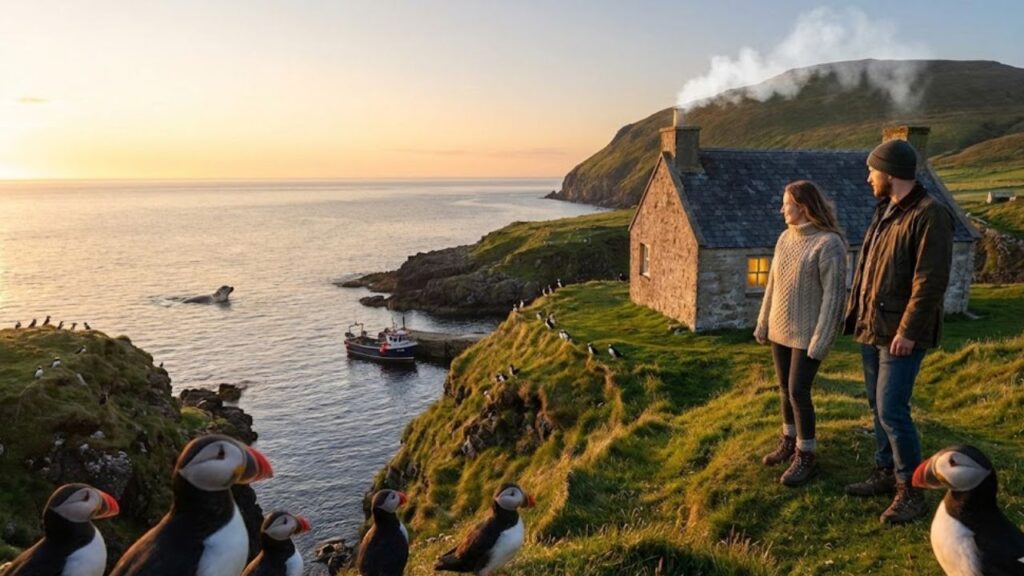
This winter, a remote Scottish island is offering around €5,000 a month, free accommodation, and six months surrounded by whales, seals, and thousands of seabirds to anyone willing to swap city noise for Atlantic storms.
You imagine your open-plan office replaced by crashing waves. Your daily commute exchanged for a walk past sheep and stone walls.

The strange thing is how quickly that daydream starts to feel uncomfortably real.

€5,000 a Month to Live Among Puffins: An Offer That Feels Unreal
The job listing sounds almost like a joke. A tiny Scottish island, with a population barely large enough to fill a small café, is searching for seasonal staff and caretakers ready to spend six months at the edge of the map. The pay sits around €5,000 per month. Rent is completely free. The extras include puffins in spring, whales in the bay, and sunsets so dramatic they look edited even when they’re not.
On one Hebridean island last year, dozens applied for a single role looking after a small café and guesthouse. The position combined caretaking, odd jobs, and acting as a wildlife-friendly host. A couple in their thirties from Glasgow landed the role, trading their flat for a stone cottage streaked with salt. Overnight, their neighbors became razorbills, guillemots, and the occasional orca gliding past the cliffs.
They describe their first night as a shock. The silence felt loud. Outside the house, darkness was total, with no city glow on the horizon, only a pale ribbon of the Milky Way overhead.
Why These High-Paying Island Jobs Keep Appearing
There’s a simple reason these offers exist. Remote island communities are struggling to survive. Young people leave for university and often never return. Shops can’t find staff. Local councils and conservation groups work together, and suddenly the maths becomes clear: pay someone well, give them a home, and they can help keep ferries running, protect fragile wildlife, welcome visitors, and bring energy back to the pub on a quiet Thursday night.
The €5,000 figure isn’t random. It needs to beat city salaries enough to tempt people away from stable urban jobs, while still fitting the tight budgets of islands dependent on short tourist seasons and limited grants.
What Life on a Remote Scottish Island Actually Looks Like
Before you start packing woolly jumpers, it helps to imagine a normal Tuesday, not the postcard version. You wake to wind rattling the gutters and the smell of cold, clean air slipping under the door. The kettle takes a little too long to boil. The Wi-Fi works, then vanishes, like a shy neighbor.
Your work might involve running a small visitor center, checking footpaths, or monitoring bird nesting sites. One morning could be spent logging sightings of puffins and minke whales, followed by an afternoon delivering parcels because the post boat had a rough crossing.
There’s no Starbucks. There might be one community hall where everything happens, from ceilidhs to dentist appointments.
People often imagine isolation as empty days, but locals tell a different story. In summer, walkers arrive soaked and smiling, searching for tea and cake. You could be baking scones at 9 a.m., guiding visitors along cliff paths by noon, and helping unload supply crates at the harbor by late afternoon.
On calm evenings, everyone drifts toward the water. You might spot a dark fin cutting through the surface or hear the low whoosh of a whale surfacing before you see it. One volunteer described dolphins following the ferry for the first time as feeling like the island was welcoming them in its own wild way.
 Goodbye Hair Dye for Grey Hair: The Conditioner Add-In That Gradually Restores Natural Colour
The Hidden Cost Behind the Free House and High Pay
The generous salary and free housing sound magical, but they sit right alongside real discomfort. Remote living means expensive food, limited healthcare, and the genuine risk of being cut off by storms. Some weeks, ferries don’t run. Fresh fruit disappears. A broken boiler turns into a community-wide emergency.
The money isn’t just a reward. It’s a buffer. A way to clear city debts, build savings, or try a radical lifestyle change without draining everything you own.
How to Tell If Island Life Is Right for You
The most honest test is simple. Write down what you would truly miss, not what you think you should miss. Late-night takeaways? Friends dropping by unannounced? The constant hum of traffic you pretend to hate but secretly depend on?
Then reverse it. List what you’re craving. True darkness at night. A routine shaped by tides and weather instead of notifications. Time to read without checking your phone every few minutes. If that list makes your shoulders relax, that’s a clue.
Start small. Spend a week in a bothy or a long stay in a quiet village. Your nervous system will give you better answers than social media ever could.
The biggest mistake newcomers make is trying to live exactly as they did in the city. The same sleep schedule, the same expectation of instant deliveries, the same constant online noise. The island won’t adapt to that.
Life follows boats and weather. If the ferry is canceled, your plans are canceled. If a neighbor’s sheep escape, your afternoon might turn into a rescue mission. These rhythms aren’t inconveniences to fix; they’re the reason people come.
As one long-time islander put it, “People come for the puffins, but they stay for the people and the peace. The birds are just the hook.”
Practical Advice from Past Island Workers
- Talk to previous workers and ask what surprised them most and what they wish they’d packed.
- Budget for hidden costs like higher food prices, fuel, and mainland travel.
- Bring a creative project such as a journal, camera, or sketchbook for long evenings.
- Expect emotional swings, from deep contentment to sudden frustration.
- Respect island boundaries by listening first and easing into close-knit communities.
A Wild Experiment in the Value of a Life
Offers like this quietly challenge a question many people carry: what if life didn’t have to look like this? Not more glamorous, just less crowded, less rushed, and more honest. When an island offers €5,000 a month and a roof, it isn’t just selling a job. It’s offering a temporary exit from a script you may never have chosen.
There’s risk. The weather might feel brutal. The work could be harder than expected. The isolation might lose its shine. Or you might discover you’ve never slept so deeply or felt so oddly useful. One whale breaching in the distance can change your idea of what “worth it” means overnight.
Some people stay. Some leave but carry the sound of Atlantic waves for years. Others never apply, yet feel their daily commute shift slightly, knowing that somewhere out there, a small island is paying strangers good money to listen to the wind and count puffins at the edge of the world.

Key Takeaways
- Paid island work: Around €5,000 a month plus free housing for six months, showing that major life changes can be financially realistic.
- Daily reality: Unpredictable ferries, harsh weather, close communities, and constant wildlife, helping you judge if the romance fits real life.
- Personal experiment: A short, defined commitment that lets you test a new lifestyle without burning bridges.
