On a dull Tuesday morning along a quiet suburban street, three plumbers stood in light drizzle, puzzled by a drain that appeared to be working perfectly. Just an hour earlier, the kitchen sink in the small brick house had been completely clogged, filled to the rim with murky brown water that gurgled ominously.
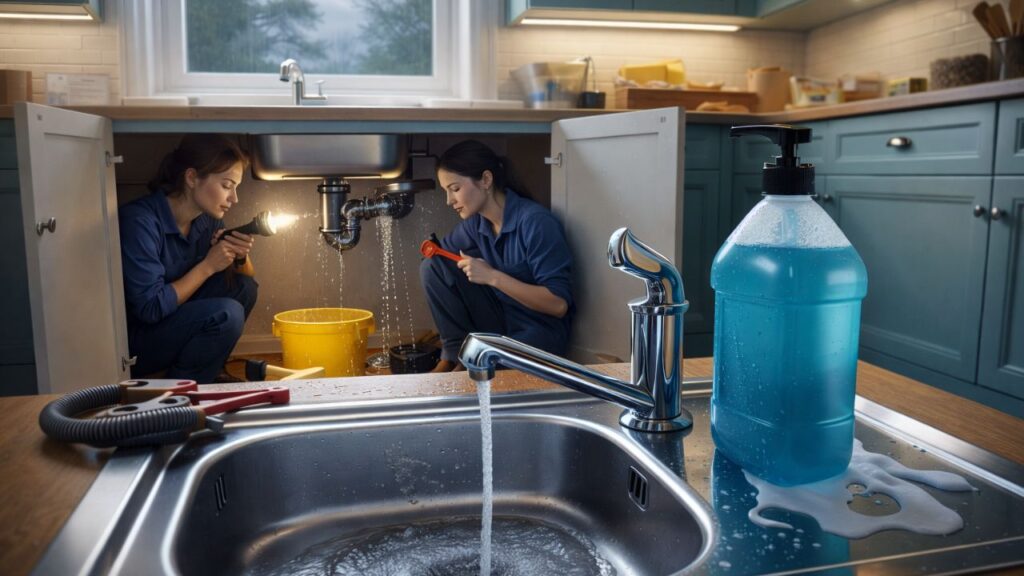
The homeowners had already accepted that an expensive and messy repair was inevitable.
Yet when the crew arrived, the problem seemed to have vanished. Water flowed freely, pipes were clear, and there was no trace of the blockage that had caused all the trouble.

Something had clearly changed during that 40-minute window, and the answer turned out to be a simple household product found under most kitchen sinks.

The Curious Case of the “Self-Repairing” Drain
The foreman, with two decades of plumbing experience, kept turning the tap on and off as if expecting the drain to fail again. Instead, the water rushed away with a smooth, hotel-style whirl. No bubbling. No backup. No slow, threatening swirl.
He looked at the homeowner and repeated the same question several times. “You didn’t pour anything down there? No chemical cleaner?”
The reply never changed: “Just dish soap.”
That unassuming bottle of yellow liquid had transformed a routine plumbing call into a mystery worth explaining.
What Happened Before the Plumbers Arrived
The previous evening, the family had tried every familiar fix. Boiling water. A plunger. Even a metal drain snake bought online and quickly regretted. None of it worked.
Out of frustration, the homeowner squeezed a long stream of concentrated dishwashing liquid directly into the drain and went to bed. There was no hot-water flush and no special technique, just soap and time.
- According to psychology, people raised by strict parents often develop lasting habits later in life
- Why wearing jeans in extreme winter cold is discouraged and which fabrics actually retain heat
- A Nobel Prize–winning physicist says Elon Musk and Bill Gates are right about the future and its impact on work
- A centenarian shares the daily routines behind her long life and independence
- Why people hang bottles filled with water and vinegar on balconies and what they are meant to do
- $2,000 Direct Deposit for U.S. citizens in February, including eligibility and IRS guidance
- Why more seniors are choosing to work after retirement to support their finances
By morning, the water level in the sink had dropped noticeably. A careful test with warm water sent everything spinning away. When the plumbers arrived, the pipes behaved like newly installed plumbing.
The Simple Science Behind the Fix
While it may sound like a viral internet trick, the explanation is straightforward. Most household clogs are made of cooled grease, soap residue, food scraps, and hair clinging to the inside of pipes.
Concentrated dish soap is designed to break down grease on cookware. Inside a drain, when left undisturbed for hours, it can begin dissolving the fatty layer holding a clog together.
The thick liquid slowly coats the blockage, loosening its grip. When followed by warm water, the softened mass breaks apart and moves down the pipe. What looked supernatural to the plumbers was simply chemistry combined with patience.
How Plumbers Suggest Using This Method Safely
This approach is quietly recommended for light to moderate clogs, especially in kitchen sinks that drain slowly but are not fully sealed shut.
 Goodbye Hair Dye for Grey Hair: The Conditioner Add-In That Gradually Restores Natural Colour
First, remove as much standing water as possible using a mug or bowl. Next, take a bottle of thick, grease-cutting dishwashing liquid and squeeze a generous amount directly into the drain opening, focusing around the plug area.
Allow it to sit for at least 30 minutes. For more stubborn clogs, leaving it for one to two hours, or even overnight, can be effective.
After waiting, run a steady stream of very warm water, not boiling, for several minutes. The goal is to move the loosened blockage gently, not shock the pipes. Boiling water can damage older PVC fittings and cause more harm than good.
A sudden gurgle followed by a fast drop in water level usually signals that the clog has released. If nothing happens, the process can be repeated once.
When This Trick Works Best
Some plumbers casually call this “the detergent trick”, while others rely on it for kitchen drains coated with years of cooking oil. One veteran technician explained that many homeowners damage their plumbing with harsh chemicals when a simpler option would have worked.
He outlined the situations where this method is most effective:
- Grease-based clogs in kitchen sinks
- Slow drains rather than fully hardened blockages
- Homes with shorter internal pipe runs before the main stack
It isn’t magic. It simply works when the problem and the pipe conditions are right.
Why a Simple Solution Feels So Surprising
There is something quietly satisfying about seeing a low-cost supermarket product succeed where expensive tools and chemicals fail. It reflects a common frustration with home maintenance, where complex fixes often overshadow the ordinary solutions we already own.
Part of the surprise that rainy Tuesday was not just the clear pipes, but the realization that the family had lived with a slow drain for months. They had adapted without noticing, rinsing plates carefully and working around the issue.
It was one of those moments that reveals how easily the house trains us, until a small change resets everything.
Key Takeaways for Homeowners
Using dish soap strategically by letting grease-cutting detergent sit in a slow drain offers a low-risk first step before calling a professional.
Pairing soap with warm water, rather than boiling, helps move loosened clogs while protecting older or plastic pipes.
Knowing when to stop DIY attempts is essential, as persistent odors, multiple blocked drains, or toilet gurgling often indicate deeper plumbing issues.