She’s around 55, her hair forming a cool silver halo, lips painted a bold, unapologetic red. Under the neon glow of a London salon, other clients flip through magazines promising “age-defying” serums and “miracle” injections. She’s here for a haircut, not colour. The stylist lifts a gleaming grey strand and murmurs, “This is better than Botox.” She nods, already convinced.
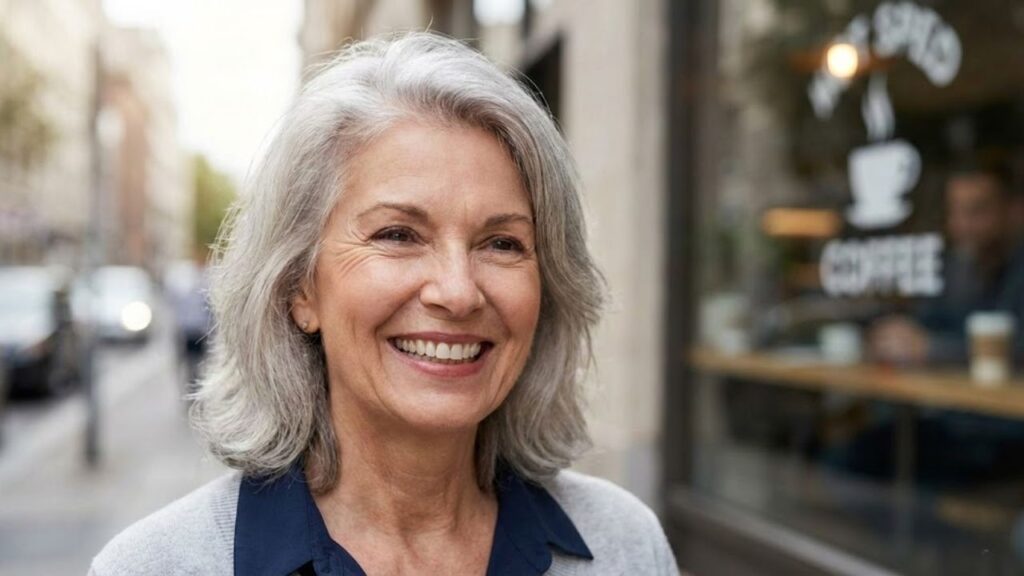
Once hidden and hurriedly covered, grey hair is now everywhere—on news anchors, CEOs, influencers, and neighbours out walking dogs at dawn. The change feels quiet yet profound. People aren’t merely accepting their grey; they’re wearing it as a statement. Meanwhile, the multi-billion anti-aging industry watches closely, tallying missed dye appointments and untouched promises of youth. Public aging is being rewritten, raising a simple question: who benefits, and who feels threatened?
Grey Hair as a Subtle Cultural Shift
Step into a rush-hour metro and the signs are unmistakable: a silver bob paired with an oversized blazer, salt-and-pepper curls matched with bright trainers, a long iron-grey ponytail swinging confidently. This isn’t the careful, apologetic grey of the past. It’s deliberate, styled, and quietly defiant—less “I’ve given up,” more “I’ve arrived.”
What stands out isn’t just the colour, but the posture that comes with it. Shoulders relax. Eye contact lingers. Smiles appear unconcerned with fine lines. Grey hair delivers what facelifts promise yet often miss: the freedom to occupy one’s age without hesitation. A facelift tightens skin; grey hair signals, calmly and clearly, “I’m done hiding.”

Data, Demand, and a Changing Market
Statistics sharpen the picture. Global sales of at-home hair dye remain large, but growth has stalled across many Western markets. At the same time, searches for phrases like “going grey gracefully,” “grey blending,” and “silver transition” climb year after year. Stylists report more clients arriving with saved images of silver-haired women, asking a simple question: “Can I do this?”
Brands have taken note. A decade ago, grey in advertising was rare and softened into polite white. Today, steel-grey pixie cuts front luxury campaigns, salt-and-pepper stubble sells skincare, and entire product lines exist to enhance natural grey. Yet, alongside this shift, the anti-aging machine still promotes stronger dyes and harsher “corrective” formulas. The tension is unmistakable.
Turning Grey into a Strength, Not a Flaw
Those whose grey hair looks almost like a facelift rarely rely on chance. There’s intention behind it. One effective approach is a gradual transition—using lowlights, balayage, or grey blending to soften the line between dyed lengths and natural roots. This transforms an awkward grow-out into a deliberate style choice.
The cut matters just as much. Grey thrives on structure: a sharp bob, modern shag, cropped pixie, or long layers with movement. A clear shape reads as style, not neglect. Maintenance helps too—purple shampoo to counter yellow tones, a light oil for shine, and subtle texture products to avoid flatness. Small adjustments deliver noticeable impact.
Practical Choices That Keep Grey Looking Fresh
Certain habits can dull grey hair. Over-washing strips natural oils, leaving strands brittle. Daily heat styling exaggerates dryness and damage. Makeup and wardrobe choices also matter; colours that once worked with brunette or blonde shades may suddenly wash out the face.
Gentle shifts make a difference: slightly bolder brows, lip colours with depth, and jewel-toned clothing instead of fading beige. These aren’t daily rules but consistent refinements that make grey appear intentional. The aim isn’t perfection—it’s energy and presence.
The Emotional Side No One Advertises
The emotional journey rarely appears in beauty campaigns, yet it’s the most powerful part. Early weeks of growing out grey can feel harsh—comments from strangers, suggestions from friends, questions at work. Beneath that noise, something else happens: your face adjusts to life without the filter of dyed hair.
“Grey hair didn’t age me; hiding it did. Once I stopped colouring, I stopped apologising for existing in my forties,” says Laura, 47, who shared her transition online and unexpectedly built a large community.
- Prioritise shine over shade—healthy grey looks fresher than damaged dye.
- Keep routines simple and realistic.
- Allow six months before judging the result.
- Surround yourself with inspiring references of grey worn confidently.
- Notice the time and money reclaimed—that freedom matters.
Why the Anti-Aging Industry Feels Uneasy
Follow the money and the anxiety becomes clear. Hair colour is a subscription built on fear: frequent root touch-ups, toners, emergency fixes. Choosing natural grey collapses that cycle instantly.
 Goodbye Hair Dye for Grey Hair: The Conditioner Add-In That Gradually Restores Natural Colour
Multiply that choice across thousands, then millions, and balance sheets begin to wobble. The same logic applies to invasive treatments. If a visible sign of aging like grey hair becomes neutral—or even aspirational—the emotional pull of “erasing” age weakens. The fear-based message loses volume.
Marketing adapts. Language shifts from “fighting” age to “refreshing” and “brightening.” Grey models appear, often paired with retouched skin and polished lives, quietly suggesting acceptance—so long as everything else stays smooth.
A Broader Cultural Turn
Grey hair as a modern facelift challenges that narrative because it’s affordable, visible, and personal. There’s no upsell, no loyalty card—just a daily reflection and the realisation that looking older isn’t the same as looking worse.
That realisation spreads. Colleagues rethink aging when a confident silver-haired manager leads the room. Younger generations grow up seeing age lived openly, not hidden. The industry adjusts, but culture shifts faster.
We won’t abandon serums or styling overnight. On difficult days, a good blow-dry still feels like armour. Yet as grey becomes normal, those choices feel optional rather than compulsory. That psychological change is what truly unsettles the market.
Grey hair won’t fix every insecurity. It may even surface old pressures at first. But for many, letting silver show sparks the first honest conversation with their own face in years.
On a busy street, the woman from the salon steps into daylight. Her silver catches the afternoon sun. No one stares. A teenager cycles past and calls out, “Cool hair!” The world keeps moving, but something subtle shifts—the story of aging tilts, just slightly.
- Grey as a natural facelift: structure, shine, and confidence create a lifting effect.
- Smooth transition strategies: blending, updated makeup, gentler routines.
- Industry resistance: fear-based marketing loses power when age is visible.
Those small shifts accumulate over time, across offices and families. Grey hair isn’t a trend—it doesn’t fade. It’s more like a language being relearned after decades of speaking only “youth or nothing.”
That’s why it feels unsettling—and right. You stop rewinding and start editing the present. Less fight, more finesse. The industry will keep selling its promises. You decide whether your hair is a battle or a banner.
And if one morning you catch your reflection in harsh light and think, “I look tired,” that’s okay. The grey didn’t cause that. The story around it did—and stories, unlike hair, can change overnight.