
The wind cuts through the street like a knife, and within minutes, you regret getting dressed on autopilot. You checked the forecast. You knew it was -10°C. Still, you pulled on your favorite jeans because they work with everything. Ten minutes into the walk, your thighs start to sting. The denim stiffens, your legs feel wrapped in ice, and every gust bites harder. You notice people in padded pants and thermal leggings and think, “Why am I freezing like this?”
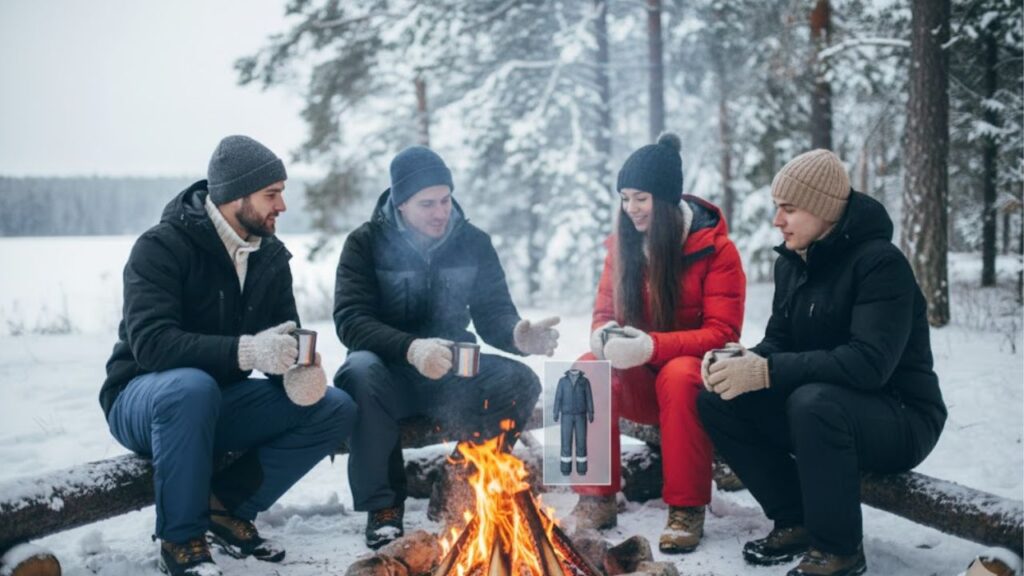
By the time you reach the bus stop, your jeans feel almost crunchy from the cold. And that’s when a simple truth becomes obvious.
Why jeans fail when temperatures plunge
Jeans look sturdy, so we assume they’ll hold up in winter. The fabric feels thick, the fit is familiar, and they’ve handled rain, long nights, and bike rides. On a mild 5°C day, that logic works. On a -15°C morning with wind, it completely falls apart.

Denim behaves like a cold magnet in freezing weather. It absorbs low temperatures and presses them directly against your skin. Once your legs cool down, the rest of your body soon follows.

Anyone who has stood on a delayed platform in January wearing only jeans knows the feeling. First, the front of your thighs ache. Then they go numb. Then comes the sharp, prickling sensation, like brushing against snow. A Canadian study on winter commuting found that exposed legs lose thermal comfort faster than the torso or hands when outdoors.
One commuter in Oslo described it during a cold snap: “My coat was fine. My gloves were fine. But by the time I got to work, my legs didn’t feel like mine anymore.” That’s the classic jeans problem.
From a physics perspective, denim is dense cotton. Cotton holds moisture—sweat, melting snow, even humidity in the air. Once it becomes slightly damp, it loses insulation and begins to conduct cold instead. In sub-zero temperatures, the tight weave also turns rigid, trapping cold air against the skin instead of forming a warm barrier.
Your body reacts by pulling warm blood away from your legs to protect vital organs. You feel colder overall, your energy drops, and the risk of frostnip or frostbite increases the longer you stay outside. That’s a steep trade-off for pants that “go with everything.”
What keeps your legs warm instead
The key isn’t finding one perfect winter pant. It’s changing how you think about layers. Start with a thin, close-fitting base layer made from synthetic fabric or merino wool. This layer moves moisture away from your skin and traps a thin pocket of warm air.
On top, you can wear lined trousers, softshell pants, or even your usual jeans if you’re only stepping outside briefly. But once temperatures fall below -5°C and your walk stretches past 15 minutes, jeans alone stop making sense.
 Goodbye Hair Dyes: The Natural Grey Coverage Movement Making Youthful Hair Look Effortless Again
That’s when fleece-lined leggings, insulated hiking pants, or ski-style trousers make a real difference. They may feel excessive indoors, but twenty minutes later on a dark sidewalk, you’ll be quietly glad you chose them.
Most people overdress their upper body and underdress their legs. Thick parka, scarf, hat, double gloves—then plain jeans. The imbalance causes your torso to overheat while your legs freeze. Moisture builds up, your skin turns clammy, and denim becomes a cold, damp shell.
Very few of us check fabric labels before heading out. We grab whatever looks presentable. Yet swapping 100% cotton denim for a wool-blend or lined pant can change how winter feels, without adding effort—just a different habit.
A winter runner in Chicago summed it up simply:
“The day I stopped commuting in jeans in January was the day I stopped hating winter.”
She wasn’t wearing high-tech gear. Just a thin thermal layer under loose, straight-leg trousers. Practical, not complicated.
- Choose a merino or synthetic base layer instead of cotton tights.
- Wear lined or softshell pants on the coldest days.
- Size outer pants slightly looser if layering underneath.
- Keep one deep-winter outfit ready by the door.
- Save your favorite jeans for milder days or short trips.
Rethinking how we dress our legs for winter
There’s a cultural attachment to jeans, even in deep winter. They’re part of our daily uniform, so skipping them on a freezing morning feels like a bold move. But once you allow yourself to look a little more functional and a little less styled, you remember what real warmth feels like.
You stop bracing for that first shock of cold when you step outside. You just walk. You breathe. You exist—without constantly thinking about your numb thighs.

| Key point | Detail | Value for the reader |
|---|---|---|
| Replace jeans below -5°C | Use layered or insulated pants instead of single-layer denim. | Reduces cold stress and risk of numb, painful legs. |
| Prioritize base layers | Wear merino or synthetic leggings under regular trousers. | Keeps skin dry and preserves body heat longer. |
| Think “leg insulation” | Match leg warmth to coat warmth on very cold days. | Creates full-body comfort instead of just a warm torso. |
