
An elderly man in the park bent down to tie his granddaughter’s shoelace, and I found myself watching his hands. They moved slowly and deliberately, almost like a ritual. He double-knotted the lace, pulled gently, checked the heel, then nodded with quiet satisfaction. She ran off. The knot held. Nearby, other children stumbled over loose shoes and half-zipped jackets, calling adults for help while staring at screens. The grandfather leaned back and murmured, almost to himself, “We knew how to do things on our own.” The words lingered. They stayed with me.
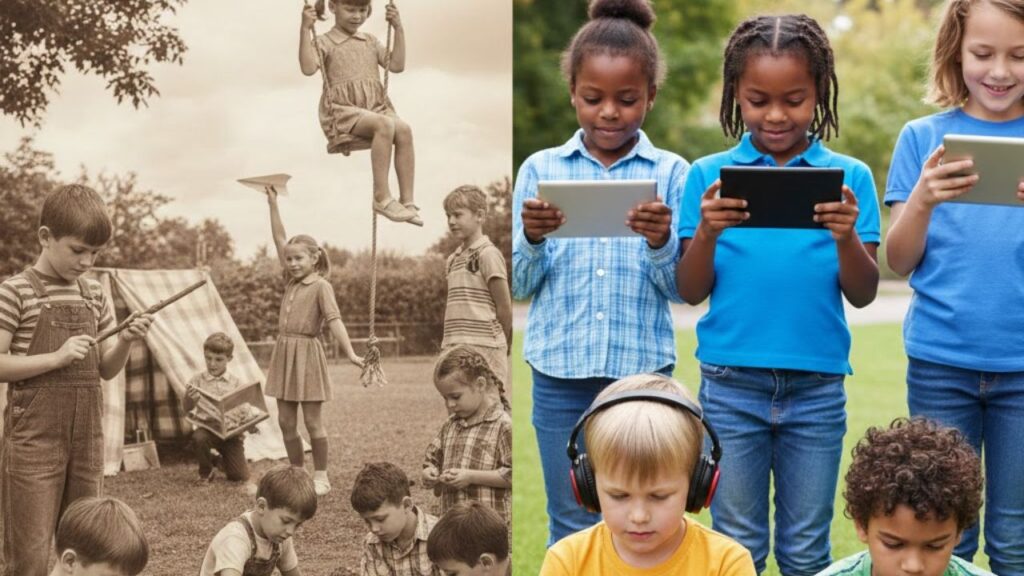
Walking to School Alone and Learning the World
Ask older generations about childhood and one image appears quickly: a long walk to school, often cold, sometimes dark, rarely supervised. They knew every shortcut, every cracked sidewalk, every barking dog. That daily journey taught observation and awareness. Today, many grandchildren know car backseats better than their own streets. We track them, escort them, schedule them. Life feels safer, yet their world feels smaller. One retired teacher told me she walked two miles to school at eight, crossing rail lines and busy roads. No apps, no cameras. She learned to listen, judge distance, and adapt. That was her geography lesson.
Safety Gained, Confidence Lost
When her grandson started school, he was driven daily. Once, traffic delayed them and he panicked, saying he didn’t know how to get there. They were only 500 meters away. Same city, same route, different childhood. We traded everyday risk for controlled safety. The result is children fluent online but anxious offline. Street sense cannot be downloaded. It grows through small risks, wrong turns, and pride earned alone. Simple steps—walking the last block solo or running a small errand—quietly say: I trust you.
Fixing, Mending, and Making Things Last
For many seniors, broken toys meant sitting at a table under a dim bulb, trying to fix them. Tools, screws, glue, patience. Someone always knew how. Today, many objects arrive nearly disposable. When they break, we replace them. Children see packages opened, not things repaired. I met a man in his seventies who still sharpens knives and mends backpacks. His grandchildren call it magic. He remembers Saturdays at a bike shop, watching tires patched and chains adjusted. A new bike wasn’t an option. You kept the old one alive.

The Value Hidden in Repair
His grandson received a new scooter when a cable snapped. The old one went to the curb, barely damaged. No one looked inside. A chance to learn disappeared. We’ve normalized throwing away and buried skills like improvisation and respect for objects. Fixing everything isn’t realistic. But letting a child see one backpack stitched or one toy opened teaches that patience creates value. Saying “I fixed it myself” builds a quiet pride no purchase can replace.
Spending the Whole Day Outside, Unscripted
Many seniors recall leaving after breakfast and returning at sunset, pockets full of treasures. The rule was simple: be home by dinner. Streets and empty lots became playgrounds. It was messy and sometimes risky, but it taught negotiation, courage, and imagination. Children made rules, broke them, argued, and made peace again. No whistles, no schedules. One grandmother described building a village in nearby woods with friends, dragging boards and chairs, inventing roles and paths. They learned knots, balance, and trust without adults watching.
When Boredom Builds Leaders
Her granddaughter’s days are now filled with structured activities. Wonderful opportunities, yet little space for drifting boredom. She gets bored quickly because boredom never stretches long enough to transform. Fear of danger has replaced faith in free play. Yet unsupervised play builds leadership quietly. Allowing safe roaming with boundaries isn’t nostalgia; it’s a decision to give children something screens can’t teach.
Talking Easily to Neighbors and Strangers
Knocking on a neighbor’s door was once normal. Borrowing eggs, asking friends to play, greeting shopkeepers by name. Seniors learned social confidence daily. Today, many children live among strangers they never meet. “Don’t talk to strangers” becomes a wall. A widow in her seventies recalled running errands for neighbors as a teen, delivering envelopes and prescriptions. No phone, just memory and voice. She learned to speak clearly and handle money. Her great-grandson orders food silently through a screen and avoids phone calls.
Practicing Human Connection
Protection matters, but social skills grow through small, safe interactions: greeting a neighbor, asking a librarian for help, thanking a driver. One grandfather challenged his grandson to greet three people a day. The boy stood taller, smiled more. Connection is practiced, not downloaded.
Chores as Real Responsibility
Older generations didn’t “help” at home; they were needed. Setting tables, peeling vegetables, washing dishes. These tasks were expected and empowering. Today, chores are either cute games or punishments. An elderly woman recalled washing dishes nightly at nine. No praise, just learning to do it well. Her granddaughter lives among machines that clean themselves and often assumes order simply happens.
Learning to Contribute
A child who never contributes never learns their own capability. Start small: one task that matters daily. Explain why. Avoid sarcasm. Let it be imperfect. Repetition teaches responsibility more than rewards.

Writing Letters and Waiting
Ask seniors about receiving their first letter and their faces soften. Paper, ink, waiting. Words chosen carefully because they couldn’t be erased endlessly. Today’s messages travel instantly and vanish just as fast. A woman showed me letters from her sister written decades ago, arguments and affection preserved on paper. Her grandson’s history lives mostly in disappearing messages.
The Power of Slowness
A handwritten note or journal teaches something rare: pause. Searching for the right word. Seniors trained that skill unknowingly. Letting children experience it offers access to a quieter inner voice.
Respecting Money by Touching It
Coins in jars. Bills in envelopes. Seniors learned money through touch and limits. Today, payment happens with taps and screens. A retired mechanic recalled earning coins for cleaning tools, choosing carefully how to spend them. His granddaughter believes money appears from phones. Letting children handle cash teaches limits without lectures. Feeling that spending here means not spending there is a first taste of freedom.
Facing Small Risks Calmly
Climbing trees, lighting campfires, jumping into rivers—older generations faced small risks and learned judgment. Not recklessness, but evaluation. One grandfather waited three summers before jumping from a rock into a river. When he finally did, it changed how he walked through life. His grandson hears constant warnings. Love-driven, but anxiety-growing.
Strength Through Measured Risk
Safe risks still exist: cutting fruit with a real knife, lighting a candle with supervision, climbing a moderate tree. Learning “I can be afraid and still act wisely” builds resilience.
Being Bored and Letting Ideas Appear
Seniors remember long rainy afternoons with little to do. Boredom came first, then imagination. Chairs became trains. Buttons became cities. Today, boredom triggers screens instantly. A woman described inventing a whole town with buttons. Her grandson has endless digital worlds yet remains restless. Boredom doesn’t vanish; it changes shape.
Protecting Empty Time
Allowing boredom feels uncomfortable, but it’s where creativity begins. That pause is fragile and valuable. No app sells it.
What Really Gets Passed Down
Seniors recall moments, not gadgets: carrying house keys, fixing something alone, walking without help. We shouldn’t romanticize the past, but within it live autonomy, resilience, and creativity. The question isn’t whether life was better, but what we want children to feel capable of. Small gestures matter: handing over a screwdriver, letting them ring a bell, not filling every quiet moment. The world changed. Growing up did not.

- Everyday autonomy: Small independent tasks build confidence
- Hands-on skills: Repairing, crafting, handling money balance digital life
- Social courage: Talking, writing, and taking safe risks nurture resilience
