
The café was lively, yet strangely silent. People were glued to their screens, AirPods in place, and fingers scrolling through endless feeds. Across from me, a delivery rider checked job alerts, while a student next to him used ChatGPT to organize a marketing project.
Suddenly, a notification popped up on my phone: a headline about a Nobel Prize-winning physicist agreeing with Elon Musk and Bill Gates. The physicist warned that we’re heading into a world with more free time and fewer traditional jobs.
The rider looked up, watching a robot vacuum move across the floor, then returned to his phone. For a brief moment, the future didn’t feel like science fiction—it felt like a Tuesday afternoon.
 Goodbye air fryer : new kitchen gadget goes beyond frying with 9 different cooking methods
A Once-in-a-Lifetime Event: The Total Solar Eclipse of 2027
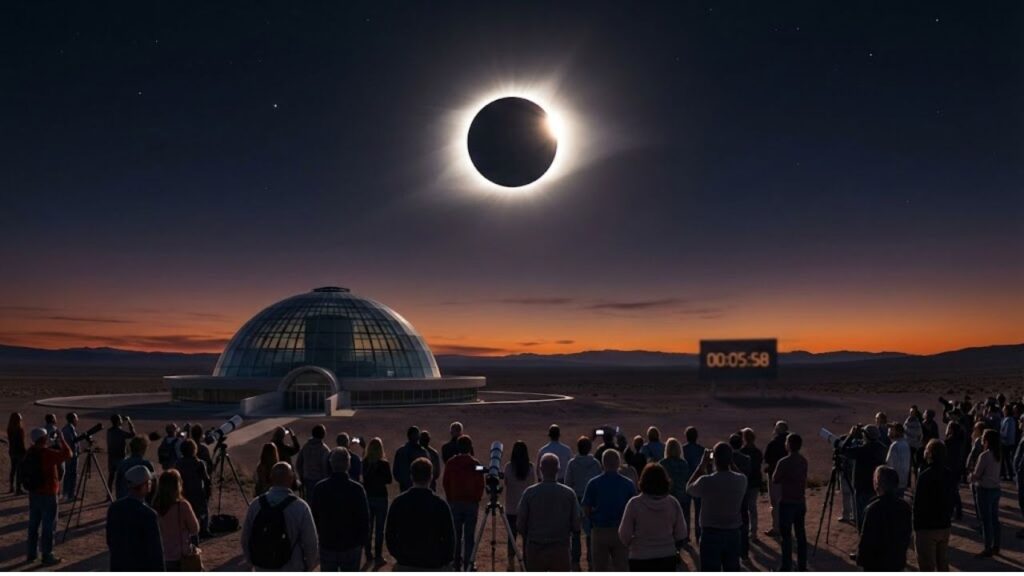
This total solar eclipse is being called one of the standout celestial events of the 21st century. On August 2, 2027, the path of totality will sweep across parts of Europe, North Africa, and the Middle East, offering up to 6 minutes and 23 seconds of total darkness in some locations.

For skywatchers accustomed to quick, two-minute eclipses, six minutes seems almost unreal. Six minutes is enough time to absorb the moment, catch your breath, and feel like time has paused just for you. It’s not just another eclipse—it’s an event that will be remembered for decades.
If you’re aiming for the longest period of darkness, your best bet is to head to North Africa. The totality path stretches from the Atlantic, across southern Spain, over the Strait of Gibraltar, and deep into Egypt and Saudi Arabia.
The maximum duration of the eclipse will be near Luxor, Egypt, where observers will experience more than six minutes of totality. Imagine standing in front of the ancient temples, with the Nile nearby, as the midday sun disappears above a landscape that has witnessed countless eclipses over millennia.
Understanding the Science Behind a Long Eclipse
So, why does this eclipse last so long? The answer lies in orbital geometry. The moon’s orbit around Earth isn’t a perfect circle—it’s elliptical. Sometimes it’s closer, sometimes farther away. In August 2027, the moon will be closer to Earth, making it appear larger in the sky.
Meanwhile, Earth will be near aphelion, farther from the sun, making the sun appear slightly smaller. This combination allows the larger moon to cover the smaller sun, creating a longer period of totality. The path also crosses near the equator, where the shadow travels more slowly across Earth’s surface, extending the duration of the eclipse.
Where to Watch the Eclipse and How to Experience It Fully
If you want to experience the full six minutes of totality, the first step is to plan ahead. The path of totality is narrow, about 200 kilometers wide. Outside this band, you’ll only see a partial eclipse, which, while spectacular, isn’t the same life-changing experience.
Luxor and Aswan in Egypt will be prime locations, with clear desert skies and a long window of totality. If you’re based in Europe, southern Spain around Seville and Córdoba offers decent viewing, along with established tourism infrastructure.
Many first-time eclipse chasers make the mistake of thinking they can just “wing it” a few weeks before the event. Flights and hotels quickly become booked, and the roads fill with last-minute drivers trying to catch a glimpse of the total eclipse.
If you’re on a budget, consider smaller towns in Egypt, Spain, or Morocco for a more authentic experience. However, remember that cloud cover can ruin your viewing, so check the local weather patterns before finalizing your plans.

How to Make the Most of Your Eclipse Viewing Experience
Don’t spend the entire eclipse fiddling with your phone or camera settings. Astrophysicist Jay Pasachoff advises, “You’ll have plenty of photos online. You only get one chance to feel it.”
Here are some practical tips for your eclipse experience:
- Pick a spot along the path of totality: Choose areas with historically clear skies (Egypt and inland North Africa are usually reliable).
- Arrive early: Give yourself time to scout the best viewing spot and check the horizon for a backup location.
- Protect your eyes: Always use certified eclipse glasses for partial phases, and only remove them during totality.
- Prepare for the elements: Bring shade, water, snacks, and a comfortable chair or blanket. The wait can be long, but the experience is short and intense.
- Focus on presence, not photos: Practice taking photos beforehand so that eclipse day is about enjoying the moment, not fiddling with settings.
Safety First: Protect Your Eyes and Enjoy the Moment
One crucial element of viewing the eclipse safely is protecting your eyes. Before and after totality, the sun is still powerful enough to cause damage to your eyes. Make sure to use proper eclipse glasses that meet the ISO 12312-2 standard. Regular sunglasses are not sufficient for solar viewing.
The only time you can look at the eclipse with your naked eye is during totality, when the sun is fully covered, and the eerie corona becomes visible. It’s a sight many people describe as awe-inspiring — but remember, once you look at the sun without protection, you risk permanent eye damage.
Creating Lasting Memories and Protecting the Planet
While preparing for the eclipse, also think about your physical well-being. August in places like Spain, Morocco, and Egypt can be extremely hot. Be sure to wear light clothing, hats, and sunscreen, and keep plenty of water on hand.
Some people create small rituals around the event—listening to a specific song or journaling afterward can help anchor the experience in memory. Watching with loved ones can also deepen the impact, as their reactions may move you just as much as the celestial event itself.
As strange as it sounds, animals may fall silent, and streetlights could switch on. The temperature may drop slightly. Embrace these moments, and let the experience wash over you.
One final thought: always leave no trace. Whether you’re in the desert or a rural village, take all your trash with you. A beautiful sky doesn’t justify a messy landscape.
Why This Eclipse Will Stay with You
Once the moon moves on and the light returns, something subtle tends to linger. Conversations slow, people glance up at the sun as if expecting it to disappear again. For some, an eclipse is just a photo opportunity. For others, the brief darkness during the day sparks a deeper understanding of our fragility and connection to the universe.
Six minutes might not seem like much, but it’s enough to mark a personal before and after. Whether you’re standing in Luxor, Seville, or a small village in Morocco, you’ll share the experience with a group of fellow eclipse-chasers, each looking at the same sky, feeling the same awe.
 Winter storm warning issued as up to 55 inches of snow could fall and overwhelm roads and networks
Key Insights for the Eclipse of the Century
- When it happens: August 2, 2027, with maximum totality over Egypt (up to 6 minutes 23 seconds).
- Where to go: The path of totality crosses parts of Spain, Morocco, Algeria, Tunisia, Libya, Egypt, Saudi Arabia, and Yemen.
- How to fully experience it: Use proper eclipse glasses, arrive early, and prioritize the moment over photos. Be prepared for the heat and stay comfortable.
