
The first real chill of November arrived overnight, and suddenly the supermarket felt different. Apples gleamed, mandarins were stacked high, and in one quiet corner sat a crate of bright orange persimmons that most shoppers ignored. A woman picked one up, turned it slowly, hesitated, and placed it back. The unspoken question lingered: “What am I supposed to do with this?”
I didn’t hesitate. I grabbed three. At the checkout, the cashier looked curious. “Are they actually good?” she asked. I told her they taste like a cross between mango and pear. She smiled, unconvinced but intrigued.
We’re surrounded by a fruit that looks festive, almost decorative, yet hides the qualities of a quiet nutritional powerhouse. We just haven’t learned how to welcome it into our routine.

A modest fruit with an unexpectedly powerful nutritional profile
Persimmons almost look unreal: perfectly round, vividly orange, and strangely glossy. They don’t advertise themselves as a superfood the way berries or avocados do. But when fully ripe, their flavour is naturally sweet and softly creamy, more like a dessert than a health food.

Behind that smooth texture is a dense mix of vitamins, fibre, and antioxidants that rarely gets attention. A single persimmon can quietly cover several daily nutritional needs without making a fuss.
From a nutritional standpoint, a medium persimmon delivers close to a full day’s vitamin A, alongside meaningful amounts of vitamin C and manganese, all for relatively few calories. Research on orange-coloured fruits has placed persimmons surprisingly high for antioxidant capacity, largely due to compounds such as carotenoids and flavonoids.
In practical terms, that means better support for skin health, eyesight, and immune function, packed into a fruit that fits comfortably in your hand. It’s like slipping a multivitamin into your day, only far more enjoyable.
The benefits go beyond charts and numbers. Those antioxidants help your cells manage everyday stress from pollution, screens, poor sleep, and irregular meals. Vitamin A quietly supports your retina and helps maintain a healthy skin barrier.
The fibre content also slows sugar absorption, helping you feel satisfied longer than you would after reaching for biscuits or pastries. That balance of sweetness and structure is exactly what many people crave during afternoon energy dips.
So when you notice that orange fruit waiting patiently in the produce aisle, you’re not just seeing a seasonal novelty. You’re looking at a compact, naturally packaged health ally.
A gentle helper for digestion and steadier blood sugar
One of the most underrated strengths of persimmons is their fibre composition. Their soft, jelly-like flesh contains both soluble and insoluble fibre, which supports smoother digestion and a calmer gut. After a heavy meal, a persimmon can feel grounding rather than overwhelming.
The natural sugars in persimmons come bundled with fibre, which means slower absorption and fewer spikes. You get energy without the sharp rise and crash that often follows processed snacks.
For anyone aiming to snack more mindfully, this combination matters.
Picture a late afternoon at work when focus fades and the vending machine starts calling. A sliced persimmon offers the same sweetness, but its fibre helps prevent hunger from returning half an hour later.
Small clinical studies on high-fibre fruit snacks have shown improved satiety and more stable blood sugar throughout the afternoon. Persimmons fit neatly into that pattern.
From a physiological angle, soluble fibre forms a gentle gel during digestion, slowing the movement of food. This supports steady energy, smoother digestion, and longer-lasting fullness. Insoluble fibre adds bulk, encouraging regular bowel movements.
Some compounds in persimmon peel and flesh have also been studied for their potential role in lowering LDL cholesterol by binding bile acids in the gut. It’s not dramatic, but it contributes to why persimmons often appear in heart-conscious eating patterns.
You don’t need to overhaul your diet. Replacing one sugary snack with a persimmon a few times a week is a realistic shift.
 Goodbye Hair Dye for Grey Hair: The Conditioner Add-In That Gradually Restores Natural Colour
Easy ways to enjoy persimmons without changing your routine
The simplest approach is to treat persimmons like peaches. Wash them, slice them, and eat the skin if it’s smooth and thin. Firm, non-astringent varieties, often labelled Fuyu, can be eaten like apples or added to yogurt and porridge.
Softer varieties, commonly called Hachiya, shine when fully ripe. Let them soften until they feel almost squishy, then scoop the flesh with a spoon. The texture works beautifully stirred into yogurt, blended into smoothies, or spooned over warm oats.
One fruit, multiple textures, and several easy meals.
The biggest mistake people make is eating astringent persimmons too early. That’s when the mouth-drying sensation appears. The rule is simple: if it’s Hachiya, wait until it feels almost like a water balloon. Then it becomes sweet and silky.
To avoid forgetting them in the fruit bowl, place one or two somewhere visible, like your desk or kitchen counter. A small visual cue can turn them into a habit.
You don’t need elaborate recipes. You need small rituals that fit into everyday life.
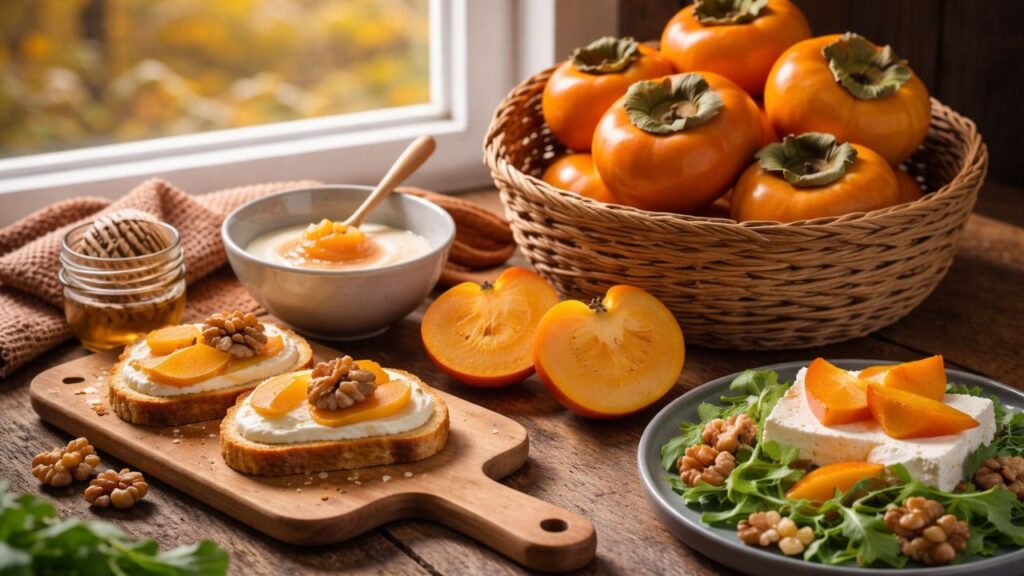
- Add sliced persimmon to salads with rocket, walnuts, and goat cheese.
- Freeze ripe chunks and blend with banana for a creamy frozen dessert.
- Layer thin slices on toast with nut butter and cinnamon.
- Dice into pancake batter for a subtle caramelised flavour.
- Roast wedges with olive oil and sea salt as a savoury side.
Six reasons persimmons deserve space in your basket
When everything comes together, six clear benefits stand out. First, persimmons are rich in antioxidants that help cells manage daily stress. Second, their vitamin A content quietly supports skin and vision. Third, the fibre aids digestion and keeps appetite steadier between meals.
Fourth, they provide a gentler sugar response than many processed snacks. Fifth, they are highly seasonal, often meaning better flavour and shorter transport distances when bought locally. Sixth, their versatility allows them to fit into breakfasts, snacks, or dinners without special preparation.
There’s also an emotional layer. Persimmons arrive as days shorten and temperatures drop, when we naturally seek comforting textures and warm colours. Their bright orange hue signals something soothing before you even take a bite.
They offer comfort without pulling you into a cycle of sugar highs and crashes. It’s a seasonal pleasure that works with your body, not against it.
In many cultures across East Asia, the Mediterranean, and the Caucasus, persimmons are associated with patience and tradition. Allowing one to ripen on the counter teaches a slower rhythm, far removed from instant-gratification snacks.
A fruit that encourages pause, sharing, and small rituals
Persimmons aren’t meant to be rushed. They invite a moment to check ripeness, notice colour, and enjoy texture. That brief pause is part of their value.
Sharing a ripe persimmon at the table, scooping the flesh together, creates a surprisingly cosy, mindful experience. It naturally slows the moment and encourages connection.
These small rituals often make food feel more satisfying, both physically and mentally.
Persimmons won’t solve everything. But they can offer dense nutrition, digestive support, steadier energy, heart-friendly compounds, flexible uses, and gentle daily pauses.
The next time you pass those bright orange fruits, consider taking two. Let one ripen slowly and slice the other into your morning yogurt. Over time, this overlooked fruit may quietly earn a lasting place in your kitchen.

- Rich in nutrients: High in vitamin A, vitamin C, fibre, and antioxidants to support skin, vision, and immunity.
- Digestive and metabolic support: Mixed fibre promotes satiety and steadier blood sugar, helping reduce energy crashes.
- Easy to integrate: Works across meals and snacks, making healthier choices feel simple and realistic.
