
Chest muscle loss after 50 rarely happens because someone stopped bench pressing. It appears when pressing mechanics lose alignment, shoulder control weakens, and the chest stops working in harmony with the upper back and core. Traditional bench exercises often shorten movement range, reduce stabilization demands, and shift stress into joints instead of muscle tissue.
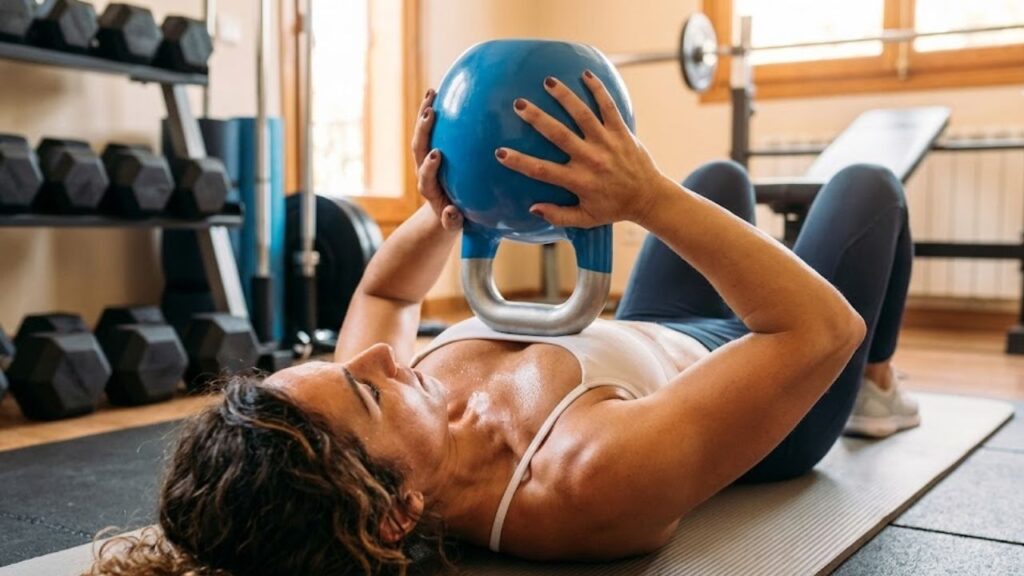
Rebuilding the chest daily works best through upright, controlled movements that create tension without heavy load. Slow tempos, extended holds, and posture-focused presses stimulate muscle fibers more consistently than occasional heavy sessions. This approach keeps the chest active while protecting the shoulders and elbows.
These five daily exercises restore chest muscle by prioritizing sustained tension, proper shoulder positioning, and full-body coordination. Done with focus, they rebuild thickness and firmness faster than bench pressing by retraining the chest to function as part of a strong, upright system.

Standing Push-Away Press
This press restores chest activation by eliminating bench support and demanding upright stability. Without back support, the chest must produce force while shoulders stay centered and the core remains braced. That requirement increases muscle fiber engagement through the mid and upper chest without heavy weight.

Slow pressing extends time under tension, which aging muscle tissue responds to better than maximal loads. Practiced daily, this movement rebuilds pressing strength while reinforcing posture that keeps the chest lifted instead of collapsed.
How to Do It
- Stand tall holding bands or light dumbbells
- Set hands at chest height
- Press forward slowly and smoothly
- Return with control, keeping shoulders steady
Standing Chest Squeeze Press
The chest responds strongly to inward pressure, yet many exercises overlook this stimulus. This squeeze press forces the chest fibers to stay active throughout the movement. Standing posture prevents the shoulders from rolling forward, keeping tension exactly where it belongs.
The continuous squeeze creates deep muscular fatigue without stressing the joints. Daily repetitions rebuild density and firmness through prolonged activation rather than explosive effort.
How to Do It
- Stand tall holding weights pressed together
- Squeeze inward firmly
- Press arms forward under control
- Maintain the squeeze the entire time
Elevated Wall Push Hold
Isometric holds rebuild chest strength faster than endless repetitions by forcing sustained engagement. This elevated position shifts load into the chest while reducing wrist and shoulder strain. Gravity increases demand while alignment stays intact.

Holding the position trains the chest to support bodyweight with calm control. That strength carries over into better pressing mechanics without joint irritation.
How to Do It
- Place hands on a wall or sturdy counter
- Step feet back slightly
- Lower chest toward hands and hold
- Maintain a straight body line
Standing Fly-to-Press Control
This fly-to-press sequence rebuilds chest fibers through lengthened tension followed by controlled contraction. Standing posture prevents momentum and removes back support, forcing the chest to work independently.
The transition from wide arms to a forward press produces deep fiber recruitment. Performed daily, it improves chest shape while enhancing shoulder stability for long-term muscle recovery.
How to Do It
- Stand holding bands or dumbbells
- Open arms wide with a slight elbow bend
- Bring hands together slowly
- Finish with a controlled forward press
Tall Carry With Chest Set
This final movement rebuilds chest muscle through posture rather than repetition. Holding weight while keeping the chest lifted and open forces continuous activation across the chest, shoulders, and upper back.
Without repeated motion, time under tension increases dramatically. Daily carries retrain the chest to support the body during standing and walking, helping muscle return even outside structured workouts.

How to Do It
- Hold weights at your sides or at chest level
- Stand tall with the chest lifted
- Brace the core and breathe steadily
- Stop when posture begins to fade
