
Saturday morning, 10:17 a.m., and the kitchen feels like a war zone. Half-sliced lemons sit on the counter, cereal bowls are shoved aside, a laptop claims one corner, and someone is desperately trying to roll pastry in the last clear spot. You’re preparing lunch, your partner wants coffee, and a child needs space for homework. Everyone crashes into each other around the same oversized surface, like traffic circling a rule-free roundabout.
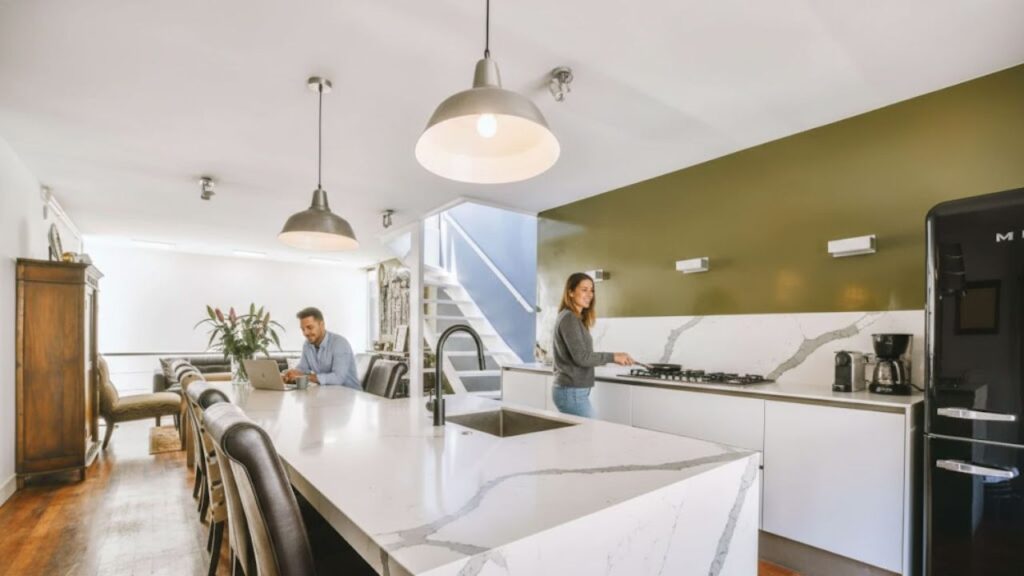
That’s often the moment when it clicks: the so-called dream kitchen island has quietly turned into the most frustrating object in the house.
The New Kitchen Focus Is No Longer in the Center
Step into recent luxury renovations or newly built apartments and something feels different. The kitchen looks lighter, calmer, almost studio-like. But the bulky island you expect to dominate the room? It’s missing.

Instead, you’ll see a slim kitchen peninsula with a dining edge or modular kitchen tables that slide, rotate, or tuck away completely. The middle of the room stays open. You can walk straight through without knocking into anything. The space feels calmer—and unexpectedly, so do you.

Interior designers now refer to this approach as the post-island kitchen. Rather than a heavy fixed block, layouts favor wall-linked peninsulas or mobile prep tables that can be parked aside when not needed.
Ask real-estate photographers what performs best online and the answer is clear. The kitchens earning the most saves on Instagram and Pinterest aren’t defined by massive marble slabs. They’re the ones with clear circulation, clean lines, and open centers. One Paris-based agency reported that homes with flexible table-peninsula kitchens saw 27% more listing clicks in 2024. Buyers don’t just want beauty. They want movement.
Why This Kitchen Trend Is Spreading So Fast
The reason is simple: modern kitchens do everything. They double as an office in the morning, a snack station in the afternoon, a production zone for weekend cooking, and a bar when guests arrive. A static island, no matter how elegant, struggles to adapt.
Peninsulas and modular tables handle that shift with ease. One side works for prep and storage, the other for seating. Sections can extend, rotate, or fold away to clear the floor. The 2026 kitchen isn’t about showcasing a giant stone surface—it’s about a room that can change its role in seconds.
How to Replace an Island Without Rebuilding Everything
If you already have an island, there’s no need to rip the kitchen apart. A practical solution is to transform it into a hybrid peninsula or kitchen table by anchoring one end to a wall or cabinet run.
 Goodbye Hair Dye for Grey Hair: The Conditioner Add-In That Gradually Restores Natural Colour
- $2,000 direct deposit for U.S. citizens in February: eligibility, payment dates, and IRS guidance
- A bowl of salt water by the window in winter: a simple trick that works as well as foil in summer
- A centenarian shares the daily habits behind her long life and why she says she won’t enter care
- Your bowel movement schedule reveals more about overall health than you might expect, according to research
- A Nobel Prize–winning physicist says Elon Musk and Bill Gates agree: more free time may come with fewer jobs
- How to keep basil alive indoors using the double-pot water mug method and one daily pinch
- €5,000 per month and free housing to live six months on a remote Scottish island with puffins and whales
The core idea is to free the center of the room. You keep the surface you love, but by anchoring one side, you open a clear pathway. This small change dramatically improves flow, especially in compact homes. Swapping bulky closed bases for lighter legs and shallow drawers also makes the floor feel brighter and more spacious.
Why Islands Often Fail in Real Homes
Most households know the scenario: three people need the island at once, and no one ends up comfortable. The issue isn’t taste—it’s scale. Many homes copied magazine layouts designed for large American kitchens and squeezed them into much smaller European spaces. The result was a striking but expensive obstruction.
A peninsula typically requires less clearance than a central island. It can run parallel to appliances or extend perpendicularly, keeping an easy route to the living area. And realistically, four bar stools aren’t used every day. Two thoughtfully placed seats on the social side of a peninsula make far more sense.
“Once the island was removed and replaced with a narrow peninsula with rounded edges, the kitchen felt instantly larger,” says London-based designer Elena Rossi. “People stopped walking around a block and started moving through a room. That change is everything.”
- Replace heavy islands with slim peninsulas connected to a wall or cabinet
- Maintain at least one meter of clear space around active cooking areas
- Choose open shelving or legged bases to keep the floor visible
- Add slide-out or fold-down extensions instead of oversized fixed tops
- Limit seating to the social side, not all four edges
From Statement Piece to Living Space
A subtle shift is happening in how we design homes. For years, the island symbolized success—the centerpiece that announced an open-plan lifestyle. Now, as people work from home and share space more closely, that symbol is being reconsidered.
The kitchens that feel right for 2026 prioritize ease and adaptability. A peninsula that allows someone to cook while another person passes behind. A slim table that rolls aside for exercise mats. A breakfast ledge that doubles as a work desk without feeling like a live broadcast from the sink.

- Freeing the center improves movement, reduces collisions, and makes rooms feel larger
- Flexible elements adapt easily to work, family life, and entertaining
- Lighter visual design creates a calmer atmosphere and simplifies daily cleaning
