The 20-second plank exercise is an effective way to build foundational core strength with minimal risk when performed correctly. If you’re new to fitness or rebuilding stability, mastering a 20-second forearm or high plank with perfect form is more beneficial than longer holds with poor alignment 1. Focus on full-body tension, neutral spine alignment, and controlled breathing—stop immediately if your hips sag or back arches to prevent strain 2. This guide covers proper technique, common errors, progression strategies, and how to integrate planks into a balanced routine for functional strength.
About the 20-Second Plank Exercise
The 20-second plank is a timed isometric exercise that challenges the muscles of the core, shoulders, glutes, and legs by holding a static position. It typically serves as an entry point for beginners or a focused set within a broader core workout. Unlike dynamic movements, the plank emphasizes endurance, stability, and neuromuscular control—training the body to resist movement rather than create it.
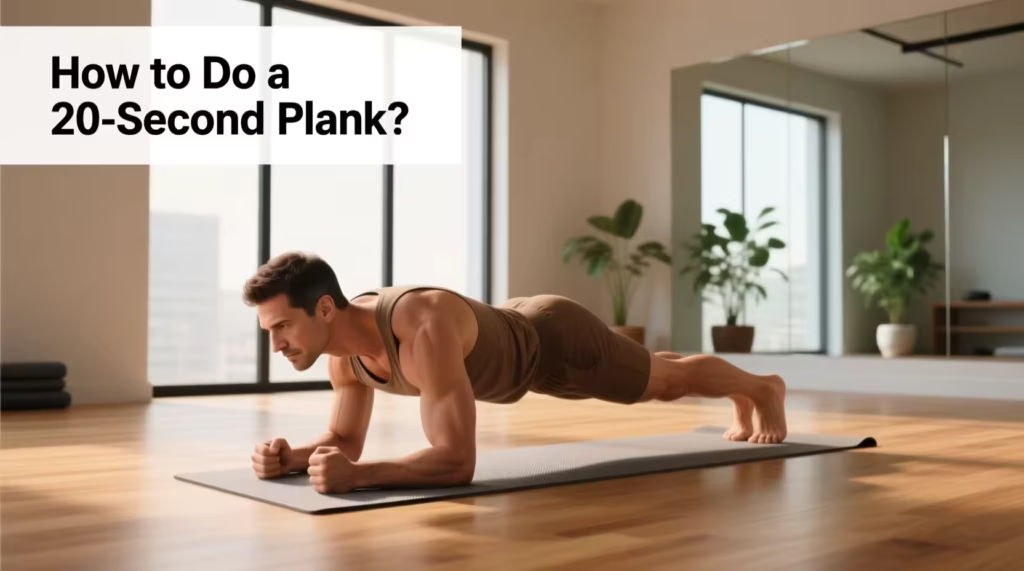
There are two primary variations: the forearm plank, where weight rests on the elbows and toes, and the high plank, which uses the palms in a push-up-like position 3. Both engage the rectus abdominis, transverse abdominis, obliques, quadriceps, and lower back muscles, promoting spinal stabilization essential for daily movement and athletic performance.
A 20-second duration balances challenge and accessibility, allowing individuals to maintain strict form while building muscular endurance gradually.
Why the 20-Second Plank Is Gaining Popularity
The 20-second plank has become a staple in home workouts, gym routines, and physical preparation programs due to its simplicity, efficiency, and low barrier to entry. It requires no equipment, can be done anywhere, and delivers measurable improvements in posture, balance, and trunk control over time.
Its rise aligns with growing interest in functional fitness—training that enhances real-world movement patterns. People seek exercises that support daily activities like lifting, bending, and standing with better alignment. The plank directly contributes to this by strengthening stabilizer muscles often neglected in traditional training.
Additionally, short-duration planks fit well into time-efficient workouts, appealing to those with limited availability. Coaches and trainers often recommend starting with 20 seconds because it encourages quality over quantity, reducing injury risk while building confidence and awareness of body mechanics.
Approaches and Differences
Different plank variations offer unique benefits depending on fitness level and goals. Below are the most common approaches used in a 20-second hold:
- Forearm Plank: Uses forearms and toes; places more emphasis on core engagement but may challenge wrist flexibility.
- Pros: Greater activation of deep abdominal muscles, ideal for isolating core tension.
- Cons: Can be difficult for those with shoulder or elbow sensitivity.
- High Plank: Performed on palms, similar to the top of a push-up.
- Pros: Easier on the elbows, allows better weight distribution through hands.
- Cons: May encourage shoulder hiking if not actively engaged downward.
- Modified Plank (Knees Down): Knees rest on the floor to reduce intensity.
- Pros: Accessible for beginners or those recovering from deconditioning.
- Cons: Reduced core demand; should transition to full plank as strength improves.
Key Features and Specifications to Evaluate
When performing a 20-second plank, success isn’t measured just by time—it’s defined by form, muscle engagement, and consistency. Key indicators of an effective plank include:
- Spinal Alignment: Body forms a straight line from head to heels; no sagging hips or raised buttocks.
- Core Engagement: Abdominals are braced (navel drawn toward spine), glutes squeezed.
- Shoulder Position: Shoulders down and away from ears, scapula retracted.
- Head and Neck: Neutral gaze, aligned with spine—avoid looking up or tucking chin excessively.
- Breathing Pattern: Steady, deep breaths into the diaphragm without holding breath.
- Hold Duration: Maintain all criteria for the full 20 seconds without compensations.
These features ensure maximum benefit and minimize strain on joints and soft tissues.
Pros and Cons
| Aspect | Advantages | Potential Issues |
|---|---|---|
| Core Development | Strengthens deep stabilizing muscles like transverse abdominis | Requires consistent practice for noticeable gains |
| Posture Support | Improves spinal alignment during sitting and standing | Only effective if practiced with correct form |
| Injury Prevention | Reduces strain on lower back by enhancing trunk stability | Poor form increases risk of neck or shoulder discomfort |
| Time Efficiency | Can be completed in under 3 minutes with multiple sets | Misconception that longer = better leads to overexertion |
| Accessibility | No equipment needed; suitable for most fitness levels | May need modification for joint sensitivities |
How to Choose the Right 20-Second Plank Approach
Selecting the appropriate plank variation depends on your current strength, mobility, and experience. Follow this step-by-step decision guide:
- Assess Your Starting Point: Can you hold a full forearm plank for 15 seconds with good form? If yes, proceed. If not, start with a modified knee plank.
- Choose Your Base Position: Opt for forearm plank to maximize core activation or high plank if you have elbow discomfort.
- Check Alignment Cues: Use a mirror or record yourself to verify straight-line posture and neutral head position.
- Engage Muscles Before Starting: Squeeze glutes, brace abs, and depress shoulders before lowering into position.
- Monitor During Hold: Focus on breathing and maintaining tension. Stop early if form breaks—even at 15 seconds.
- Rest and Repeat: Allow 10–30 seconds between sets. Aim for 3–4 sets initially 4.
To avoid: Holding beyond fatigue, arching the back, letting hips drop, or holding breath—all compromise effectiveness and safety.
Insights & Cost Analysis
The 20-second plank exercise involves zero financial cost and no special equipment. It can be performed on a yoga mat, carpet, or even bare floor. While accessories like timing apps or smartwatches can help track duration, they are not necessary.
Compared to other core training methods (e.g., stability balls, resistance bands, gym machines), the plank offers the highest value per effort unit—delivering significant functional benefits at no monetary expense. Time investment is minimal: a complete session with four sets and rest takes less than three minutes.
Better Solutions & Competitor Analysis
While the 20-second plank is excellent for foundational strength, combining it with other core exercises yields better long-term results. Below is a comparison of complementary movements:
| Exercise | Benefits Over Standard Plank | Potential Challenges |
|---|---|---|
| Dead Bug | Teaches anti-extension with limb movement; safer for lower back | Coordination required; harder to master initially |
| Russian Twists | Adds rotational strength for obliques | Can encourage poor spine mechanics if rushed |
| Leg Raises | Targets lower abs specifically | May cause hip flexor dominance if core disengages |
| Side Plank | Improves lateral stability and oblique strength | Balance-intensive; may require progression |
Customer Feedback Synthesis
Based on aggregated user experiences, people commonly report:
- Frequent Praise: Improved posture, reduced lower back tightness during prolonged sitting, increased confidence in body control.
- Common Complaints: Shoulder fatigue, difficulty maintaining form past 15 seconds, confusion about optimal hand/elbow placement.
Many note that using visual feedback (like a mirror or video recording) significantly improves their ability to self-correct and progress steadily.
Maintenance, Safety & Legal Considerations
To maintain safe and effective plank practice:
- Always prioritize form over duration.
- Discontinue immediately if pain (not muscle fatigue) occurs.
- Warm up lightly before engaging in isometric holds.
- Progress gradually—add 5–10 seconds weekly once 20 seconds becomes manageable.
No certifications or legal requirements apply to performing planks. However, instructors offering guided sessions should be trained in basic biomechanics to prevent misinstruction.
Conclusion
If you’re new to core training or aiming to improve stability with minimal time investment, the 20-second plank exercise is a practical and effective choice. By focusing on proper alignment, full-body engagement, and consistent repetition, you can build foundational strength that supports overall movement quality. Start with achievable variations, avoid pushing through compromised form, and gradually increase challenge through duration or added exercises. When executed mindfully, the 20-second plank becomes a cornerstone of sustainable, functional fitness.
FAQs
How do I know if my plank form is correct?
Ensure your body forms a straight line from head to heels, shoulders are down, core is braced, and head is neutral. Use a mirror or record a side view to check alignment.
Is a 20-second plank enough for core strength?
Yes, especially when performed with perfect form. For beginners, a solid 20-second hold builds foundational endurance. Progress by increasing time or adding variations.
What is the difference between a forearm plank and a high plank?
The forearm plank uses elbows for support and emphasizes core activation. The high plank uses palms and may be easier on the arms but requires more shoulder control.
Why does my core shake during a plank?
Muscle tremors indicate fatigue and neuromuscular challenge, which are normal. If shaking leads to loss of form, end the hold to maintain safety.
How many sets of 20-second planks should I do?
Start with 3–4 sets, resting 10–30 seconds between each. Adjust based on your ability to maintain proper technique throughout all sets.