Is a 20-Pound Bicep Curl Good? Your Complete Home Dumbbell Guide
✅ Short Introduction: Is a 20-Pound Bicep Curl Good?
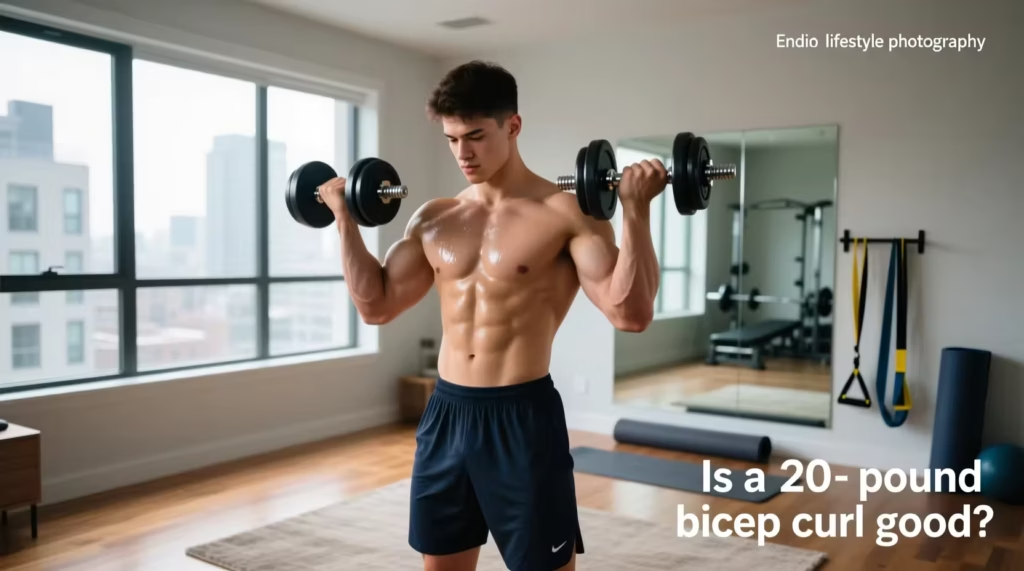
A 20-pound bicep curl can be effective depending on your fitness level and goals. For beginners or those focusing on toning, it’s a solid starting point that allows proper form and controlled movement 1. If you’re aiming for muscle growth (hypertrophy), use this weight only if you can perform 8–12 reps with good technique and feel challenged. For advanced lifters, 20 pounds may be too light to stimulate further gains. The key is not the number on the dumbbell but how it fits into your progression plan. This guide covers how to do a biceps workout at home with dumbbells, evaluate appropriate weights, and structure routines for lasting results.
📌 About Biceps Workouts at Home with Dumbbells
A biceps workout at home with dumbbells is a practical way to build arm strength and definition without gym access. Using adjustable or fixed-weight dumbbells, individuals can perform a variety of curl variations that target the biceps brachii, brachialis, and forearm muscles. These workouts are ideal for people seeking flexibility in their training schedule, limited space, or budget-friendly fitness solutions.
Common exercises include standing curls, hammer curls, reverse curls, and cross-body movements—all of which require minimal equipment and can be done in small spaces. Whether using one pair of 20-pound dumbbells or multiple sets, consistency and correct execution matter more than heavy loading. This approach supports progressive overload, muscle endurance, and neuromuscular coordination over time.
📈 Why Home Bicep Workouts Are Gaining Popularity
The rise of home-based fitness reflects changing lifestyles, increased awareness of physical health, and greater access to affordable equipment. A home bicep workout with dumbbells appeals to many because it’s time-efficient, scalable, and adaptable to different experience levels.
People choose this method for several reasons: avoiding crowded gyms, reducing commute time, maintaining privacy, or integrating short sessions into busy days. Additionally, post-pandemic habits have normalized remote exercise, making tools like dumbbells a staple in living rooms and home gyms. With just one pair of weights, users can train arms, shoulders, back, and even legs—making dumbbells one of the most versatile pieces of fitness gear available.
⚙️ Approaches and Differences in Bicep Training
Different training approaches yield varied outcomes based on rep ranges, tempo, and exercise selection. Below are common methods used in a dumbbell bicep workout at home.
| Approach | Best For | Pros | Cons |
|---|---|---|---|
| Hypertrophy (8–12 reps) | Muscle size increase | Optimal tension for growth, measurable progress | Requires consistent weight progression |
| Muscle Endurance (12–15+ reps) | Toning, stamina | Improves muscular control, low injury risk | Limited mass-building stimulus |
| Strength Focus (4–6 reps) | Maximal force output | Neural adaptation, stronger contractions | Needs heavier weights, higher joint stress |
| Circuit Training | Time efficiency, calorie burn | Combines strength and cardio elements | May compromise form under fatigue |
🔍 Key Features and Specifications to Evaluate
When assessing whether a 20-pound dumbbell suits your needs, consider these measurable factors:
- Rep Range: Can you complete 8–12 reps with control? If yes, it’s likely suitable for hypertrophy.
- Form Integrity: Do you swing, lean, or lose posture? Poor mechanics suggest the weight is too heavy.
- Progression Path: Are you increasing difficulty over time through added reps, sets, or weight?
- Mind-Muscle Connection: Can you feel the biceps contracting throughout the full range?
- Eccentric Control: Lowering phase should take 3–4 seconds to maximize muscle fiber engagement.
These criteria help determine effectiveness beyond sheer poundage. Tracking them ensures long-term development regardless of starting point.
📋 Pros and Cons of Using 20-Pound Dumbbells
✨ Tip: Effectiveness depends on individual context—what works for one may not suit another.
Advantages
- Ideal for beginners learning proper curl mechanics
- Suitable for high-rep toning workouts (12–15 reps)
- Allows focus on slow negatives and full range of motion
- Reduces risk of momentum-based cheating
- Great for unilateral training (one arm at a time)
Limitations
- May become insufficient for muscle growth after several weeks
- Too light for advanced lifters seeking maximal stimulation
- Limited utility for compound lifts requiring heavier loads
- Potential plateau if not paired with progressive overload
📝 How to Choose the Right Weight for Your Bicep Workout
Selecting the right dumbbell weight involves self-assessment and clear objectives. Follow this step-by-step decision guide:
- Define Your Goal: Are you aiming to tone, build muscle, or improve endurance?
- Test Current Strength: Try curling 20 lbs for 10 reps. If easy, go heavier. If form breaks down, reduce weight.
- Assess Rep Performance: Use the 8–12 rep rule: if you can do more than 12 clean reps, increase weight next session.
- Check Form Regularly: Record yourself or use a mirror to ensure elbows stay fixed and body doesn’t sway.
- Plan Progression: Increase by 2.5–5 lbs when current weight feels manageable 1.
Avoid these pitfalls: Choosing weight based on ego, skipping warm-ups, neglecting eccentric control, or ignoring bilateral imbalances.
📊 Insights & Cost Analysis
Investing in a quality pair of dumbbells pays off in durability and versatility. While 20-pound fixed dumbbells cost between $30–$60, adjustable models (e.g., 5–25 lbs per dumbbell) range from $100–$250 but save space and offer scalability.
For those committed to long-term home training, adjustable sets provide better value. However, if space and budget allow, owning multiple fixed pairs enables seamless transitions between exercises. Consider grip comfort, material (rubber-coated vs. chrome), and floor protection when purchasing.
🌐 Better Solutions & Competitor Analysis
While 20-pound dumbbells work well initially, long-term success requires adaptability. Here’s how alternatives compare:
| Option | Suitable For | Potential Issues | Budget Estimate |
|---|---|---|---|
| Fixed 20-lb Dumbbells | Beginners, toning focus | Limited progression | $30–$60 |
| Adjustable Dumbbells | All levels, space-saving | Higher upfront cost | $100–$250 |
| Dumbbell Set (Multiple Pairs) | Progressive overload, variety | Storage needed | $100+ |
| Resistance Bands | Travel, rehab, activation | Less precise loading | $15–$40 |
For sustainable progress, adjustable options often deliver the best balance between cost and functionality.
💬 Customer Feedback Synthesis
Based on aggregated user experiences:
Common Praise
- “Perfect for starting out—helped me learn form without injury”
- “Easy to store and use daily”
- “Great for quick morning routines”
Frequent Complaints
- “Outgrew them quickly—wish I bought adjustable ones earlier”
- “Hard to find matching pairs locally”
- “Some cheaper models chip flooring”
🧼 Maintenance, Safety & Practical Considerations
To ensure longevity and safe use:
- Store dumbbells on rubber mats to protect floors and equipment
- Wipe handles regularly to maintain grip integrity
- Perform dynamic warm-ups before lifting to prepare joints and muscles 4
- Avoid locking elbows during lowering phase to reduce joint strain
- Train opposing muscle groups (e.g., triceps, back) for balanced development 6
Always prioritize controlled movement over lifting heavier weights prematurely.
✅ Conclusion: Who Should Use a 20-Pound Bicep Curl?
If you’re a beginner or focused on toning and form mastery, a 20-pound bicep curl is a smart choice for your home dumbbell workout routine. It provides enough resistance to stimulate early gains while minimizing injury risk. Intermediate lifters can use it selectively for higher-rep sets or accessory work. Advanced users will likely need heavier loads for continued growth. Ultimately, the best weight challenges you within your target rep range while preserving perfect form. Pair your training with gradual progression, full-range motions, and attention to technique for optimal outcomes.
❓ Frequently Asked Questions
Is a 20-pound bicep curl good for beginners?
Yes, a 20-pound dumbbell curl is generally good for beginners, especially men. It allows focus on form, muscle control, and building initial strength without excessive strain.
Can I build big biceps with 20-pound dumbbells?
You can build noticeable bicep size initially, especially as a beginner. However, for continued growth, you’ll eventually need to increase resistance through heavier weights or advanced techniques.
How many reps should I do with 20-pound dumbbells?
For muscle growth, aim for 8–12 reps per set. For toning or endurance, perform 12–15 reps. Choose a weight that makes the last few reps challenging but doable with good form.
What exercises can I do with 20-pound dumbbells at home?
Effective exercises include standing curls, hammer curls, reverse curls, cross-body curls, and alternating curls. Combine them into circuits for a complete arm workout.
Should I increase weight after using 20-pound dumbbells?
Yes, once you can perform 12 reps comfortably with proper form, gradually increase the weight by 2.5–5 pounds to continue challenging your muscles and promoting growth.